A Good Start Makes Life With Your Puppy Easier
Bringing a new puppy home is exciting, but it can also be exhausting. Between potty training, biting, chewing, and teaching basic manners, there is a lot to figure out. If you’re looking for a puppy trainer in Cumming, GA, you want someone who understands more than obedience commands. You want someone who understands how puppies learn, develop, and build trust.
Choosing a puppy trainer in Cumming, GA starts with finding someone who understands early development, uses clear and consistent training methods, and teaches you how to continue at home. Look for experience, individual attention, a calm environment, and practical guidance that fits your puppy’s needs.
What We’ve Learned From Raising Puppies
At Ducktown Lodge, our understanding of puppies started long before we opened our boarding and training facility. We’ve spent years raising litters, watching puppies develop, and learning how much their early experiences shape their behavior. We use the Puppy Culture program to support early development and confidence building. In this article, we’ll share what we’ve learned and what you should look for when choosing a puppy trainer in North Georgia.
Why Early Puppy Training Matters More Than You Think
Puppies are learning from the moment they come home. Every interaction teaches them something, whether you intend it to or not.
When your puppy jumps up and gets attention, they learn that jumping works. When they pull on the leash and reach something interesting, pulling gets rewarded. When they calmly sit and receive praise, they begin to understand what you want.
This is why early puppy training matters. It’s not about expecting a young dog to behave perfectly. It’s about helping them develop good habits before unwanted behaviors become harder to change.
Puppies Start Learning Before You Start Training
One of the biggest misconceptions about puppy training is that you need to wait until a puppy is older.
You don’t.
Young puppies can begin learning simple skills through short, positive experiences. They can learn their name, come when called, settle in a crate, and understand basic household routines.
The key is keeping expectations appropriate for their age.
A young puppy doesn’t have the attention span of an adult dog. They need repetition, patience, plenty of rest, and opportunities to succeed.
Training should build confidence, not frustration.
Common Puppy Behaviors That Benefit From Early Guidance
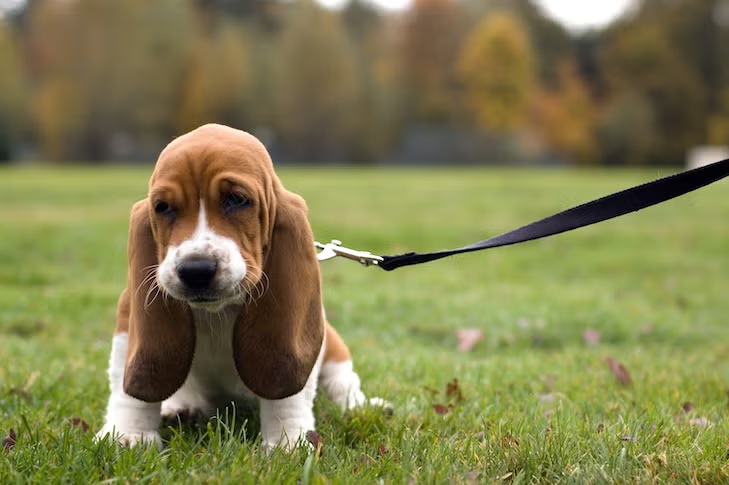
Most new puppy owners face similar challenges. These behaviors are normal parts of puppy development, but that doesn’t mean you have to wait for your puppy to outgrow everything.
Here are some common areas where early training helps.
- Biting and chewing: Puppies explore with their mouths. Teaching them what they can chew and redirecting them toward appropriate toys helps establish better habits.
- Jumping on people: Puppies naturally seek attention. Rewarding calm greetings teaches them that keeping their feet on the floor works better.
- Potty training: Consistent schedules, supervision, and positive reinforcement help puppies understand where to go.
- Leash pulling: Introducing leash manners early makes future walks more enjoyable.
- Difficulty settling: Puppies need help learning when it’s time to play and when it’s time to relax.
None of these behaviors mean you have a bad puppy.
They mean you have a puppy who is still learning.
What Raising Puppies Taught Us About Early Development
Before Ducktown Lodge, I spent more than 10 years raising puppies. During that time, I raised many litters and learned firsthand how important the earliest stages of development really are.
We use the Puppy Culture program, which focuses on early puppy development, confidence building, and positive experiences.
One of the biggest lessons I’ve learned is that puppies need opportunities to explore the world in ways they can handle.
A new sound, an unfamiliar surface, or meeting a new person might seem like a small thing to us. To a young puppy, it can be a big experience.
We want those experiences to build curiosity and confidence, not fear.
Here are a few principles that have stayed with me.
- Early experiences matter: Puppies begin forming associations with the world around them long before formal obedience training starts.
- Confidence takes time: Some puppies investigate everything. Others need a little encouragement. Both deserve patience.
- Small lessons make a difference: Short, positive experiences can help puppies become more comfortable with everyday situations.
- Every puppy is an individual: Even puppies from the same litter can have completely different personalities.
Raising puppies taught me that good training starts with understanding the dog in front of you.
That philosophy continues to influence how we care for and train dogs at Ducktown Lodge.
What Should Puppy Obedience Training Actually Teach?
When people think about puppy obedience training, they often picture a dog sitting, staying, or walking perfectly beside its owner.
Those skills are useful, but good training goes further.
The real goal is to create clear communication between you and your puppy.
Your puppy should begin to understand what you’re asking and feel confident responding.
Foundational Commands That Make Everyday Life Easier
Basic obedience creates a foundation for more advanced training.
Some of the most useful skills include:
- Sit: Helps with calm greetings, waiting for meals, and everyday manners.
- Down: Encourages your puppy to settle instead of constantly moving.
- Place: Teaches your puppy to go to a designated spot and remain there until released.
- Come: Builds the foundation for reliable recall and safer outdoor activities.
- Heel and leash manners: Help your puppy understand how to walk with you instead of pulling toward every distraction.
These commands aren’t just tricks.
They help your puppy understand expectations and give you practical ways to guide behavior throughout the day.
Impulse Control Is Just as Important as Commands
Puppies naturally want things immediately.
They want the treat, the toy, the open door, or the person walking toward them.
Impulse control teaches them that waiting and paying attention can lead to good things.
You can begin with simple daily exercises.
- Before meals: Ask for a brief moment of calm before placing the food bowl down.
- At doorways: Practice waiting instead of rushing through an open door.
- During greetings: Reward your puppy when all four paws remain on the floor.
- During play: Practice short pauses before restarting a favorite game.
Keep these exercises short and appropriate for your puppy’s age.
The goal isn’t to make a puppy wait endlessly. It’s to help them understand that calm behavior and clear communication work.
Preventing Resource Guarding Starts With Building Trust
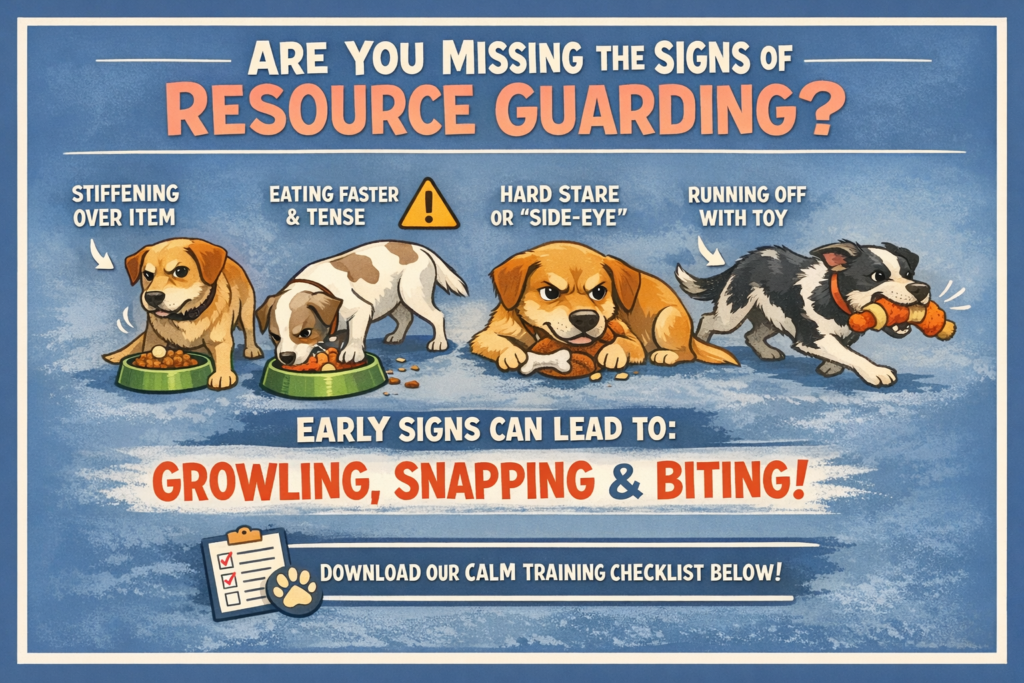
This is one area where our experience raising puppies has taught us a valuable lesson.
Resource guarding happens when a dog becomes protective of something they consider important.
That might be food, a bone, a favorite toy, or even a resting place.
Some puppies may stiffen, freeze, growl, or try to move away when someone approaches a valued item.
One of the best things we can teach puppies early is that people approaching their belongings doesn’t have to mean something bad is about to happen.
Our Rule of Thumb: Trade, Don’t Take
When you give your puppy a bone or another valuable chew, and you need to take it away, offer something valuable in return.
For example, let’s say your puppy is enjoying a bone.
Instead of walking over and simply pulling it out of their mouth, offer a favorite treat.
When your puppy willingly leaves the bone to take the treat, you can safely pick it up.
The idea is simple.
Your puppy learns that giving something up can lead to something good.
Here are a few ways to practice this approach.
- Start with easy exchanges: Practice trading a lower-value toy for a favorite treat before working with more valuable items.
- Make the exchange worthwhile: Offer something your puppy genuinely wants.
- Keep the experience calm: Avoid grabbing, chasing, or turning the exchange into a confrontation.
- Return items when appropriate: Sometimes give the toy back so your puppy learns that releasing something doesn’t always mean losing it.
- Respect warning signs: If your puppy freezes, growls, snaps, or becomes defensive, don’t force the exchange. Seek guidance from a qualified professional.
You also don’t need to repeatedly interrupt a puppy enjoying a bone just to test whether they’ll give it up.
Let them enjoy their things in peace.
The American Kennel Club discusses similar prevention strategies in its article on preventing resource guarding.
This is a good example of why early puppy training is about more than obedience.
It’s about building trust through everyday experiences.
How to Choose the Right Puppy Trainer in Cumming, GA
Searching for puppy training near me can bring up a long list of options.
You may find group classes, private trainers, and board-and-train programs. Each has its place.
The important question isn’t simply which trainer is closest to your home.
It’s who has the experience, approach, and environment that fit your puppy.
Look for Experience, Patience, and Clear Communication
A good puppy trainer should understand that puppies develop at different rates.
Some are confident and outgoing. Others are cautious or easily distracted.
The trainer should recognize those differences and adjust accordingly.
Experience matters, but so does the ability to explain what’s happening.
You should feel comfortable asking why a trainer uses a particular method, what tools are involved, and how your puppy will be supported.
Training shouldn’t leave you confused about what your dog is learning.
It should help you become more confident, too.
Ask These Questions Before Choosing a Puppy Trainer
Before enrolling your puppy in a training program, ask questions.
A good trainer should welcome them.
Here are six worth asking.
- How many dogs do you train at one time? Smaller numbers may allow more individual attention and flexibility.
- What training methods do you use? Ask how new behaviors are taught, how mistakes are handled, and whether any training equipment is used.
- What happens if my puppy becomes overwhelmed? A trainer should be able to recognize stress and adjust the experience.
- Will I receive updates? You should understand how your puppy is progressing and what they’re practicing.
- How will you teach me to continue training at home? Owner education is essential for long-term progress.
- Can I visit before committing? Seeing the environment and meeting the people involved can help you make an informed decision.
Pay attention to how the trainer answers.
You want someone who listens, explains their approach clearly, and treats your concerns with respect.
Why a Calm Training Environment Can Make a Difference
Puppies need opportunities to experience the world, but there’s a difference between helpful exposure and overwhelming stimulation.
Imagine trying to learn something new in a room where everyone is talking at once.
It would be difficult to concentrate.
Puppies can struggle in the same way.
A busy environment isn’t automatically bad. Controlled distractions can be valuable during training.
But puppies also need opportunities to learn in settings where they can focus and feel secure.
A smaller training environment can make it easier to adjust the pace and give individual attention.
The goal is to build skills in manageable situations, then gradually practice those skills around new distractions.
Puppy Classes or Board and Train: Which Is Right for Your Family?
There isn’t one training format that’s right for every puppy.
Some families enjoy attending weekly classes and practicing between sessions.
Others need more structured support or prefer a program where a professional works with their puppy throughout the day.
Understanding the differences can help you choose.
When Puppy Training Classes Make Sense
Group puppy classes can be a good choice for owners who want to participate directly in training.
They provide opportunities to learn basic skills while practicing around other puppies and people.
A well-run class should manage distractions carefully and allow puppies to learn at an appropriate pace.
Group classes can be especially helpful when:
- You have time to attend regularly and practice at home.
- Your puppy is comfortable in a small, controlled group.
- You want direct coaching while working with your dog.
- You’re looking for guidance with basic manners and early socialization.
The quality of the class matters more than the number of puppies attending.
What Happens During a Puppy Board and Train Program?
A board and train program allows your puppy to stay with a professional trainer for a set period while receiving structured instruction.
Instead of practicing only during a weekly lesson, the puppy has opportunities to learn throughout the day.
Training may include basic obedience, leash skills, crate routines, impulse control, and everyday manners.
A thoughtful program also includes time for rest, play, and normal puppy activities.
Puppies need downtime just as much as they need practice.
Before choosing a board and train program, ask about age requirements, training methods, daily routines, and how owners participate.
Not every program is appropriate for every puppy.
The Benefits of Personalized Puppy Board and Train in Cumming, GA
For some North Georgia families, a personalized board and train program provides the consistency they’re looking for.
Benefits may include:
- Regular practice: Training can be incorporated into daily routines rather than limited to occasional sessions.
- Individual attention: The trainer can adjust exercises based on the puppy’s temperament and progress.
- Predictable structure: Consistent schedules help puppies understand what to expect.
- Everyday learning: Skills can be practiced during meals, walks, greetings, and other normal activities.
- Professional observation: An experienced trainer can recognize patterns and help owners understand their puppy’s behavior.
Board and train can provide a useful foundation, but it doesn’t replace the owner’s role.
That brings us to one of the most important parts of puppy training.
Why Training Must Continue After Your Puppy Comes Home
A puppy may respond beautifully to a trainer and still struggle when returning home.
Why?
Because dogs learn through repetition, context, and consistency.
Your home has different distractions, people, routines, and expectations.
That’s why the transition from trainer to owner matters so much.
A good program should show you how to use the commands your puppy has learned, explain the training tools involved, and help you understand how to respond in everyday situations.
You should leave knowing what to practice and what realistic progress looks like.
Training doesn’t end when your puppy comes home.
That’s where you begin building on what they’ve learned together.
What Makes Puppy Training at Ducktown Lodge Different?
At Ducktown Lodge, we’ve intentionally chosen to keep things small.
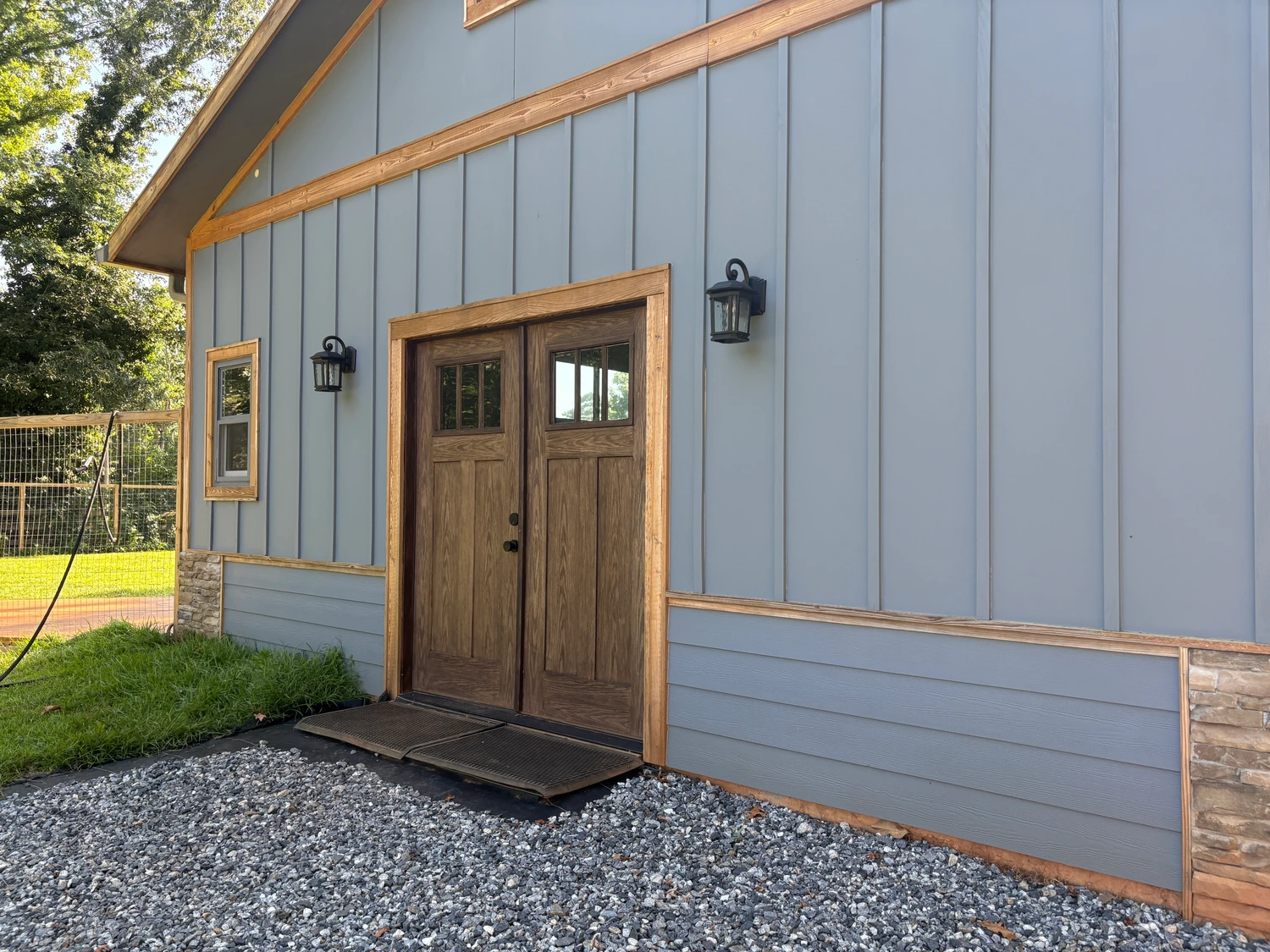
We’re a family-owned dog boarding and training facility in Cumming, Georgia, located on a quiet farm.
Our approach comes from years of working with dogs, raising puppies, and understanding that each dog needs something different.
We don’t believe more dogs automatically means better training.
We believe attention, consistency, and clear communication make a meaningful difference.
A Smaller Setting With More Individual Attention
Ducktown Lodge has just 12 private suites.
Each suite is designed to provide a quiet, comfortable place for dogs to rest without the constant activity of crowded group settings.
Dogs enjoy supervised outdoor sessions throughout the day, with routines suited to their individual needs.
We don’t operate large communal playgroups.
Instead, we focus on structured care, appropriate activity, and a calm environment where dogs can settle.
For puppies learning new skills, that predictability can be especially helpful.
Our boarding care is provided by familiar people, and training is incorporated into the dog’s daily experience.
From Raising Puppies to Helping Families Train Them
My experience with dogs began long before Ducktown Lodge.
I spent more than a decade raising puppies and using the Puppy Culture program to support their early development.
Watching puppies grow taught me how different they can be, even within the same litter.
One puppy might confidently investigate every new object.
Another might stand back and watch before deciding to approach.
Neither puppy is wrong.
They simply need different kinds of support.
That experience helped shape how I think about training today.
I want dogs to understand what’s expected of them, but I also want us to understand what they’re communicating.
Meet Sara: Experience That Goes Beyond Basic Commands
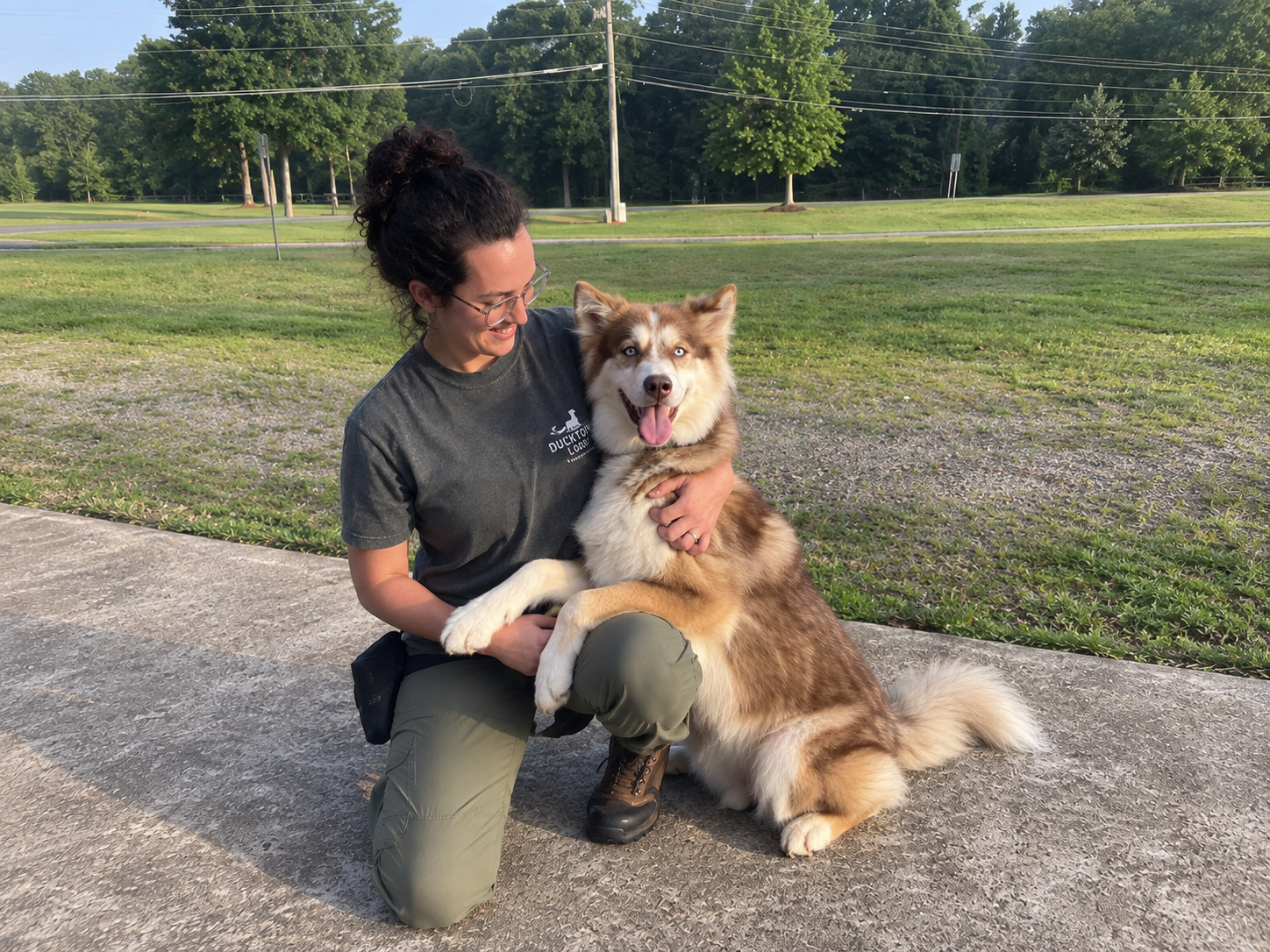
Our trainer, Sara York, brings more than eight years of hands-on dog training experience to Ducktown Lodge.
Before joining us, Sara worked under an established North Georgia trainer and became a lead trainer in a high-volume environment.
Today, she works with no more than three training dogs at a time.
That smaller number allows her to focus on each dog’s progress, temperament, and individual needs.
Sara understands that training isn’t just about teaching a dog to perform a command.
It’s also about helping the owner understand how to maintain those skills.
Training That Fits Into Real Life
Our board and train program focuses on practical skills that make everyday life easier.
We use a balanced training approach that combines positive reinforcement with clear guidance and appropriately introduced training tools.
Our two-week program is customized to the individual dog.
Depending on age, readiness, and training goals, instruction may include:
- Foundational obedience such as sit, down, place, and heel.
- On-leash manners and recall.
- Crate routines and impulse control.
- Practice around everyday distractions.
- Off-property training sessions when appropriate.
- Introduction to off-leash skills when suitable for the dog.
We don’t expect every puppy to progress at exactly the same rate.
Young dogs need age-appropriate expectations, and some skills require more time than others.
The goal is steady, useful progress that can continue after the stay.
Owners Are Part of the Training Process
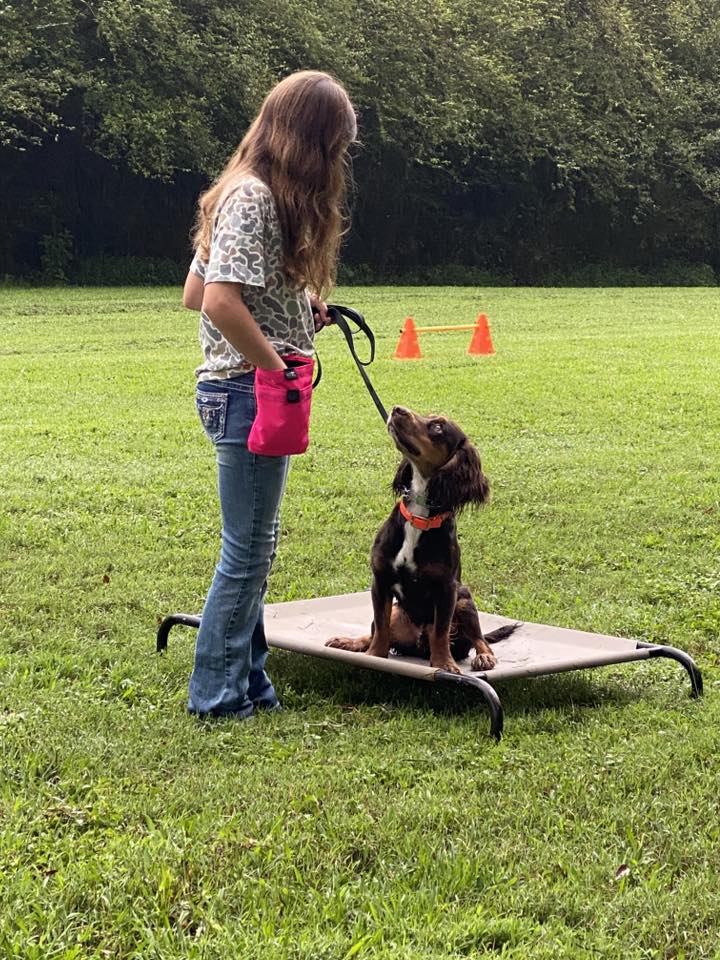
One thing we believe strongly at Ducktown Lodge is that training the owner matters just as much as training the dog.
Our two-week board and train program includes a take-home instruction session.
We walk you through what your dog has learned, how to use the training tools, and how to maintain routines at home.
We also provide continued client support by phone, text, and email.
We want you to understand your dog, not just receive a list of commands.
Because the real measure of training isn’t what your dog does for us.
It’s how confidently you and your dog can work together once you’re home.
Frequently Asked Questions About Puppy Training in Cumming, GA
What Age Should I Start Training My Puppy?
You can begin teaching simple skills as soon as your puppy comes home.
Name recognition, potty routines, crate comfort, and gentle handling are all good starting points.
Formal training programs may have different age requirements, so ask about your puppy’s developmental readiness before enrolling.
How Long Does It Take to Train a Puppy?
There isn’t one timeline that applies to every puppy.
Some basic skills can develop quickly with consistent practice. Reliable responses around distractions take longer.
Training continues as puppies grow and encounter new situations.
Focus on progress and consistency rather than expecting perfection by a certain date.
Is Board and Train a Good Choice for Puppies?
Board and train can be helpful for puppies who are developmentally ready for a structured residential program.
The right fit depends on the puppy’s age, temperament, health, and training goals.
Ask about supervision, rest periods, training methods, and owner instruction before deciding.
Will My Puppy Remember Their Training After Coming Home?
Puppies can retain what they’ve learned, but they need practice in different environments.
A command learned at the training facility may need additional reinforcement in your kitchen, yard, or neighborhood.
Consistency at home helps those skills become more reliable.
Can Puppy Training Help With Biting, Jumping, and Leash Pulling?
Yes. Training can help owners manage and redirect these common puppy behaviors.
It also helps to understand normal puppy development.
For example, teething and chewing are natural. Training teaches appropriate alternatives rather than expecting a puppy to stop using its mouth entirely.
Should I Choose Group Classes or Individual Puppy Training?
Both can be useful.
Group classes allow owners to practice directly with their puppies around controlled distractions.
Individual training offers more focused attention and flexibility.
The best choice depends on your puppy’s needs, your schedule, and how involved you want to be in each training session.
Give Your Puppy a Strong Start With the Right Training Support
Feel More Confident About Life With Your Puppy
You brought your puppy home because you wanted a companion, not because you wanted every day to feel like a training challenge.
But puppyhood can be a lot.
There are accidents to clean up, shoes to rescue, and moments when you wonder whether you’re doing things right.
You don’t have to figure everything out on your own.
With the right guidance, everyday life can become more manageable. Walks can feel calmer. Your puppy can begin to understand household expectations. And you can feel more confident knowing how to respond when challenges come up.
At Ducktown Lodge, we believe good training should strengthen the relationship between you and your dog.
Our experience raising puppies, our use of Puppy Culture principles, and Sara’s hands-on training background all contribute to the way we approach that work.
We take the time to understand your dog and help you understand them, too.
If you’re considering puppy training in Cumming, GA, we’d be happy to talk about what you’re experiencing and whether our program is the right fit.
Every new client begins with an in-person meet and greet. You’ll have an opportunity to see the lodge, meet us, and ask questions before making a decision.
Let’s talk about your puppy.
Ducktown Lodge
6140 Dahlonega Highway
Cumming, Georgia
Phone: (770) 733-0836
Email: hello@ducktownlodge.com
Website: https://ducktownlodge.com
Start with a conversation, not a contract.