Board and Train: How to Make Dog Training Stick at Home

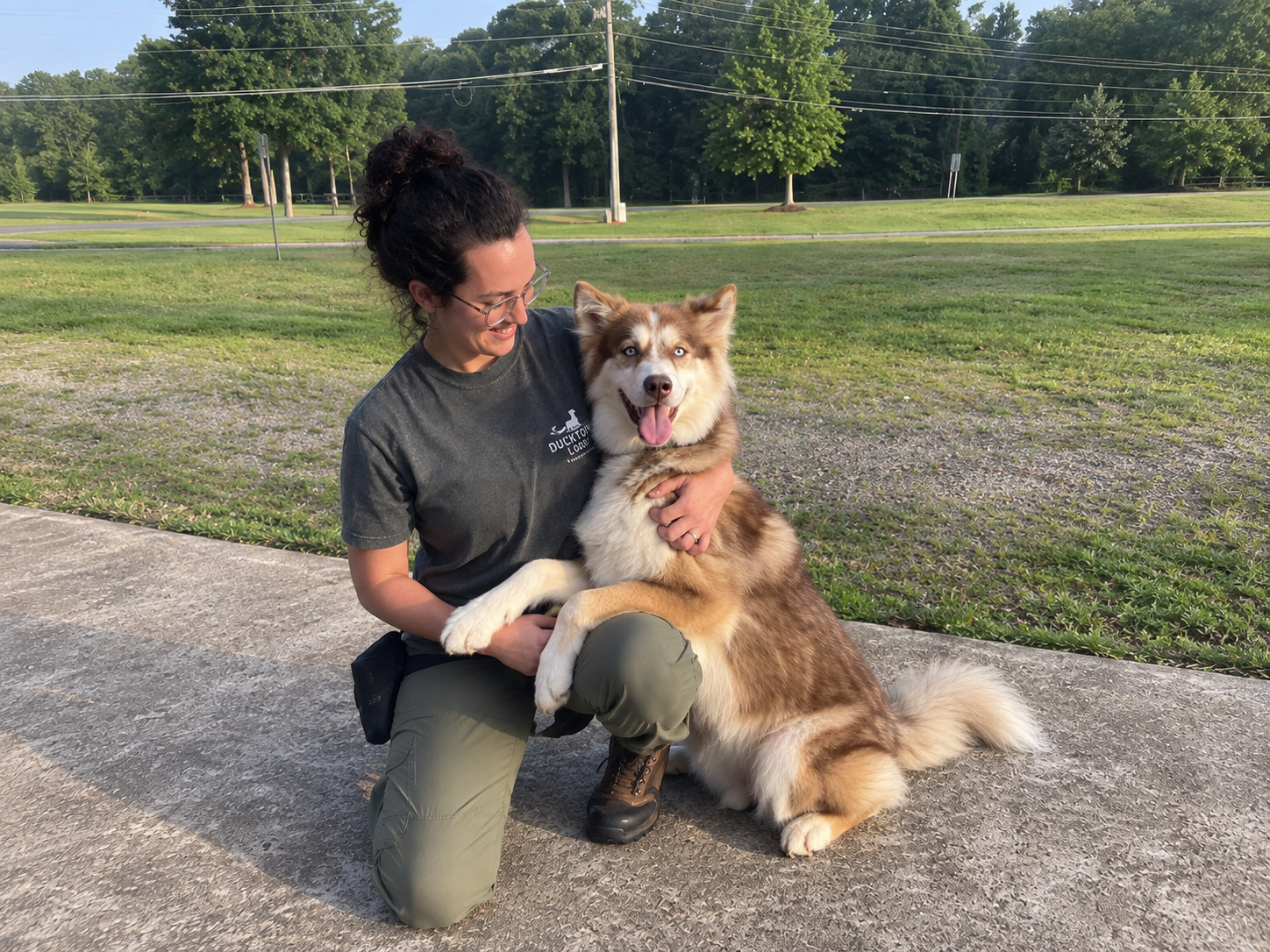
We are celebrating Frida’s Graduation. Happy Paw Doodles Pup. Your dog just came home from board and train. You can see the progress. The leash feels different. Commands are clearer. Your dog may be settling faster, checking in more often, and responding in ways that once felt difficult. Now comes an equally important part of dog training: bringing those new skills into everyday life with you.
After board and train, keep dog training consistent at home by using the same commands, maintaining clear boundaries, practicing skills each day, and slowly adding distractions. Your dog has learned the foundation. Your job is to make those new skills part of normal life through practice and follow-through.
Bringing Board and Train Skills Home
One of the biggest worries owners have after board and train is simple: “What if I mess this up?” You do not need to recreate the training program at home. You need to understand what your dog learned and use those skills consistently. That means keeping expectations clear, practicing in normal routines, and knowing when to ask your trainer for help.
This is where Part One of our series, Dog Training That Works: What Actually Makes Training Successful, becomes important. Successful dog training is built on clarity, consistency, structure, trust, and real world practice. Now we are going to take those principles home.
What Should You Do When Your Dog Comes Home From Board and Train?
Coming home is a transition.
Your dog has spent time learning new expectations in a structured environment. Now they are returning to a familiar place filled with familiar people, smells, routines, and old habits.
Do not be surprised if your dog needs a little time to connect what they learned during board and train with life at home.
Your dog did not forget everything.
The environment changed.
That is why the first days home are less about testing your dog and more about helping them understand that the skills they learned still matter here.
How to Maintain Board and Train Progress at Home
Your take-home lesson matters.
At Ducktown Lodge, our board and train program includes an owner handoff because we do not want to send you home with a trained dog and a head full of questions.
Pay attention to:
- Commands. Use the same words your dog learned during training.
- Timing. Understand when to give a command and how to respond.
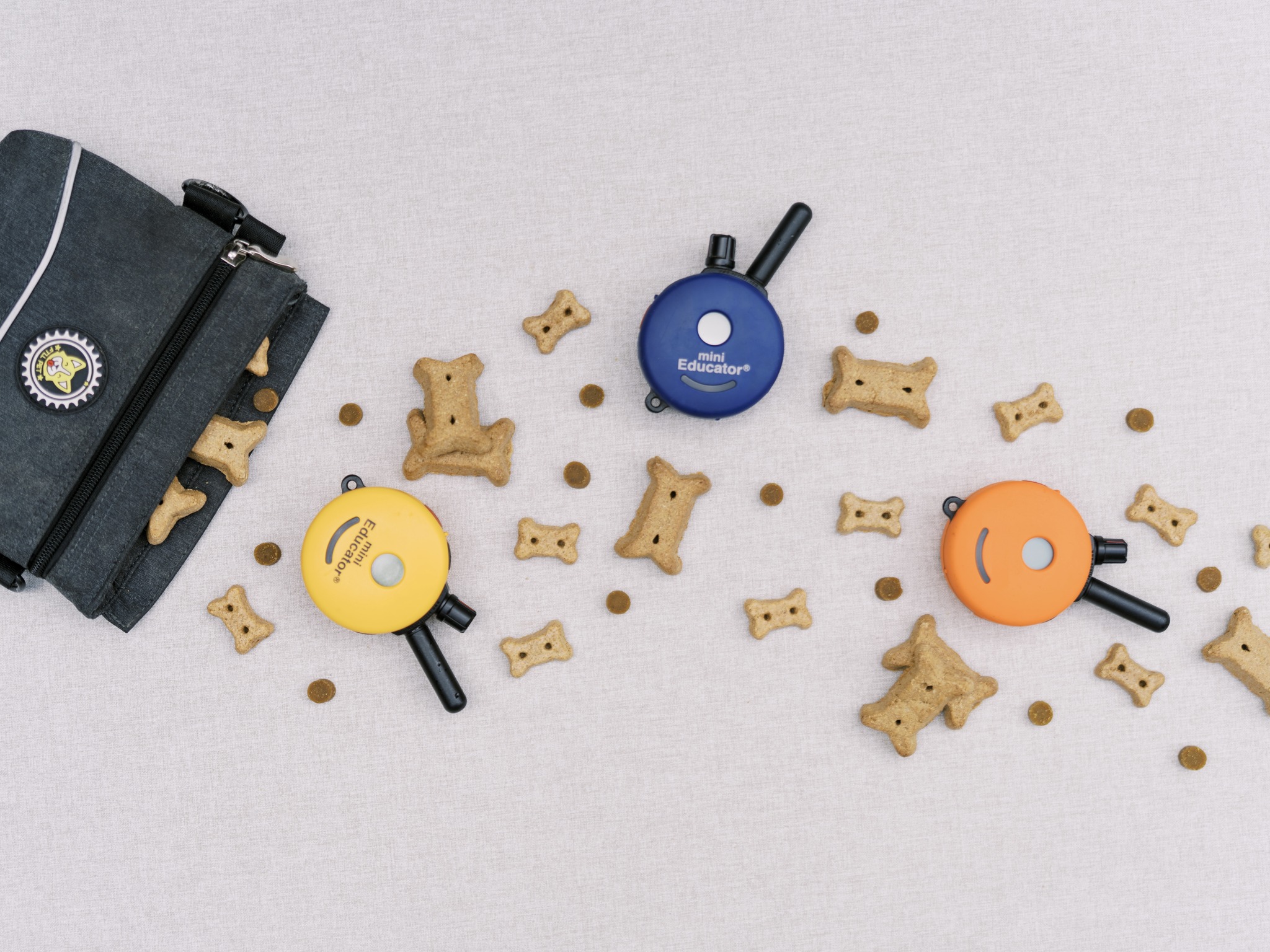
- Tools. Make sure you know how and when to use any training tools included in your dog’s program.
- Boundaries. Know which expectations helped create your dog’s progress.
- Daily routines. Ask how training can fit naturally into meals, walks, doorways, crate time, and other normal parts of the day.
If something from your handoff is unclear, ask.
Good dog training should make communication clearer, not leave you guessing.
Keep the First Days Home Simple
It is tempting to bring your dog home and immediately celebrate by dropping every expectation.
You missed them.
They missed you.
Of course you are happy to see each other.
But affection and structure do not have to compete.
Your dog can get love, attention, play, and time with the family while still keeping the expectations they learned during board and train.
Give Your Dog a Predictable Routine
Predictability can make the transition home easier.
You do not need a minute by minute schedule. Focus on a few routines that happen every day.
That may include:
- Meals. Use simple obedience skills before putting the food down.
- Doorways. Practice waiting rather than rushing through an open door.
- Walks. Reinforce the leash skills your dog learned during training.
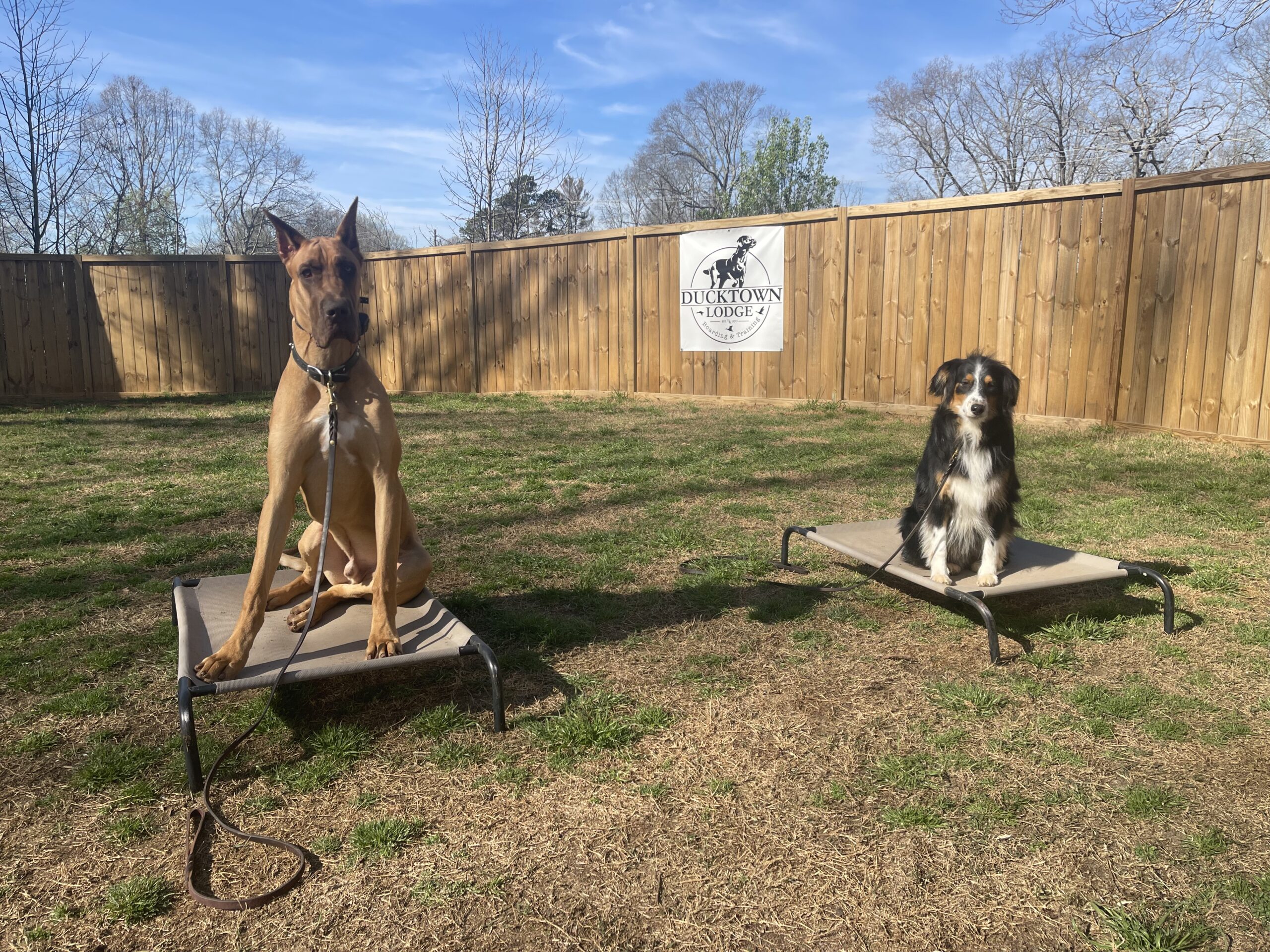
- Place. Use place during normal household activity.
- Crate time. Keep crate routines consistent if they were part of your dog’s training.
- Recall. Practice coming when called in an appropriate, controlled environment.
These are small moments.
But small moments repeated every day are where dog training starts becoming part of normal life.
Consistency Is What Connects Board and Train to Home
Your dog spent time learning what certain commands and expectations mean.
Try not to change the language immediately.
If your trainer taught one word for a behavior and everyone at home starts using three different phrases, you can create unnecessary confusion.
Make Sure Everyone in the House Is on the Same Page
This is one of the easiest ways for dog training at home to become inconsistent.
One person asks the dog to wait at the door.
Another lets the dog rush through.
One person expects place to mean stay there until released.
Someone else releases the dog without realizing it.
Your dog begins receiving different answers to the same question.
Before your dog comes home, make sure everyone understands the basics.
Talk about:
- Which commands your dog knows
- What each command means
- What household boundaries you are keeping
- How the dog is released from a command
- Which training tools are being used
- What to do when the dog does not respond
You do not need every person in the family to become a dog trainer.
You do need reasonable consistency.
Avoid Repeating Commands Over and Over
If you say “sit” five times before your dog responds, your dog can begin learning that the first few repetitions do not matter.
Give commands clearly.
Then follow the training process you were taught.
This is one reason owner education is such an important part of board and train. You should know what to do after giving the command, not simply repeat yourself louder.
Turn Everyday Life Into Dog Training
Here is the good news.
Maintaining dog training at home does not mean scheduling hours of formal practice every day.
Your life already gives you training opportunities.
You just have to notice them.
Practice During Things You Already Do
Think about how many times you interact with your dog during a normal day.
You open doors.
You prepare food.
You go for walks.
You sit down for dinner.
Someone knocks.
You get in the car.
You spend time in the yard.
Each of those moments can reinforce a skill.
For example:
- Ask for a sit before opening the door.
- Practice place while you prepare dinner.
- Reinforce heel during part of your walk.
- Practice recall in a safe environment.
- Ask your dog to wait before getting out of the car.
- Use place when a visitor comes inside.
- Practice calm behavior before putting down a meal.
That is dog obedience training in real life.
You are not constantly drilling your dog.
You are showing them that the skills they learned have a purpose outside the training environment.
Do Not Give Your Dog Every Freedom at Once
Freedom works best when your dog knows how to handle it.
If your dog came home with better boundaries, recall, leash manners, or place work, give those skills time to become established with you before expecting them to hold up everywhere.
Build Freedom as Reliability Grows
Think of freedom as something that expands alongside understanding.
Start in easier situations.
Practice.
Then add a little difficulty.
If that goes well, move forward again.
Your progression might look something like this:
Quiet room. Yard. Driveway. Neighborhood walk. New environment. Higher distractions.
The exact progression will depend on your dog.
The important part is not rushing.
A dog that performs beautifully in your living room may not be ready to give you the same response in a busy park.
That is normal.
Do Not Test Your Dog Just to See What Happens
There is a difference between practicing a skill and setting your dog up for a challenge they are not ready to handle.
You do not need to immediately find the hardest possible distraction and see whether the training “worked.”
Build toward it.
Give your dog successful repetitions first.
Then gradually increase the difficulty.
That is how reliability grows.
Expect Your Dog to Notice the Difference Between You and the Trainer
This surprises some owners.
Your dog may perform a command quickly for the trainer and then hesitate when you ask.
That does not automatically mean your dog only listens to the trainer.
Dogs notice differences in people.
Timing changes.
Body language changes.
Confidence changes.
Your dog has had many repetitions with the trainer. Now they need repetitions with you.
Your Confidence Will Grow With Practice Too
You may feel awkward at first.
That is okay.
Dog training is a skill for humans too.
The more you practice what you learned during the handoff, the more natural your timing and communication should begin to feel.
Do not compare your first few days handling your dog to someone who trains dogs every day.
Focus on becoming clear and consistent.
You and your dog are learning how to use the same language together.
Keep Practicing the Skills That Matter Most
You do not need to practice everything every day.
Think about the skills that matter most to your family’s life.
For one household, that may be leash walking.
For another, recall is the priority.
Another family may need place because visitors regularly come to the house.
Five Skills Worth Working Into Daily Life
Depending on what your dog learned during board and train, these foundational skills can be useful to maintain.
Sit
Sit is simple, but it has countless practical uses.
Practice it before opening doors, crossing streets, putting down meals, or beginning another activity.
Place
Place can help your dog understand how to settle while life continues around them.
Practice while cooking, eating dinner, answering the door, or relaxing with the family.
Heel
You do not need every walk to feel like an obedience competition.
But practicing good leash skills regularly helps keep communication clear when you need it.
Down
Down can be useful when you need your dog to remain settled for a longer period.
Practice in different parts of the house before expecting the same response around bigger distractions.
Come
Recall matters.
Practice it safely and consistently. As your dog’s reliability grows, you can work around more challenging environments based on the training plan you were given.
The goal is not endless repetition.
The goal is keeping important skills familiar.
What If Old Behaviors Start Showing Up Again?
This is the moment when some owners panic.
Your dog pulls on the leash again.
They break place.
They hesitate before responding.
An old behavior you thought was gone suddenly appears.
Do not immediately assume the entire board and train program has disappeared.
A Setback Is Information
Ask yourself a few questions.
Did the environment become harder?
Have expectations become less consistent?
Is someone in the household communicating differently?
Have you stopped practicing a particular skill?
Did you increase freedom too quickly?
Is your dog unclear about what you are asking?
Sometimes a small adjustment is all that is needed.
The key is noticing changes early instead of waiting until frustration builds.
Go Back to an Easier Version
If your dog struggles with a skill in a difficult environment, reduce the difficulty.
Help them succeed again.
Then rebuild.
This is not going backward.
It is training.
A dog that struggles with recall around a major distraction may simply need more repetitions in an easier setting before trying that level again.
Meet your dog where their understanding is and work forward from there.
Keep Adding Real World Distractions Gradually
Your dog does not live in a training bubble.
Eventually, the skills need to work when life gets interesting.
This is where dog training at home begins expanding into dog training everywhere else.
Move From Easy to Hard
Start where your dog can think clearly.
Then gradually introduce new environments and distractions.
You might move from:
- Your living room to the backyard
- The backyard to the driveway
- The driveway to a quiet neighborhood walk
- A quiet walk to a busier location
- Familiar distractions to less predictable ones
Watch your dog.
If a situation is too difficult, create more distance or reduce the challenge.
Progress does not have to happen on anyone else’s schedule.
Real Life Is Where Training Becomes Useful
The point of dog obedience training is not to prove your dog can perform commands.
It is to make life together easier.
Maybe that means walking past another dog without losing control.
Maybe it means opening the front door without worrying about your dog rushing outside.
Maybe it means sitting at a coffee shop with a dog who can settle.
Maybe it means enjoying more freedom because recall has become reliable.
Those are meaningful results.
Use Training Tools the Way You Were Taught
If your board and train program includes a training tool, your handoff should include clear instruction on how to use it.
At Ducktown Lodge, our program may include an e collar as part of off leash training.
The tool should not replace communication.
It is part of the communication system your dog has already learned.
Ask Before You Guess
If you forget how to use a tool or are unsure about timing, contact your trainer.
Do not improvise because you feel embarrassed to ask.
There is nothing wrong with needing a refresher.
In fact, asking early can prevent a small misunderstanding from becoming a bigger source of frustration for you and your dog.
How Much Should You Practice After Board and Train?
Consistency matters more than turning your day into one long training session.
Short, purposeful practice can be woven into your normal routine.
An outside training resource we reviewed for this article makes a similar point, recommending short practice periods and integrating obedience into everyday activities rather than treating maintenance as one long daily drill.
Ducktown’s approach is less about following a universal timer and more about using what your dog learned consistently in real life.
Make Practice Part of the Routine
Instead of asking, “When am I going to find time to train today?” ask:
“Where does training already fit?”
Your morning walk is practice.
Opening the front door is practice.
Dinner is practice.
Having friends over is practice.
Getting into the car is practice.
Calling your dog inside is practice.
Training becomes much easier to maintain when it belongs to your life instead of competing with it.
When Should You Call Your Dog Trainer for Help?
You do not have to wait until everything feels out of control.
If something is not making sense, ask.
That is especially important if:
- Your dog is repeatedly struggling with a skill that was previously reliable.
- You are unsure how to use a training tool.
- A new behavior appears.
- You cannot reproduce what you learned during the handoff.
- Your dog seems confused by a command.
- You are becoming frustrated and do not know what to change.
- A real world situation feels beyond what you are prepared to handle.
A little guidance early can save a lot of frustration later.
At Ducktown Lodge, support does not disappear when your dog leaves the program. Our board and train clients can reach out by text, email, or phone when questions come up.
Because sometimes the dog does not need another two weeks of training.
Sometimes the human just needs a little clarification.
Board and Train Gives You a Foundation. What Happens Next Matters.
A good board and train program can accomplish a lot.
Your dog has had consistent practice. They have learned new skills. They have worked around distractions. They have experienced structure and clear expectations.
Now those skills need a life outside the program.
That is where you come in.
You do not need to be perfect.
You need to be clear.
You need to be reasonably consistent.
You need to practice.
And when something is not working, you need to be willing to ask why rather than assuming everything has failed.
That is how dog training becomes part of your relationship instead of something your dog once did with a trainer.
How Do You Make Dog Training Stick After Board and Train?
Keep it simple.
Use the same language. Keep commands clear and familiar.
Maintain the important boundaries. Do not immediately remove every bit of structure your dog learned.
Practice during real life. Use meals, walks, doors, visitors, car rides, and quiet time as opportunities.
Build distractions gradually. Do not expect your dog to go from the living room to the hardest environment overnight.
Give freedom as reliability grows. Let your dog’s understanding guide the pace.
Pay attention to small setbacks. Address confusion before it becomes frustration.
Ask for help. Your trainer should be a resource after your dog comes home.
Most importantly, remember why you started training in the first place.
It probably was not because you wanted a dog that could perform commands on cue for an audience.
You wanted life together to feel better.
You wanted clearer communication.
You wanted safer walks.
You wanted more confidence.
You wanted to enjoy your dog without constantly wondering what to do next.
That is the part worth maintaining.
Bring the Training Home With Confidence
Sending your dog to board and train is an investment in what life together can become.
But you should not feel like you are handed the leash at pickup and suddenly left on your own.
At Ducktown Lodge, our dog training and board and train in Cumming, GA is designed with the transition home in mind. Owner instruction is part of the process because your confidence matters just as much as the skills your dog learns.
Our training dogs also live and learn within the same calm, low volume boarding environment that defines Ducktown Lodge. Training happens alongside real routines, structure, care, outdoor time, and everyday experiences.
When your dog comes home, the goal is not perfection.
The goal is knowing each other better.
You understand what your dog has learned. Your dog understands what you expect. And both of you have a clearer way to communicate when real life happens.
If you are considering board and train and wondering what happens after those two weeks, ask us.
Seriously.
Let’s talk about your dog. Tell us what is happening now, what you would like life together to look like, and what questions you have about training.
Ducktown Lodge
6140 Dahlonega Highway
Cumming, Georgia
(770) 733 0836
hello@ducktownlodge.com
Meta Descriptions
Recommended: Board and train is only the beginning. Learn how to maintain dog training at home with consistent commands, structure, practice, and clear routines.
Option 2: Learn how to make dog training stick after board and train with simple routines, clear commands, consistency, and real world practice at home.
Option 3: Keep your dog’s board and train progress going at home. Learn how consistency, structure, practice, and clear communication help training last.
Option 4: What happens after board and train? Learn how to maintain dog obedience training at home and turn new skills into lasting everyday habits.
Option 5: Board and train builds the foundation. Learn how dog training at home, consistent routines, and real world practice help your dog’s progress last.
SEO Keyword Phrases: board and train, dog training, dog training at home, dog obedience training, board and train in Cumming GA