Resource Guarding Is Something We Start Thinking About With Our Puppies
Resource guarding in dogs is one of those behaviors that can catch an owner completely off guard. Your puppy has been happily eating out of the same bowl for weeks, and then one day you walk by and notice a stiff body or a look you have not seen before. Maybe your adult dog grabs something they should not have and suddenly does not want you anywhere near it. That is usually when people start worrying.
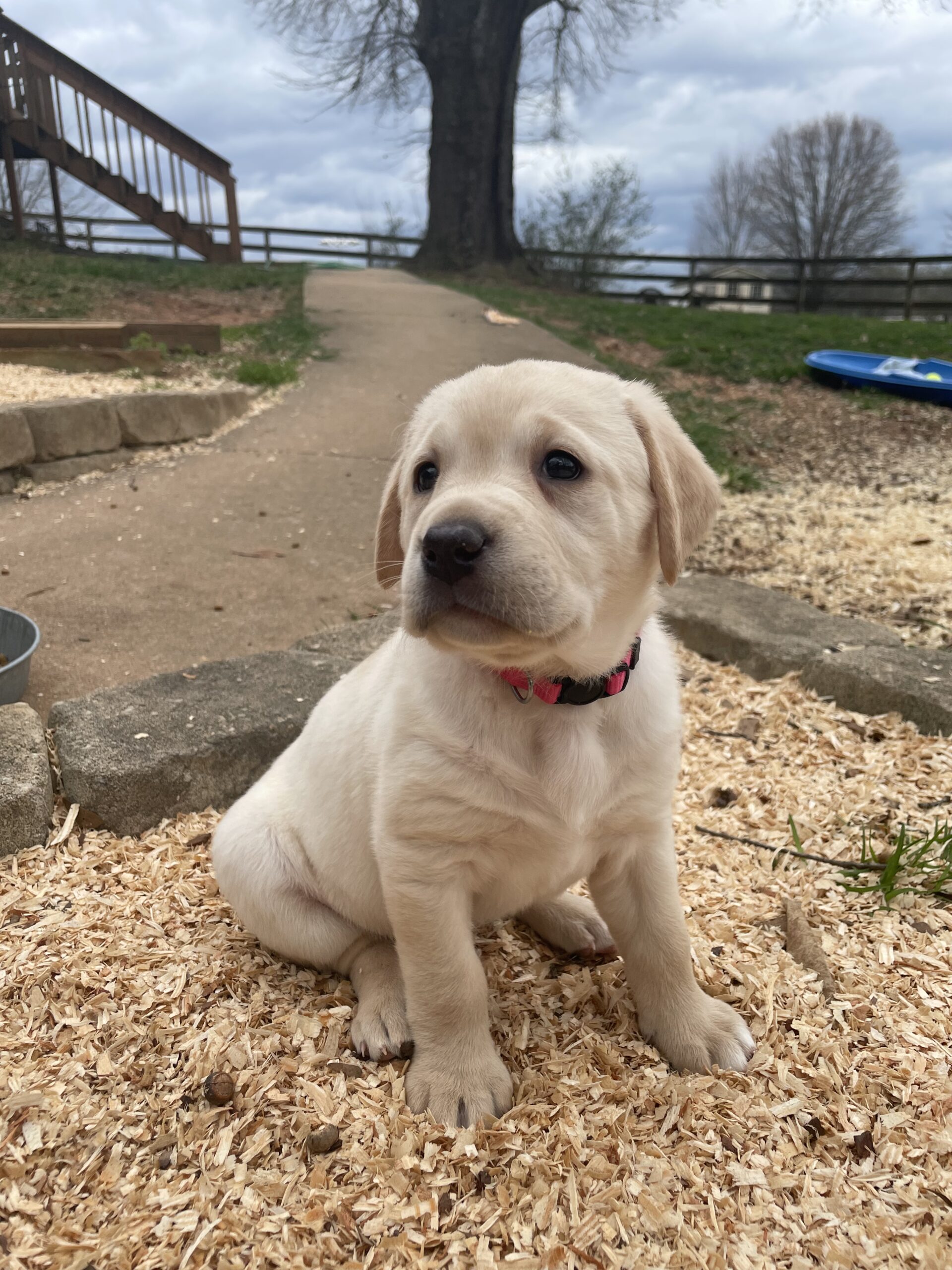
I understand that worry. Before Ducktown Lodge, there was Ducktown Retrievers. We have raised many puppies over the years, and those years taught me how much of dog training starts long before there is a problem to fix. With our puppies, we use Puppy Culture protocols to help build confidence and create good experiences around food, toys, handling, people, and everyday life.
Resource guarding is one of the behaviors I would much rather think about early than wait until a puppy is growling over a bowl.
What We Teach Our Puppies About People and Their Stuff
One of the things I like about the Puppy Culture approach is actually very simple.
I want a puppy to learn that a person walking toward their food does not automatically mean, “Uh oh, she is going to take this away from me.”
I would rather have that puppy think, “Oh good, something else might be coming.”
That difference matters.
If I walk past a puppy eating, I can casually add something good and keep going. I do not need to put my hands in the bowl. I do not need to take the food away to prove that I can. I am creating an association that says people coming near your things can be a good thing.
We use that same thinking with toys and other items puppies value.
What Is Resource Guarding in Dogs?
Resource guarding is exactly what it sounds like. A dog has something they value and does not want to lose it.
It might be food. It might be a bone. It might be a favorite toy.
And sometimes it is something ridiculous.
If you have raised enough puppies, you know exactly what I mean. The sock you would happily throw in the laundry suddenly becomes the most valuable possession on earth because the puppy has it and you want it back.
The important part is not whether we think the item has value.
The dog thinks it does.
What Does Dog Resource Guarding Look Like?
I do not wait for a bite before I consider something worth paying attention to.
There are usually smaller signs first.
You might notice your dog:
- Getting still. They were relaxed until you approached the bowl or toy, and suddenly their body changes.
- Eating faster. Some dogs start gulping their food when a person or another dog gets close.
- Moving away with the item. Your dog picks up the chew and leaves as soon as you approach.
- Hovering over something. Their head or body moves over the item as if they are trying to cover it.
- Giving you a hard look. You can sometimes see the tension before you hear anything.
- Growling or showing teeth. At this point, your dog is giving you a pretty clear message that they are uncomfortable.
- Snapping or biting. This is where I want owners to stop experimenting and get professional help.
I look at all of those behaviors as information.
I want to know what happened before the dog reacted, what they had, who approached, and what happened next.
That tells me much more than simply saying, “This dog is aggressive.”
Why Do Dogs Resource Guard?
I wish there were one answer because it would make dog training a lot easier.
There is not.
Some dogs naturally place a very high value on certain things. Some have experienced competition around resources. Some have learned that when a human approaches, whatever they have is about to disappear.
Sometimes we know exactly where the behavior started.
Sometimes we do not.
That is why I always want to look at the dog standing in front of me instead of making assumptions based on a label.
This Is Why Puppy Training Matters So Much
Raising puppies through Ducktown Retrievers has allowed us to think about these behaviors before they become established habits.
With our puppies, we want resources to feel plentiful rather than scarce.
We want human hands and human approaches to predict good things.
That can mean providing plenty of appropriate toys and resources. It can mean walking by a puppy’s food and adding something better. It can mean teaching a puppy to trade one object for something else instead of chasing them through the house and prying it out of their mouth.
None of this is particularly flashy dog training.
That is probably why I like it.
It is simply teaching a puppy what to expect from us.
How Puppy Culture Helps Us Prevent Resource Guarding
Puppy Culture has influenced the way we raise our puppies because so much of it centers on the puppy’s emotional development.
We are not waiting for a problem and then asking how to correct it.
We are asking what we can teach the puppy now that will make life easier later.
We Make Resources Feel Abundant
With a litter of puppies, I do not want them growing up believing that everything good is scarce and worth fighting over.
Providing plenty of appropriate resources gives puppies opportunities to eat, chew, explore, and play without constantly competing for access.
That does not guarantee a dog will never resource guard.
Dogs are individuals.
But it helps us create an early environment where competition does not have to become the normal way of getting something valuable.
We Add Something Good
This is one of my favorite simple exercises.
A puppy is eating.
I approach without crowding them, toss or add something really good, and move along.
That is it.
I am not reaching into the bowl.
I am not taking the bowl away.
I am not testing the puppy.
I want my approach to predict addition instead of loss.
We repeat that experience and let the puppy learn from it.
We Teach Puppies to Trade
Trading is another skill I want puppies to understand.
If a puppy has something and I need it back, I can offer something better.
The lesson becomes, “Giving something to Lucinda does not mean everything good disappears.”
Sometimes they may even get the original item back if it is safe for them to have.
That is a much different interaction than chasing a puppy around the house while yelling, “Drop it!”
And yes, most of us have probably done the second one at some point.
What I Do Not Recommend for Resource Guarding
I do not recommend repeatedly taking your puppy’s food away just because someone told you that you need to show them who is in charge.
Think about what you are actually teaching.
Every time you approach, the good thing disappears.
Then we are surprised when the dog starts worrying about us approaching.
That does not make much sense to me.
Do Not Punish the Warning and Ignore the Reason
If a dog growls, I pay attention.
That does not mean I want a dog growling at people over food.
Of course I do not.
But the growl tells me something.
If I focus entirely on stopping the noise without asking why the dog felt the need to make it, I may miss the actual problem.
Resource-guarding dog training should address the underlying behavior, not simply make the warning quieter.
What If Your Adult Dog Already Resource Guards?
Prevention with puppies is wonderful, but plenty of people reading this already have an adult dog who guards things.
You are in a different place, and that is okay.
We start with what is happening now.
What does your dog guard?
How close can you get before their body changes?
Have they ever snapped or bitten?
Are children in the home?
Does the behavior happen around other dogs?
Has it gotten worse?
Those answers help determine what happens next.
Management Comes Before Training
Sometimes the first step in dog training is not a training exercise at all.
It is changing the environment.
I have worked with a dog who liked getting dangerous things out of the kitchen and then did not want to give them back. Before we worried about perfecting a command, we stopped giving the dog access to the kitchen.
Simple.
Not glamorous.
But it made everyone safer and stopped the dog from practicing the same behavior again and again.
Management might mean feeding dogs separately, putting tempting objects away, limiting access to a particular room, or temporarily removing a chew that repeatedly creates problems.
Once things are calmer, we have room to actually train.
How Resource Guarding Dog Training Can Help
When I work with resource guarding, I am not looking for one magic command.
I am looking at the whole picture.
The dog’s behavior matters. So does the environment. So does the way the people in the home respond.
This is where everyday dog training becomes important.
A dog who understands how to go to a bed, leave something alone, drop an object, come when called, and respond to clear direction gives us more ways to handle real situations without everything becoming a struggle.
Training the Human Is Part of the Job
I say this all the time.
We have to train the humans too.
I can work with your dog and make wonderful progress, but eventually your dog goes home with you.
You need to know what I did.
You need to know why I did it.
And you need to know what to do when the dog steals the sock at 7:30 on a Tuesday morning and I am not standing in your kitchen.
That is the part of dog training that matters to me.
When Resource Guarding Needs Professional Help
There is a point where I do not want someone trying things they saw in a video online.
If your dog has bitten someone, attempted to bite, guards resources around children, or the behavior is becoming more intense, please get professional help.
And if the behavior appeared suddenly, especially in an adult dog, talk with your veterinarian too. A sudden behavior change can sometimes have a medical component that needs to be considered.
You should not have to be afraid to walk past your dog’s food bowl in your own home.
Resource Guarding Dog Training at Ducktown Lodge
Ducktown Lodge grew out of years of living with dogs, raising puppies through Ducktown Retrievers, and learning that the little things we do every day make a big difference.
That experience shapes how we train today.
We keep our dog training program intentionally small because I want to know the dogs I am working with. I want to see the little changes in body language. I want to know what makes that particular dog uncomfortable and what helps them settle.
We use balanced training, structure, positive reinforcement, appropriate tools when needed, and a lot of observation.
But I am never interested in correcting a behavior without understanding what is driving it.
Dog Training in Cumming, GA That Has to Work at Home
Whether we are working on resource guarding, leash manners, impulse control, or basic obedience, my question is always the same.
Will this actually help you live with your dog?
That is the standard.
A dog performing beautifully for me does not mean much if I cannot help you understand how to get the same communication at home.
Our board and train program at Ducktown Lodge is intentionally limited to a small number of dogs so training can stay individual. We work on real life skills, and when your dog goes home, we work with you too.
Because that is where the training has to last.
You Can Start With a Conversation
If your dog is resource guarding, you do not have to show up at Ducktown Lodge with the right terminology or a diagnosis.
Just tell me what is happening.
Tell me what your dog guards.
Tell me what you see when you approach.
Tell me what you have already tried.
We can start there.
Sometimes you need a training plan. Sometimes you need better management. Sometimes you need someone experienced to look at the situation and help you understand what your dog has been trying to tell you.
That is what I want Ducktown Lodge to be for our clients.
A place where you can ask the question without feeling judged for asking it.
If you are looking for resource-guarding dog training or dog training in Cumming, GA, reach out when you are ready.
Start with a conversation, not a contract.
Ducktown Lodge
6140 Dahlonega Highway
Cumming, GA 30928
(770) 733-0836
hello@ducktownlodge.com