Successful Dog Training Starts With Clarity, Not Just Commands
Dog training works when your dog understands what you are asking and has enough consistent practice to respond when real life gets involved. Teaching sit, down, place, or heel matters. But commands alone do not create a well-trained dog. Clear communication, structure, repetition, trust, and practice all have to work together. That is what turns a training exercise into a skill your dog can actually use.
Dog training works best when dogs get clear communication, consistent expectations, daily structure, and real-world practice. Lasting success also depends on owners understanding the training, reinforcing learned skills, and building trust through everyday routines at home and steady follow-through.
So, What Makes Training Last?
That is the question we are going to answer. We will look at what successful dog training really requires, why a dog can understand a command in one setting and struggle with it somewhere else, and how structure, consistency, trust, and real-world practice fit together.
We will also talk about something that matters just as much as training the dog: helping the owner understand how to communicate clearly too.
Because the goal is not simply a dog that performs well for a trainer. It is a dog and owner who understand each other better when everyday life takes over.
What Actually Makes Dog Training Work?
Successful dog training is not one command, one technique, or one training tool.
It is a process.
Your dog needs to understand what you want. You need to know how to communicate it. Then both of you need enough repetition for that communication to become familiar.
That sounds simple. In practice, several pieces have to come together.
Clear Communication Comes First
Think about how confusing it would be if the rules at work changed depending on the day.
Monday, one thing is expected. Tuesday, the rules change. Wednesday, something that was fine yesterday suddenly gets a completely different response.
Dogs can experience the same confusion when expectations are not clear.
Good dog training removes as much of that guesswork as possible.
A dog needs to learn what a command means, what behavior is expected, and what happens when they make the right choice.
Clear communication does not mean constantly correcting your dog. It means becoming predictable enough that your dog can understand you.
That clarity is one of the foundations of dog obedience training.
Consistency Turns a Lesson Into a Skill
A dog doing something correctly once does not necessarily mean the skill is learned.
It means you have a starting point.
Repetition helps your dog understand that an expectation is not random. It applies again tomorrow. It applies when another family member gives the command. Eventually, it applies in more challenging situations too.
Consistency can include:
- Using commands clearly. If you use a command, allow your dog to respond rather than repeating it until the word becomes background noise.
- Keeping expectations steady. If a behavior is not allowed today, allowing it tomorrow can make the boundary harder for your dog to understand.
- Practicing regularly. Short moments throughout normal life can reinforce training without making every day feel like a formal training session.
- Getting the household involved. Training becomes harder when every person communicates with the dog differently.
Consistency does not require perfection.
It requires enough predictability for your dog to understand what you mean.
Dog Obedience Training Is About More Than Commands
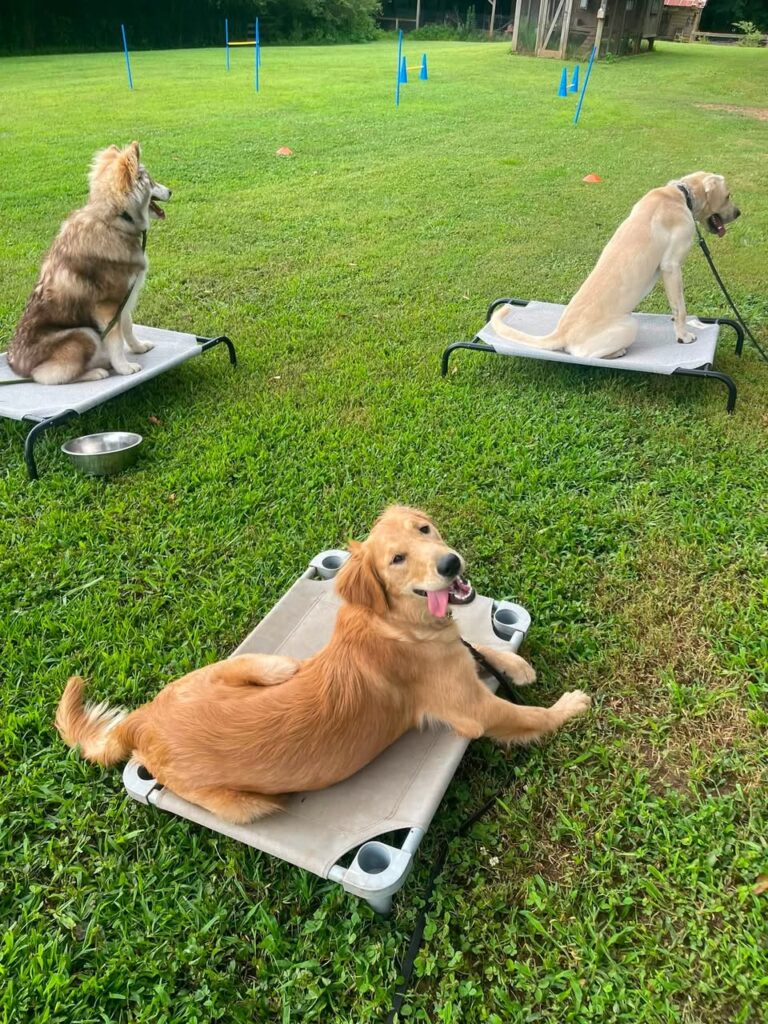
Sit. Down. Place. Heel. Come.
These are important skills, but successful dog obedience training goes much deeper than knowing a list of words.
The real question is whether your dog understands how to respond when those skills are needed.
Knowing a Command Is Not the Same as Understanding It
Maybe your dog sits beautifully in the kitchen.
Then you walk outside and someone passes with another dog.
Suddenly, that perfect sit seems to have disappeared.
Did your dog forget?
Not necessarily.
The environment changed.
Dogs need opportunities to practice skills in different places and around different levels of distraction. A command learned in a quiet room is the beginning. It is not always the finished product.
This is one reason real world dog training matters so much.
Reliable Dog Training Requires Practice Around Real Life
Life does not happen in a quiet training room.
Doorbells ring. Visitors arrive. Cars pass. Dogs bark. Kids run through the house. You need to load your dog into the car. Someone walks past you on the sidewalk.
Those everyday situations are where training becomes useful.
At Ducktown Lodge, we believe dog training should prepare dogs for the moments owners actually encounter.
That can mean practicing skills around situations such as:
- Someone knocking at the door
- Visitors entering the home
- Walking around other dogs
- Getting into and out of the car
- Waiting appropriately in public
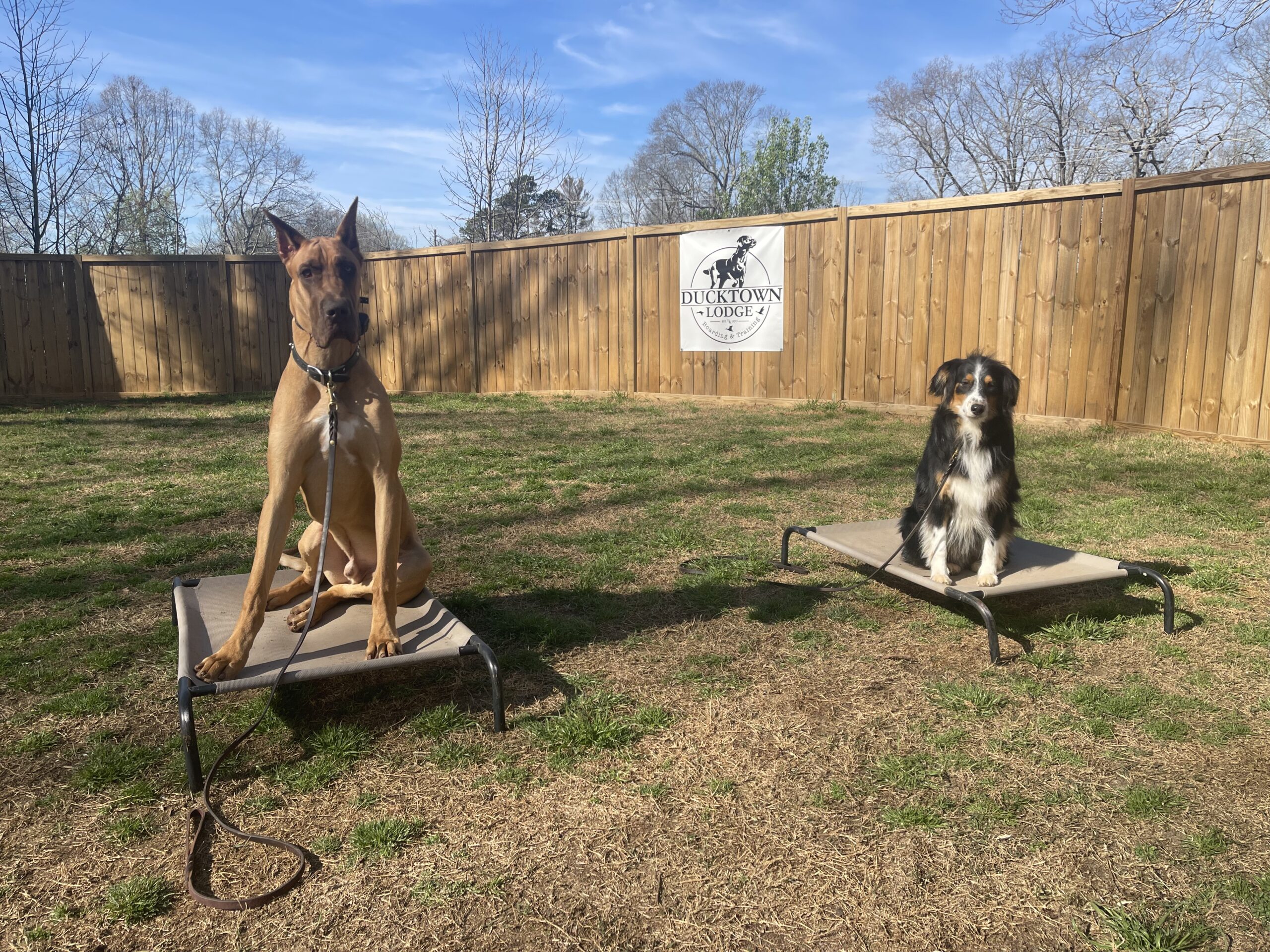
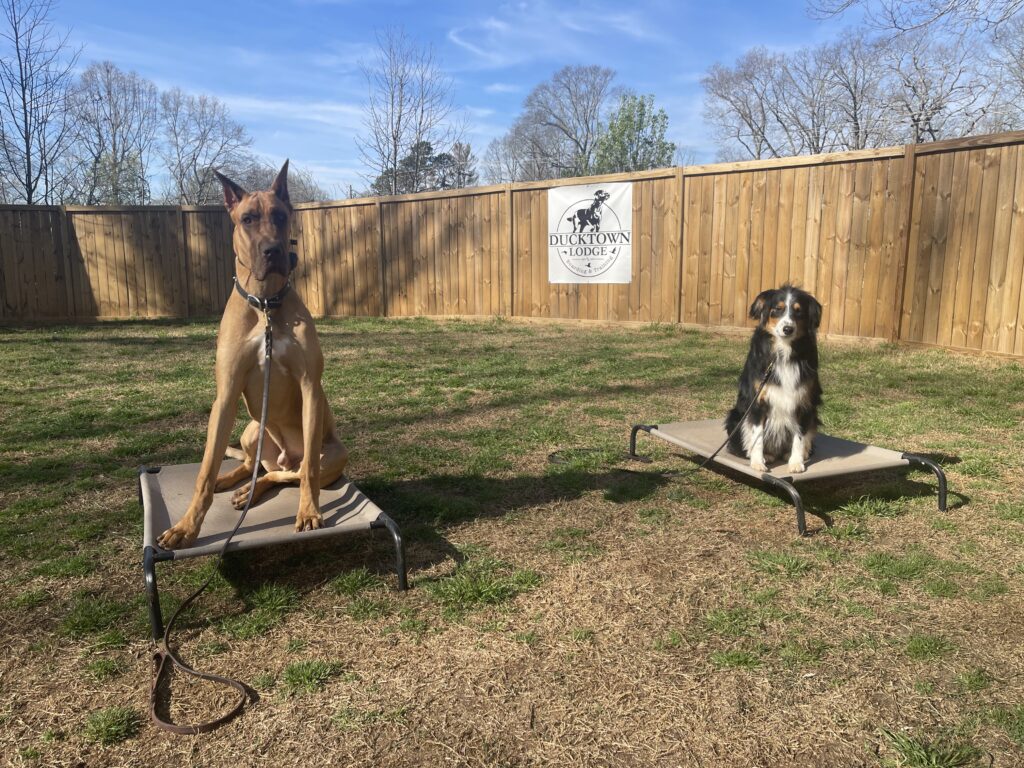
- Holding place while activity happens nearby
- Coming when called around distractions
- Walking politely on a leash in a new environment
A dog does not need to perform for an audience.
Your dog needs skills that make everyday life clearer, safer, and easier to navigate.
Why Distractions Matter in Dog Training
Have you ever wondered, “Why does my dog listen perfectly at home but ignore me everywhere else?”
Distractions are often part of the answer.
Your living room may be easy. A busy sidewalk is harder. A new park with unfamiliar smells may be harder still.
Successful dog training gradually teaches the dog how to respond as the environment becomes more challenging.
The goal is not to throw a dog into the hardest situation possible and demand perfection.
We build the skill first. Then we add difficulty.
That allows the dog to succeed while building reliability over time.
Structure Gives Dogs Clear Expectations
The word structure can sound rigid.
It does not have to be.
Structure simply gives your dog a clearer picture of what happens next and what is expected.
For many dogs, that predictability can make daily life easier.
What Does Structure Mean in Dog Training?
Structure can be woven into ordinary routines.
You might ask your dog to wait before walking through a doorway. You may use place while preparing dinner. A walk may include expectations about leash manners. Crate time can become part of a predictable daily routine.
Other examples include:
- Doorways. Your dog learns to wait instead of rushing through.
- Leash walking. The walk becomes something you do together instead of a constant pulling contest.
- Place. Your dog learns where to settle when activity is happening around the house.
- Crate routines. The crate becomes part of a consistent routine instead of something used only when everyone leaves.
- Greetings. Your dog learns what to do when people arrive.
- Recall. Coming when called becomes an expectation that is practiced regularly.
These small moments matter because they happen over and over again.
That makes everyday life one of your best opportunities to reinforce dog training.
Structure Is Not the Same as Control
Good training is not about controlling every move your dog makes.
Dogs should still get to be dogs.
They can sniff. Play. Explore. Rest. Be silly. Enjoy their people.
Structure simply creates boundaries around the moments when clear expectations matter.
When a dog knows what to expect, there is less guessing.
When an owner knows what to ask for, there is less frustration.
That clarity can change the relationship on both ends of the leash.
Why Trust Matters in Successful Dog Training
Training is communication.
And communication works better when trust exists.
At Ducktown Lodge, we do not look at dog training as a process of creating perfect obedience robots. We want dogs to understand what is being asked of them, and we want their owners to understand how to communicate those expectations clearly.
The relationship matters.
Training Should Strengthen Communication
Many frustrating moments between dogs and their owners come down to a communication gap.
The owner thinks the dog should know what to do.
The dog is not quite sure what the owner wants.
Both become frustrated.
Training gives you a shared language.
You begin to understand how to ask for a behavior clearly. Your dog begins to understand what that request means.
Over time, you spend less energy guessing.
That can make everything from walks to visitors to quiet evenings at home feel different.
Good Dog Training Builds Owner Confidence Too
Dogs are not the only ones learning.
Owners need support too.
Maybe your dog pulls on walks. Maybe recall has never felt reliable. Maybe you struggle to get your dog to settle when guests arrive.
Needing help with those things does not mean you need a lecture.
You need a plan you understand.
Good dog training should help you become more confident about what you are asking your dog to do and how to respond when things do not go perfectly.
Training should leave you with more clarity, not more questions.
Why One Size Fits All Dog Training Falls Short
Dogs are individuals.
A young puppy is not the same as an adult dog with years of established habits. A confident dog may respond differently than a sensitive dog. One dog may pick up a skill quickly while another needs more time and repetition.
That matters.
Dogs Learn at Different Speeds
Several things can influence how a dog progresses through training:
- Age. Puppies and adult dogs can have very different needs.
- Temperament. Some dogs are naturally more confident while others need additional time to adjust.
- Past experiences. What a dog has already learned can affect how new skills are introduced.
- Previous training. Some dogs arrive with a strong foundation while others are starting from the beginning.
- Environment. A dog may behave very differently at home than in an unfamiliar place.
- Distractions. Some dogs find certain sights, sounds, people, or animals more difficult to work around.
- Owner goals. Not every family needs exactly the same outcome.
That is why dog training should never feel like an assembly line.
The Training Plan Should Fit the Dog
At Ducktown Lodge, we intentionally work with only a few training dogs at a time.
That matters to us.
Smaller numbers give us more opportunity to observe the dog, work at an appropriate pace, and provide individual attention.
The dog in front of us determines what needs attention.
Not a stopwatch.
Not a cookie cutter checklist.
The goal is meaningful progress that fits the dog and the family waiting at home.
Progress Matters More Than Performance
A dog can look impressive for a video and still struggle with everyday life.
We care more about what happens when real life shows up.
Can you enjoy a walk together?
Can your dog settle?
Can you communicate clearly when someone comes to the door?
Can you call your dog and get a reliable response?
Can you take your dog somewhere without feeling like every outing is a battle?
Those outcomes may not look flashy.
They can make a tremendous difference in everyday life.
Why Real World Practice Makes Dog Training More Reliable
Training has to leave the training environment eventually.
A dog that only practices in one predictable location may struggle when the surroundings change.
Real-world practice helps bridge that gap.
Dogs Need to Practice Where Life Actually Happens
At Ducktown Lodge, our board and train program includes work in everyday situations and off property sessions.
There is a reason for that.
Dogs need opportunities to practice around changing environments.
The lesson becomes more meaningful when the dog learns that heel still means heel somewhere new. Place still means place when something interesting is happening. Recall still matters when there is something else the dog would rather investigate.
That is how a skill begins becoming more reliable.
Building Reliability Takes Time
Reliable dog training is a progression.
A simple way to think about it is:
Learn the skill. Practice the skill. Add distractions. Change the environment. Keep reinforcing the expectation.
You would not teach someone to drive in an empty parking lot for one afternoon and then assume they were ready for every road condition.
Dog training is similar.
We first help the dog understand.
Then we gradually ask the dog to use that understanding when the situation becomes more challenging.
What Reliable Training Looks Like in Everyday Life
Reliable training does not have to look dramatic.
You may notice it when your dog starts checking in with you during a walk.
You may notice that getting out the front door is calmer.
You may call your dog away from something interesting and get a response.
Your dog may settle on place while someone visits instead of spending the entire time overwhelmed by the activity.
These are the moments that matter.
The best dog training often shows up as everyday life simply becoming easier.
The Human Side of Dog Training Matters Just as Much
You can send your dog to an excellent dog trainer.
You can invest in a board and train program.
You can build a strong foundation.
But eventually, the leash comes back to you.
That is why owner education matters.
Your Dog Is Learning From You Every Day
Training does not only happen when you announce that it is time to practice.
Your dog is learning throughout the day.
If you ask for a boundary and then abandon it, your dog learns something.
If you calmly reinforce the same expectation, your dog learns something from that too.
Dogs notice patterns.
That is why everyday interactions matter so much.
The goal is not to turn your entire life into a dog training session.
It is to understand that the small things you do consistently can support the bigger things your dog has learned.
A Good Dog Trainer Should Teach the Owner Too
A trainer should not hand your dog back and leave you wondering what to do next.
You need to understand the commands.
You need to understand the tools being used.
You need to know what the expectations should look like at home.
And you need a chance to practice.
At Ducktown Lodge, owner instruction is part of our board and train program because the dog and owner eventually need to work as a team.
The goal is not for us to say, “Look what we can make your dog do.”
The goal is for you to say, “I understand how to communicate with my dog now.”
That difference matters.
Training Is a Partnership
Successful dog training involves the dog, the trainer, and the owner.
The trainer can teach and strengthen skills.
The dog can learn those expectations through repetition and practice.
The owner carries that communication into everyday life.
When all three pieces connect, training becomes much more than a temporary change in behavior.
It becomes a shared language between you and your dog.
Does Board and Train Really Work?
Yes, board and train can create a strong training foundation.
But it is important to understand what a board and train program can do and what still needs to happen afterward.
A good program should not depend on unrealistic promises.
It should prepare both the dog and owner for what comes next.
What Board and Train Can Accomplish
An immersive environment gives dogs consistency.
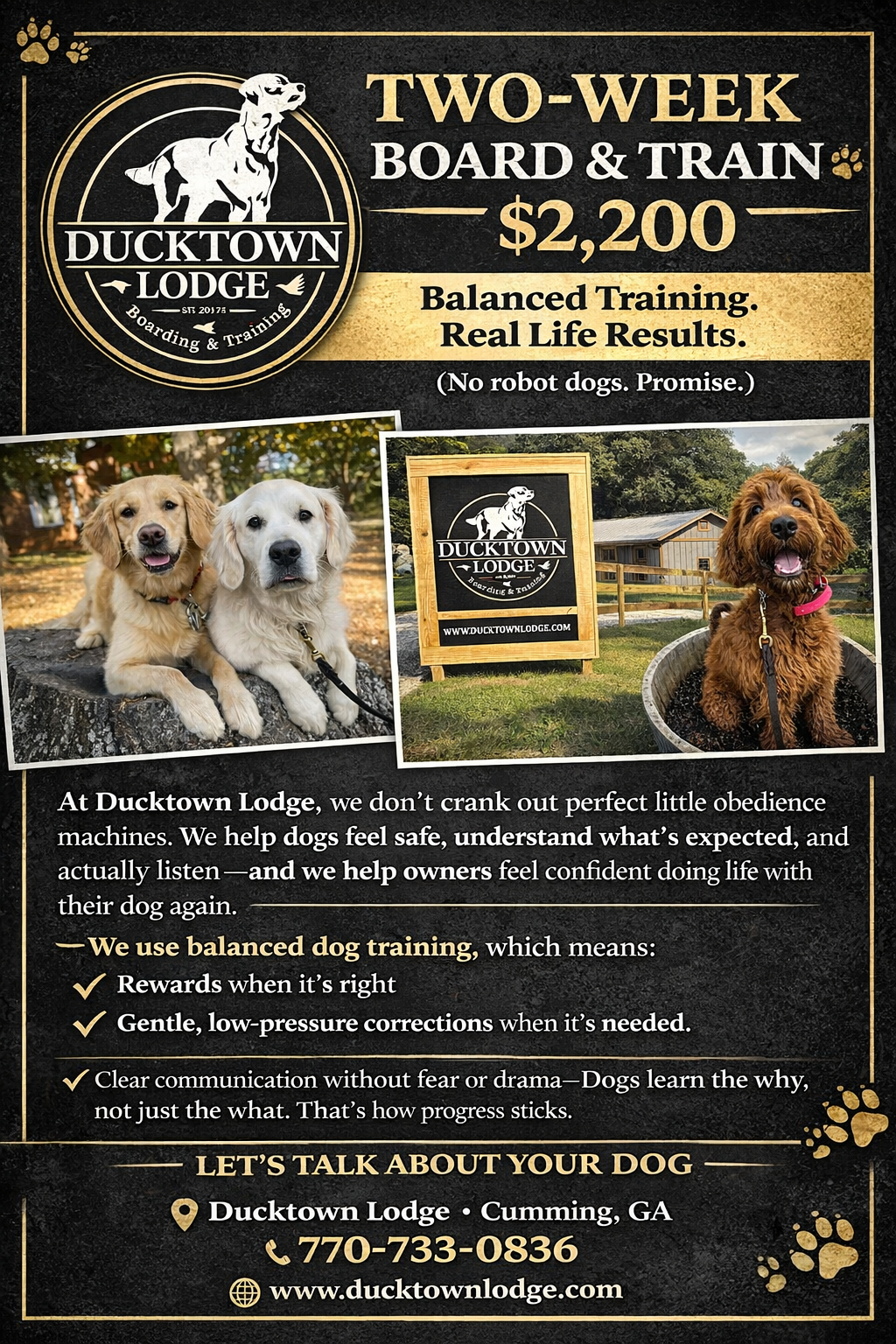
At Ducktown Lodge, our two week board and train program is customized around the individual dog and includes training in a real environment.
Depending on the dog and training goals, the program can include:
- Foundational obedience
- Sit, down, place, and heel
- Advanced leash work
- Off leash obedience
- Recall
- Structured daily routines
- Distraction work
- Real world training situations
- Off property training sessions
- Baseline behavior work when needed
- Owner instruction during the take home session
Because training is integrated into the dog’s daily routine, there are opportunities to practice throughout the day rather than limiting learning to one isolated session.
What Board and Train Cannot Do for You
Board and train is not magic.
Your dog does not come home with a permanent switch that can never be affected by what happens next.
Training creates a foundation.
The owner still has an important role.
That is why we believe it is better to be honest about training than promise instant perfection.
Dogs need consistency. Owners need to understand what their dog learned. Everyone needs time to adjust when the dog returns home.
That does not mean the training did not work.
It means training is a relationship, not a finished product sitting in a box.
The Handoff Is Part of the Training
The day your dog comes home matters.
At Ducktown Lodge, our board and train program includes a take home session because we want owners to understand how to work with the dog that is coming back through their front door.
We explain the tools, expectations, commands, routines, and next steps.
You should leave with more than a trained dog.
You should leave knowing what to do.
And that brings us to the next part of this conversation.
What Makes Dog Training Successful Long Term?
There is no single secret to successful dog training.
It is the combination of several simple things done well and done consistently.
Clarity matters. Your dog needs to understand what you are asking.
Consistency matters. Expectations cannot change every time the situation changes.
Structure matters. Everyday routines give dogs opportunities to practice what they know.
Real world practice matters. Skills need to work beyond the quiet place where they were first taught.
Trust matters. Training should improve communication between you and your dog.
Owner involvement matters. Your dog may learn the skills with a trainer, but you are the person who will share everyday life with them.
That is what makes dog training work.
It is not perfection.
It is clarity repeated often enough that both dog and owner know what comes next.
And once your dog completes a board and train program, another important question begins.
How do you keep all of that progress going once your dog is back home?
That is exactly where we are headed in Part Two of this series: How to Make Dog Training Stick at Home After Board and Train.
You Do Not Have to Figure Out Dog Training Alone
Maybe you have tried training on your own and feel overwhelmed by conflicting advice. Maybe your dog knows some commands but struggles when distractions appear. Or maybe everyday life simply feels harder than you want it to.
You do not need more noise.
You need clarity.
At Ducktown Lodge, our approach to dog training in Cumming, Georgia is personal because dogs are personal. We keep our training numbers small, work with dogs in real situations, and help owners understand how to continue the work when their dog comes home.
The goal is not a perfect dog.
It is a dog you understand better and a relationship that feels clearer.
Imagine walks where you are not constantly fighting the leash. A dog that understands when it is time to settle. Recall you can feel more confident about. Boundaries that make sense to both of you.
Most of all, imagine knowing what to do instead of wondering whether you are doing everything wrong.
That is what good training should give you.
Let’s talk about your dog. Tell us what life looks like now and what you would like it to look like. We will help you decide what kind of training support makes sense.
Ducktown Lodge
6140 Dahlonega Highway
Cumming, Georgia 30928
(770) 733 0836
hello@ducktownlodge.com