
Why a Puppy Socialization Checklist Matters More Than Most Owners Realize
A puppy socialization checklist gives new dog owners a roadmap for helping their puppy grow into a confident, adaptable adult dog. Puppy socialization is one of the most important parts of puppy development. The experiences a puppy has during the first few months of life help shape how they respond to people, places, sounds, and new situations for years to come.
A puppy socialization checklist helps puppies build confidence through positive exposure to people, places, sounds, and daily experiences. Focus on safe, enjoyable interactions that teach your puppy the world is a comfortable place while supporting healthy puppy development and long-term confidence.
Socialization Starts Before Your Puppy Comes Home
As AKC breeders at Ducktown Retrievers, we have spent years raising Labrador Retriever puppies and helping families start with a strong foundation. Every puppy in our program is hand-raised and introduced to age-appropriate experiences designed to build confidence and curiosity. We utilize AKC educational resources along with years of hands-on experience raising puppies.
We believe early puppy socialization begins with the breeder. A puppy should not spend the first eight weeks of life simply eating and sleeping. Those early weeks are an opportunity to introduce puppies to sounds, surfaces, handling, people, and everyday experiences. While early exposure creates an advantage, we have also helped many puppies that received little or no developmental exposure. The right approach can help dogs build confidence at any stage of life.
Puppy Socialization Checklist for New Dog Owners
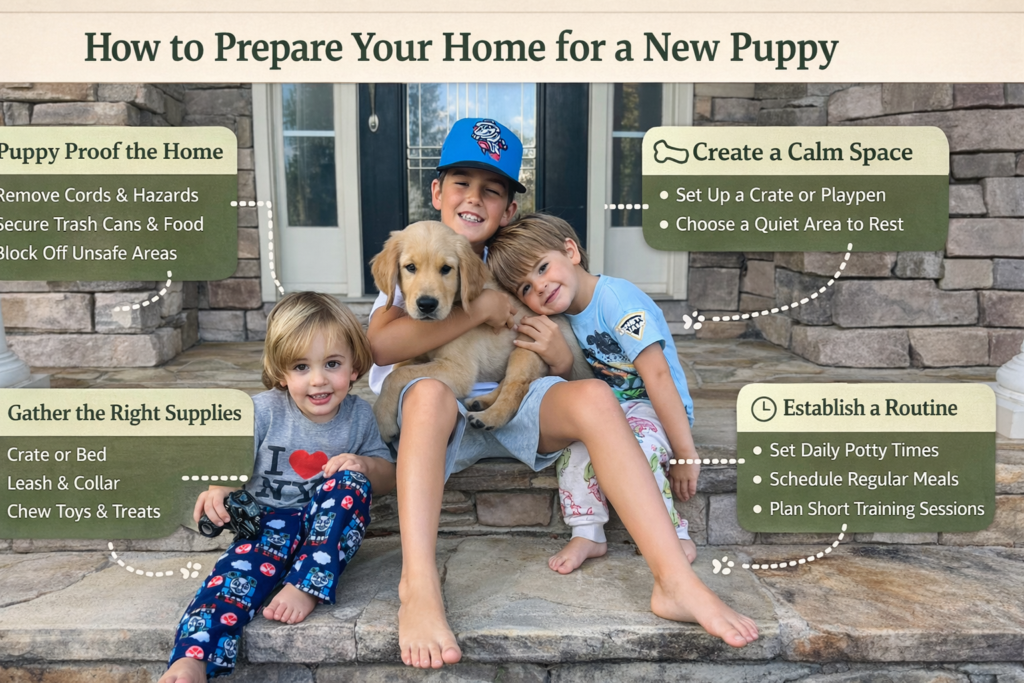
A puppy socialization checklist is not about overwhelming your puppy with endless experiences. It is about helping them learn that new things are safe and manageable.
People Every Puppy Should Meet
Your puppy should experience a wide variety of people during their development.
- Children: Supervised interactions that are calm and positive.
- Men and Women: Different voices, appearances, and movements.
- Older Adults: Including people who move differently.
- People Wearing Hats: Hats can look strange to young puppies.
- People With Glasses: Visual differences matter to puppies.
- People Carrying Bags: Help puppies learn these objects are normal.
- People Using Walkers Or Wheelchairs: Exposure creates confidence.
The goal is not to force interaction. Let your puppy observe, investigate, and engage at their own pace.
Places Every Puppy Should Experience
Puppies benefit from exposure to a variety of environments.
- Neighborhood Streets
- Parks
- Pet Friendly Stores
- Veterinary Clinics
- Outdoor Shopping Areas
- Parking Lots
- Friend’s Homes
- Car Rides
Each new location helps expand your puppy’s comfort zone and builds adaptability.
Sounds Every Puppy Should Learn To Ignore
Many adult fears begin when puppies never learn that common sounds are harmless.
- Vacuum Cleaners
- Doorbells
- Televisions
- Traffic Sounds
- Lawn Equipment
- Thunder Recordings
- Construction Noise
- Kitchen Appliances
Introduce sounds gradually. Pair them with positive experiences whenever possible.
Surfaces And Environments That Build Confidence
Different surfaces help puppies develop physical and emotional confidence.
- Grass
- Concrete
- Gravel
- Wood Floors
- Decks
- Rubber Mats
- Stairs
- Uneven Ground
A puppy that learns to confidently navigate different surfaces is often more comfortable exploring new environments later in life.
Puppy Handling Exercises Every Dog Should Experience
Many future challenges can be prevented through gentle handling exercises.
- Touching Paws
- Checking Ears
- Examining Teeth
- Gentle Grooming
- Brushing
- Nail Trim Preparation
- Wearing A Collar
- Leash Introduction
These exercises help prepare puppies for veterinary visits, grooming appointments, and daily life.
Why Early Puppy Socialization Starts With The Breeder

Many owners assume puppy socialization begins when they bring their puppy home. In reality, some of the most important developmental experiences happen long before that day arrives.
How We Socialize Labrador Retriever Puppies At Ducktown Retrievers
At Ducktown Retrievers, our puppies are raised as part of our daily lives. They are exposed to household sounds, different textures, people, handling exercises, and age-appropriate challenges designed to encourage confidence.
We do not simply raise puppies. We actively participate in their puppy development.
Every interaction teaches a puppy something. Our goal is to ensure those lessons help create curious, confident dogs that are prepared for life with their new families.
Hand-raised Puppies Learn Differently
Hand raising puppies creates opportunities for intentional socialization every day.
Puppies learn through experience. They learn through handling. They learn through observation. They learn through exploration.
The more positive experiences they have during their developmental stages, the stronger their foundation becomes.
Using AKC Educational Resources To Support Puppy Development
AKC educational resources provide valuable guidance on puppy development and puppy socialization. We use these resources alongside years of practical experience raising Labrador Retriever puppies.
Combining education with hands-on experience allows us to create thoughtful developmental opportunities that support long-term success.
Puppy Socialization Enhances a Dogs Development
Not every puppy gets the ideal start.
Some puppies come from environments where little thought was given to socialization. Others may have had limited exposure due to circumstances beyond the owner’s control.
Signs Of Poor Puppy Socialization
Common signs may include:
- Fear Of New People
- Fear Of New Places
- Sensitivity To Sounds
- Lack Of Confidence
- Difficulty Adapting To Change
- Excessive Caution In New Situations
These challenges do not mean a dog is broken. They simply indicate areas where confidence needs to be developed.
Can Older Puppies Still Be Socialized?
Absolutely.
While early puppy socialization is ideal, learning does not stop after puppyhood. Dogs continue learning throughout their lives.
We have worked with puppies and young dogs that received little developmental exposure early on. Through patience, structure, and positive experiences, many of those dogs learned to become far more comfortable navigating the world.
Helping Puppies Build Confidence Later In Life
Confidence grows through repetition and success.
Small wins matter.
A successful trip to a new location. A calm interaction with a stranger. Walking across an unfamiliar surface.
These experiences may seem small, but together they create meaningful progress.
How To Socialize A Puppy Without Creating Fear
One of the biggest mistakes owners make is trying to do too much too quickly.
Good puppy socialization should build confidence, not overwhelm it.
Watch Your Puppy’s Body Language
Your puppy will tell you how they feel.
Look for signs of confidence:
- Relaxed posture
- Curiosity
- Willingness to explore
- Soft body language
Watch for signs of stress:
- Tucked tail
- Excessive panting
- Avoidance
- Freezing
- Trembling
Your puppy’s comfort level should guide the pace.
Focus On Positive Puppy Socialization Experiences
A few positive experiences are worth far more than dozens of overwhelming ones.
Quality always matters more than quantity.
Every socialization experience should leave your puppy feeling more confident than when they started.
Let Your Puppy Build Confidence At Their Own Pace
Confidence cannot be forced.
Some puppies move through new situations quickly. Others need more time.
Respecting your puppy’s pace helps build trust and creates lasting confidence.
Benefits Of Following A Puppy Socialization Checklist
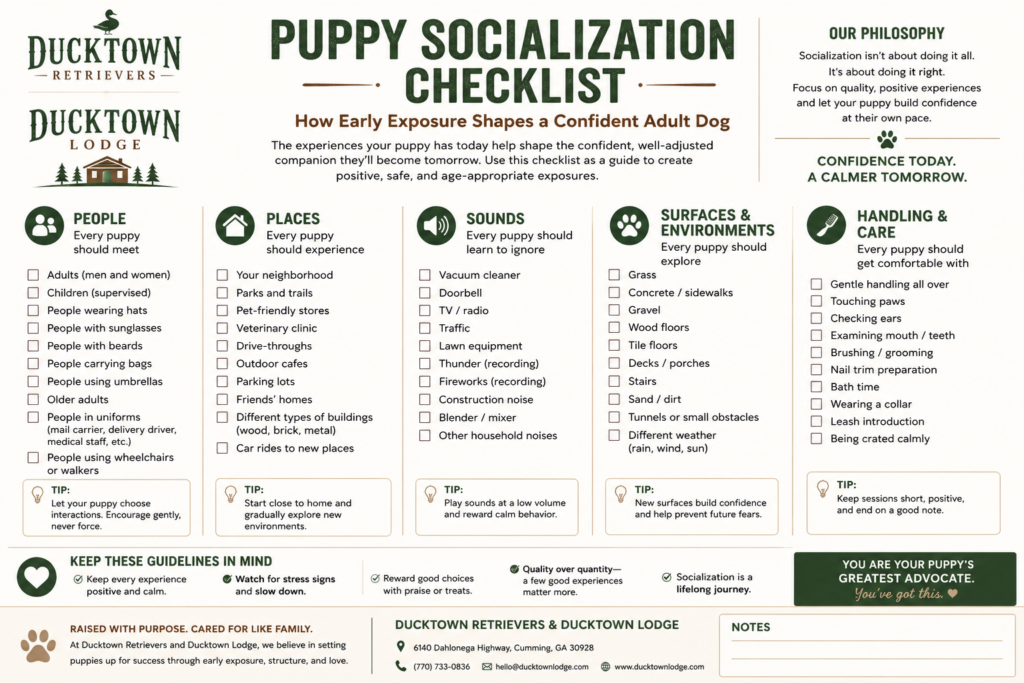
A thoughtful puppy socialization checklist creates benefits that last a lifetime.
More Confidence In New Situations
Socialized puppies are often more comfortable handling change and new experiences.
Better Puppy Training Results
Confident dogs tend to learn more effectively because they are not distracted by fear or uncertainty.
Stronger Relationships Between Dogs And Owners
Trust grows when puppies feel safe and understood.
Fewer Behavior Problems Later In Life
Many common behavioral challenges can be reduced through proper puppy socialization and thoughtful puppy development.
Puppy Socialization Is An Investment In Your Dog’s Future
Every experience matters.
Every positive interaction helps shape the dog your puppy will become.
The goal is not perfection. The goal is confidence. When puppies learn that the world is a safe place, they are better prepared to handle life’s challenges with curiosity instead of fear.
Give Your Puppy The Strongest Possible Start
If you are raising a new puppy, you do not have to figure everything out on your own. Whether your puppy is starting with a strong foundation or needs help building confidence later in life, thoughtful guidance can make all the difference.
At Ducktown Retrievers, we have spent years raising Labrador Retriever puppies through intentional socialization and hands-on developmental experiences. At Ducktown Lodge, we continue helping dogs build confidence through structure, clear communication, and relationship-based training.
The best feeling as a dog owner is knowing your puppy is growing into a confident companion who can comfortably navigate the world around them. That confidence starts with positive experiences, thoughtful exposure, and people who understand how important those early lessons really are.
Reach out when you’re ready. We are always happy to talk about your puppy.