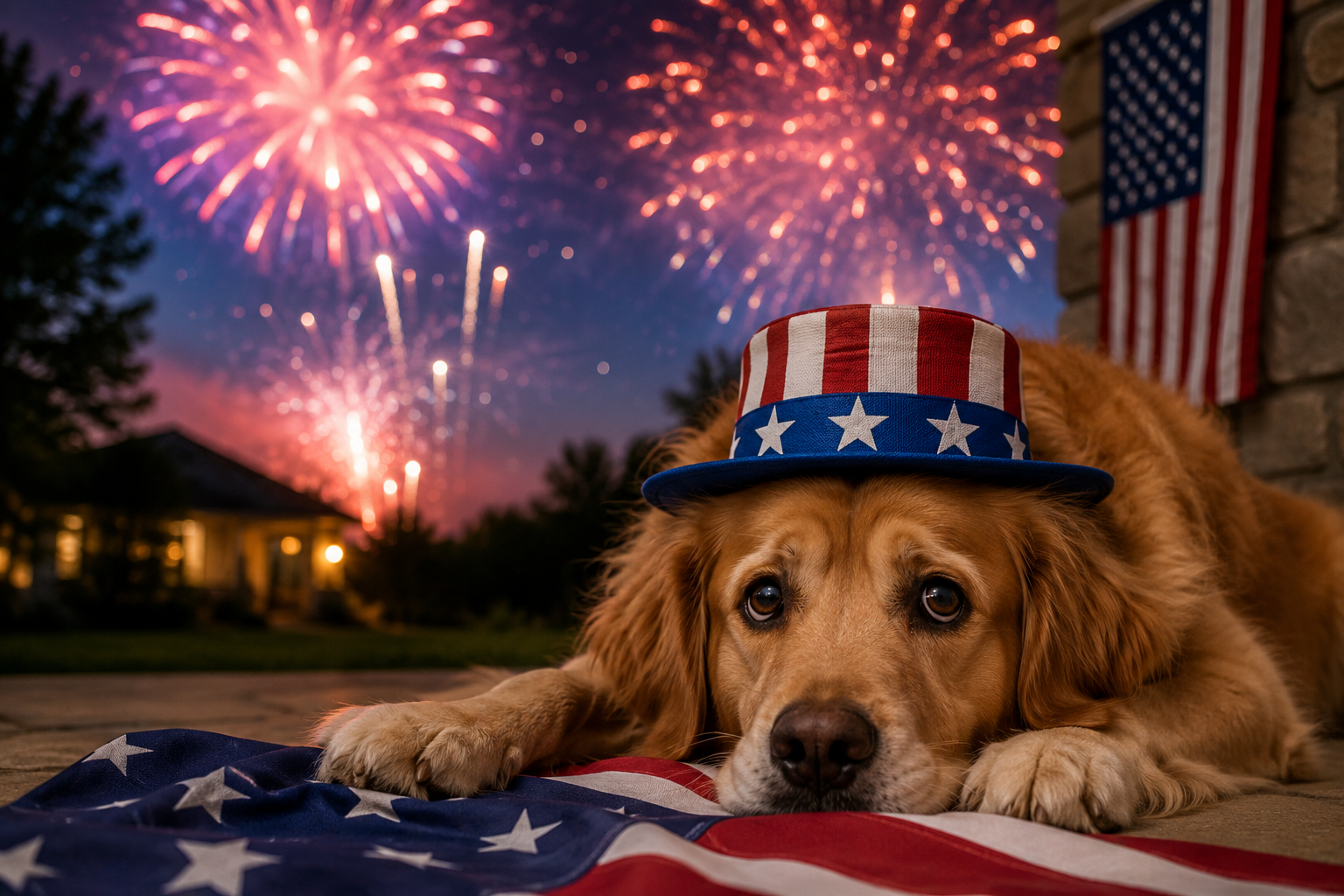
Why Are Dogs Afraid of Fireworks? Need More Than Distraction
A dog afraid of fireworks is not being dramatic or stubborn. Loud noises can feel overwhelming and unpredictable to dogs, especially dogs who are already sensitive to stress or overstimulation. Some dogs shake, bark, hide, pace, or panic because their nervous system no longer feels safe.
A dog afraid of fireworks often needs calm structure, quiet spaces, and emotional support to feel safe during storms and loud noises. Consistent routines and low-stress environments can help dogs recover faster and feel more secure during fireworks season.
Why Some Dogs Become Afraid of Fireworks
Dogs experience sound differently from humans. Fireworks, thunderstorms, and sudden loud noises can feel intense because dogs hear higher frequencies and react quickly to environmental changes.
Some dogs become afraid of fireworks because of:
- Past stressful experiences
- Lack of gradual exposure to loud sounds
- Sensitive temperaments
- Overstimulating environments
- Anxiety that builds over time
Fear responses are not bad behavior. They are stress responses.
How to Calm a Dog Afraid of Fireworks
Create a Quiet Safe Space for a Dog Afraid of Fireworks
Dogs afraid of fireworks usually settle better when they have a calm place to retreat before the noise begins.
Helpful ways to create safety include:
- Use a familiar room or crate
- Close blinds and curtains
- Play calming background noise
- Bring favorite blankets or beds nearby
- Exercise earlier in the day before fireworks start
Small changes help reduce sensory overload and give dogs a chance to decompress.
Keep Calm Around a Dog Afraid of Fireworks
Dogs pay close attention to human energy. When owners become tense or reactive, anxious dogs often escalate too.
Things that help most include:
- Speaking calmly
- Avoiding punishment
- Respecting whether the dog wants space or closeness
- Keeping routines steady
Dogs afraid of fireworks need emotional steadiness more than pressure.
Dog Afraid of Fireworks and Thunderstorms? Watch for These Signs
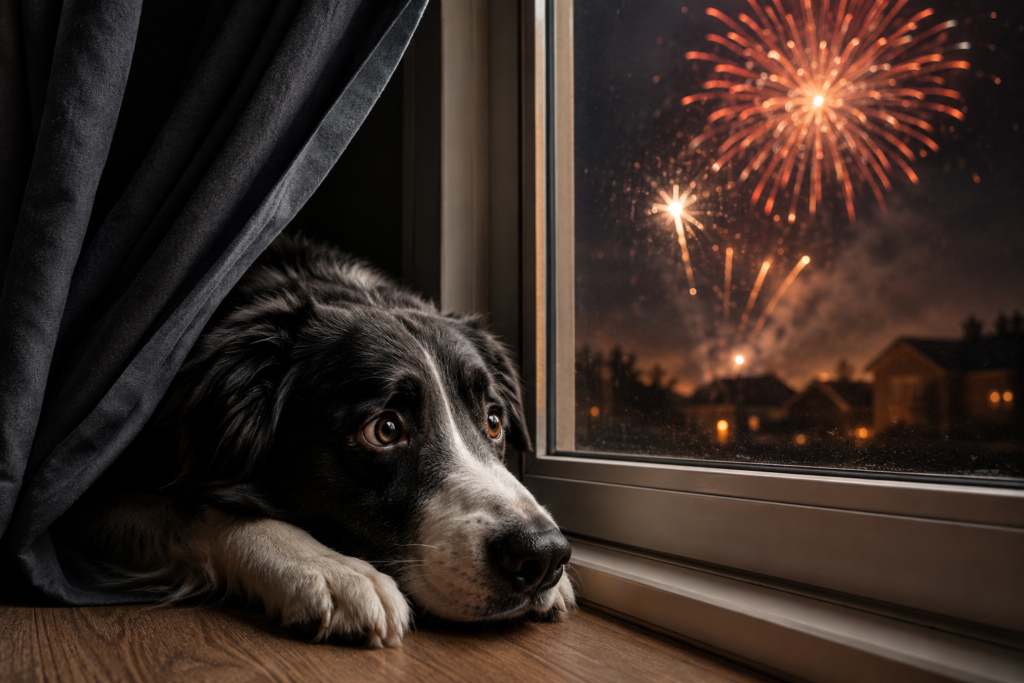
Some dogs show obvious fear. Others become quiet or withdrawn.
Common signs of noise anxiety include:
- Shaking or trembling
- Panting
- Pacing
- Hiding
- Whining or barking
- Refusing food
- Trying to escape
- Clinginess
- Difficulty settling
The earlier stress signals are recognized, the easier it becomes to support the dog before panic escalates.
Can Dogs Be Traumatized by Fireworks?
Yes, dogs can absolutely be traumatized by fireworks, especially if they have had a frightening experience in the past. Loud, sudden noises trigger a natural fight or flight response in dogs because their survival instincts are wired to react quickly to danger.
For some dogs, fireworks are not just startling. They feel unsafe, confusing, and impossible to escape. A single stressful experience can leave a lasting impression, especially for sensitive dogs or dogs already prone to anxiety.
Dogs often remember fear based experiences clearly. If your dog was terrified during fireworks once before, there is a good chance they will anticipate that fear the next time loud noises begin. Some dogs even start reacting before the fireworks start because they associate certain sounds, smells, or routines with stress.
A dog’s reaction to fireworks is usually shaped by:
- Personality and temperament
- Past experiences with loud noises
- Their overall stress levels
- How safe and supported they feel during stressful moments
This is why emotionally safe environments and calm routines matter so much. Dogs who feel supported during stressful events are often able to recover faster and build confidence over time.
Why Calm Environments Help Dogs Afraid of Fireworks
Many anxious dogs struggle more in loud or chaotic environments. Constant barking, crowded playgroups, and overstimulation can keep the nervous system on edge.
Dogs afraid of fireworks often benefit from:
- Quiet spaces
- Predictable routines
- Consistent caregivers
- Structured outdoor time
- Emotionally safe handling
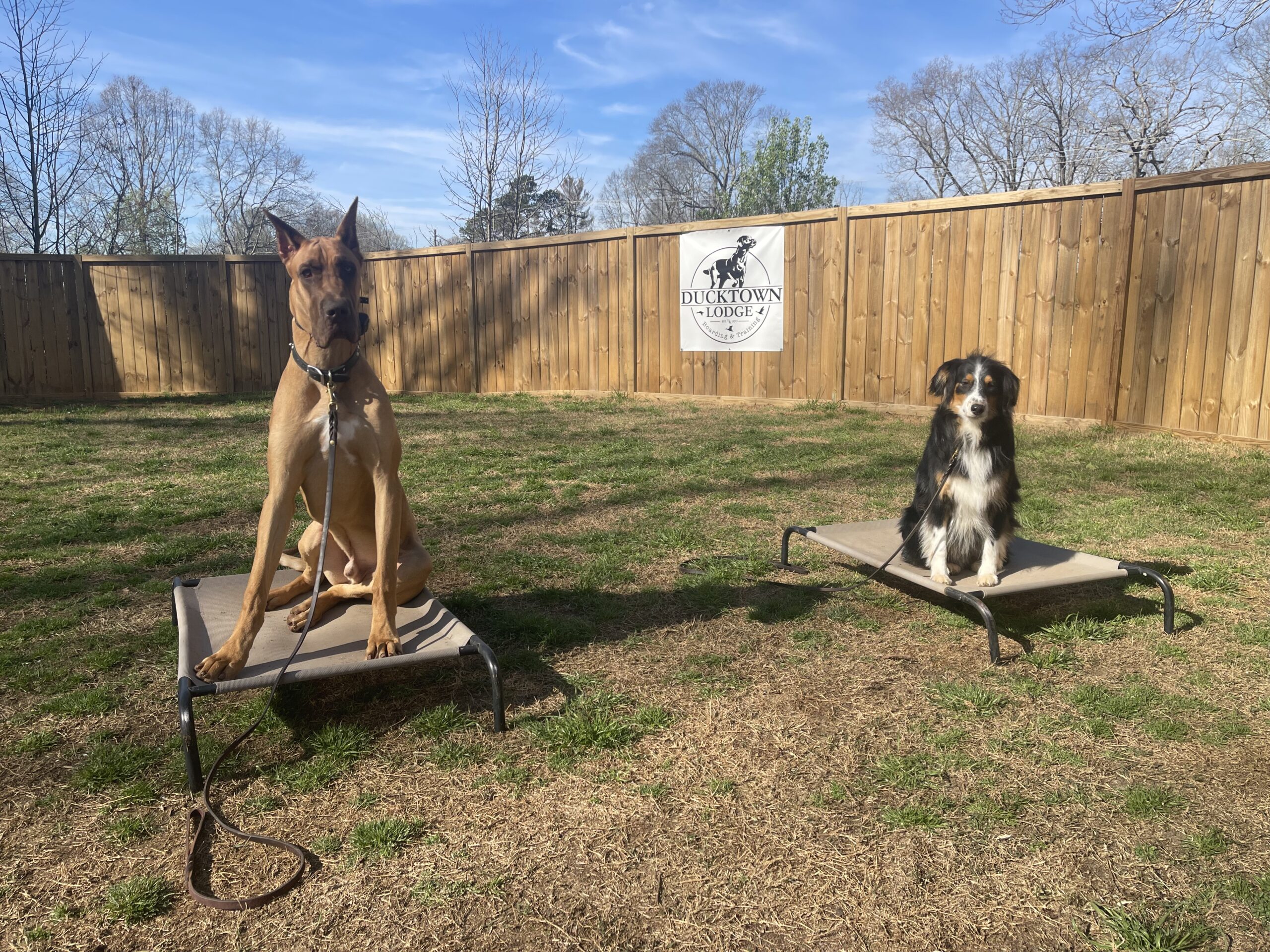
At Ducktown Lodge, dogs stay in private suites designed to reduce stress and overstimulation. Calm routines and relationship based care help dogs settle more naturally, especially sensitive dogs who struggle in louder boarding environments.
According to the AKC, helping a dog afraid of fireworks starts with preparation before the noise begins. Creating a safe indoor space, using calming background noise, exercising earlier in the day, and staying calm yourself can help reduce stress and anxiety during fireworks.
Helping a Dog Afraid of Fireworks Build Confidence Over Time
Confidence grows slowly through repeated experiences of safety and recovery.
Helpful long-term strategies include:
- Rewarding calm behavior
- Building positive associations with sound
- Using relationship-based training
- Keeping routines predictable
- Allowing recovery without pressure
Dogs do not need to become fearless. They need support that helps them feel more secure and more understood.
As AKC breeders, we proudly support the AKC Reunite program because keeping dogs safe is part of responsible care. Fireworks season is one of the busiest times of year for lost pets, especially dogs frightened by loud noises. Microchipping and updated identification give families an added layer of protection if a scared dog escapes during storms or fireworks.
Your Dog Afraid of Fireworks Deserves Calm, Safe Support
Dogs afraid of fireworks are not trying to make life difficult. They are trying to feel safe again.
With calm structure, emotionally safe care, and consistent support, many dogs learn to recover faster and feel more grounded during storms and fireworks season.
At Ducktown Lodge, we believe dogs settle best in quiet, low-stress environments where care feels personal, steady, and trustworthy. Whether your dog needs boarding, training, or simply a calmer place to stay, we are here to help both of you breathe easier.