Understanding Resource Guarding Without Fear or Labels
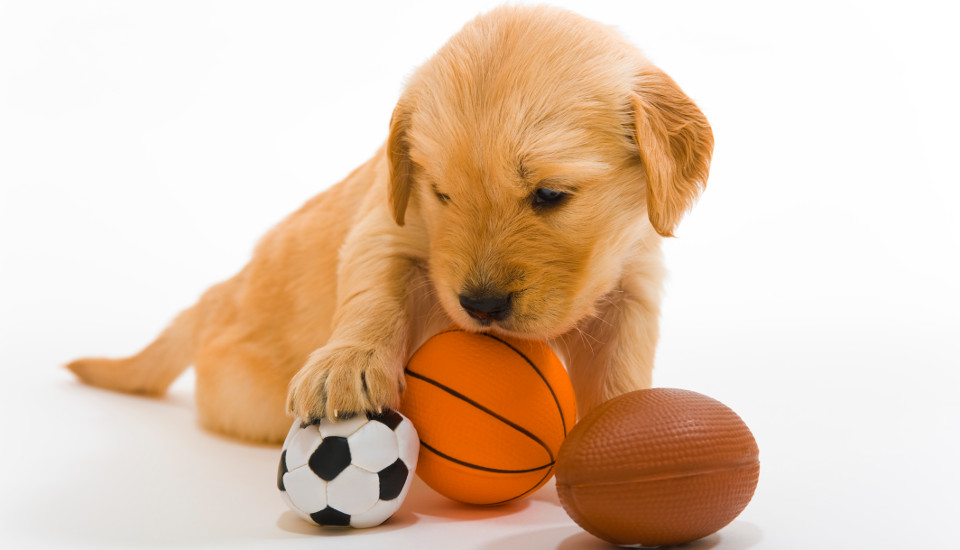
Resource guarding often feels like it comes out of nowhere. A puppy who was easygoing last week stiffens over a bowl. An adult dog growls for the first time over a bone. Owners panic, assuming something went wrong. In reality, this behavior usually develops quietly, long before it becomes obvious.
Resource guarding is not a personality flaw or a sign of a “bad” dog. It’s a survival-based response rooted in uncertainty. Dogs guard when they’re not confident that important things—food, toys, space, or people—will remain available.
When this behavior is approached calmly and thoughtfully, it can often be reduced, reshaped, or prevented entirely.
What resource guarding actually is
At its core, resource guarding in dogs is about fear of loss, not a desire for control. Dogs guard when they feel unsure about access to something they value. That uncertainty can begin in puppyhood or develop later, but the root is the same.
Puppies are especially impressionable. If early interactions around food or toys feel rushed, intrusive, or unpredictable, a puppy may learn that human’s approach equals loss. Over time, that belief can turn into freezing, staring, growling, or snapping. The behavior is learned, not malicious.
This is why prevention matters so much. When puppies are taught early that people make good things better, guarding often never takes hold. When that foundation is missing, the same principles can still be used later to rebuild trust.
Common items dogs guard
Most dogs don’t guard everything. They guard what feels valuable or uncertain. According to Preventive Vet, “While most often seen around food items, a dog can develop resource guarding with any item that they deem “valuable.”
Common triggers include:
- Food and food bowls
- High-value chews or bones
- Toys
- Resting spaces like beds or crates
- People they feel emotionally attached to
Understanding these patterns helps owners intervene early, especially with puppy resource guarding, before the behavior escalates.
Why early prevention changes everything
Many owners try to fix guarding only after it becomes loud. By then, the dog has already learned that warning signs are necessary. Prevention focuses on something simpler: teaching dogs they don’t need to guard because nothing is being threatened.
Programs like Puppy Culture emphasize consent, trust, and positive associations around resources. Puppies learn that humans approaching brings better outcomes, not loss. That lesson carries into adulthood and prevents many guarding issues from forming in the first place.
Discovering the Guarding Behavior
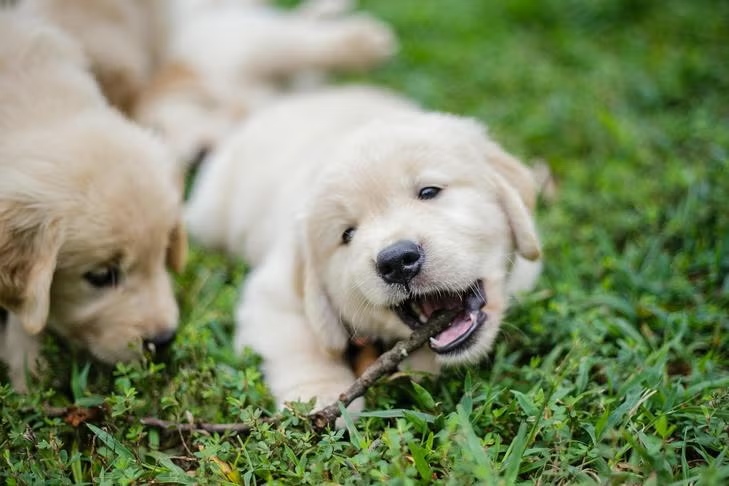
Most people don’t realize their dog has resource guarding tendencies until the behavior shows itself. A puppy may seem easygoing for months, then suddenly freeze over a bowl or tense when someone walks by with a chew. That moment can feel alarming, but it’s usually the first clear sign of uncertainty—not aggression.
Guarding almost always starts quietly. Dogs communicate discomfort long before they growl or snap.
Early body language signs to watch for
Common early signals include:
- Stiffening or freezing over an item
- Hard eye contact or “side eye.”
- Showing the whites of the eyes
- Lip lifts or low growling
These behaviors are communication. Punishing them often removes the warning without removing the fear, which increases risk later.
Why these signs often get missed in puppies
Puppy resource guarding is easy to overlook because puppies are small and their signals seem harmless. But those early moments matter. Puppies are learning what human approaches mean. If every approach leads to loss, confidence erodes.
Early prevention is often as simple as slowing down, creating space, and adding value instead of testing the puppy.
Any dog can show guarding behavior
Resource guarding is not breed-specific and not limited to shelter dogs. Individual temperament and early environment matter far more than labels.
Calm, predictable handling reduces guarding. Rushed, inconsistent, or confrontational handling increases it.
Why Dogs Develop Resource Guarding
Resource guarding develops through experience. Dogs learn whether resources are predictable or uncertain based on how humans handle them.
Fear of loss, not dominance
Dogs guard because something taught them they might lose access. They are not challenging authority. They are responding to unpredictability.
Environmental contributors
Guarding is more likely when dogs experience:
- Competition for food or toys
- Inconsistent rules
- Overhandling without consent
- Lack of clear routines
The puppy window that matters most
Puppyhood is a critical learning period. Puppy Culture focuses on this window for a reason. When puppies learn early that people approaching means good things happen, guarding
How Puppy Culture Prevents Resource Guarding
Puppy Culture prevents guarding by teaching emotional security first.
Humans make good things better
Approaches add value instead of removing it. Food improves. Better treats appear. Puppies learn there’s no need to brace.
Consent-based handling
Puppies are taught that their signals are respected. This prevents escalation and builds trust around resources.
Safe interruptions through trading
Trading teaches puppies that giving something up doesn’t mean losing it forever. This becomes the foundation for lifelong confidence.
How to Fix Resource Guarding: What Actually Matters

When you strip away the noise, fixing resource guarding comes down to two things:
managing the environment and building trust around resources.
Everything else is a variation of these two principles. When they’re done well, progress follows. When they’re skipped or rushed, guarding tends to intensify.
Step One: Management before modification
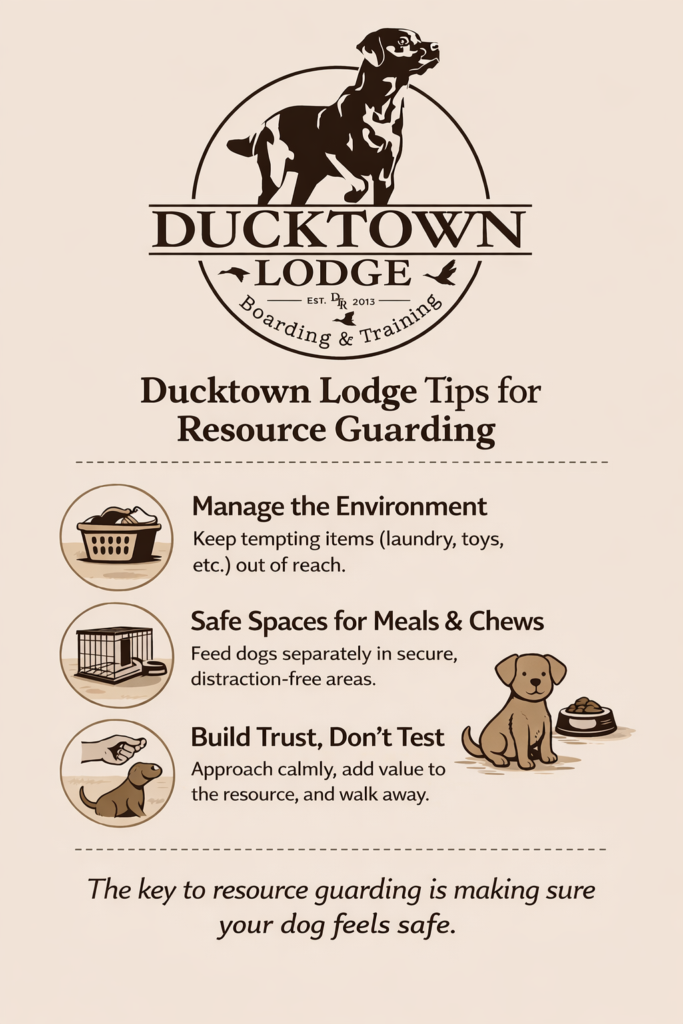
Before training begins, managing the environment removes pressure and keeps everyone safe. This visual breaks down what management actually looks like in real life. Management is not training, and it’s not avoidance. It’s a temporary strategy that removes pressure so your dog doesn’t keep practicing the guarding behavior.
Every time a dog successfully guards something, the behavior gets reinforced. Management interrupts that cycle.
Start by identifying what your dog actually guards. This might be food bowls, certain toys, furniture, shoes, laundry, or specific high-value items. Once you know the triggers, the goal is simple: reduce access and reduce opportunity while you work on trust and skills.
Sometimes the solution is surprisingly straightforward. One training client had a dog who loved stealing dangerous items from the kitchen and then refusing to give them back. The first step wasn’t a cue or correction — it was blocking access to the kitchen altogether. Once the environment was safe, they could calmly practice cues like Go to Bed and Drop It without stress or chasing.
Management creates safety and clarity. It allows training to happen without conflict.
Practical management strategies for resource guarding
Depending on what your dog guards, management may include:
- Keeping tempting items like shoes, laundry, and toys put away
- Raising or securing laundry baskets
- Picking up food bowls after meals, once your dog has walked away
- Feeding dogs separately in quiet, secure spaces
- Avoiding high-value chews that have triggered guarding in the past
- Restricting access to furniture or beds in those spaces are guarded
- Ending free-feeding and switching to structured meal times
For puppies, these steps prevent guarding from forming in the first place. For adult dogs, they create breathing room so trust can be rebuilt without repeated conflict.
Management is not permanent. It’s a foundation. Once the dog feels safe and predictable patterns are in place, training becomes calmer, clearer, and far more effective.
Step Two: Rebuild trust
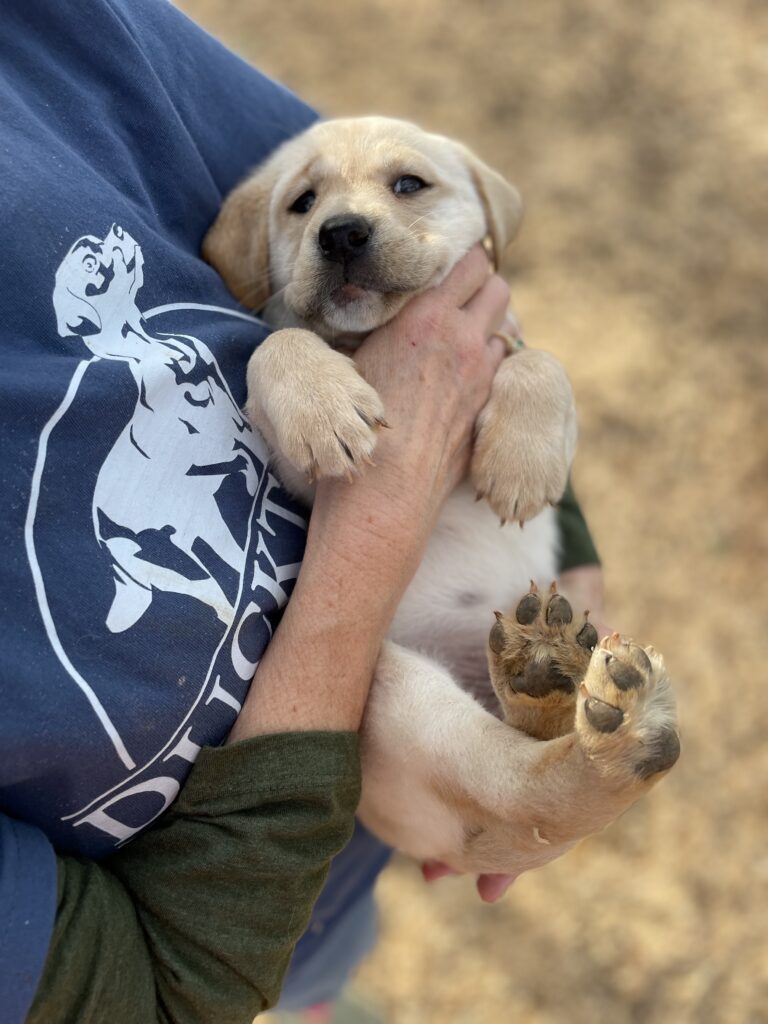
At Ducktown Lodge, we’ve been raising and training puppies for over 12 years, following AKC guidelines that emphasize early observation, emotional safety, and thoughtful handling. When a puppy begins to protect toys, food, bedding, or other valued items, they’re showing early signs of what behaviorists call resource guarding — and that’s exactly when calm guidance matters most.
Let’s talk about trust. Once the environment is managed and pressure is reduced, the real work can begin. Rebuilding trust is about changing how your dog feels when people are near the things they value. Until that emotional response shifts, no cue or correction will truly stick.
This step is not about asking your dog to give things up yet. It’s about teaching them that your presence is predictable, safe, and worth relaxing around.
Start where your dog already feels calm
Trust-building always begins below your dog’s stress threshold. That means starting at a distance where your dog can notice you without tensing, freezing, or hovering over the resource.
If your dog stiffens, you’re too close. If they keep eating or chewing calmly, you’re in the right place.
From there:
- Approach briefly
- Add something better
- Leave again
This simple pattern matters more than people expect. You’re teaching your dog that your approach doesn’t end the experience — it improves it.
Change the meaning of your approach
Many dogs with resource guarding have learned that humans approaching means loss. Rebuilding trust flips that expectation.
Instead of reaching in or hovering:
- Toss a higher-value treat near the bowl
- Drop something better next to the chew
- Calmly walk away afterward
No grabbing. No staring. No hovering.
Over time, your dog begins to look forward to your approach instead of bracing for it. This emotional shift forms the foundation for everything that follows.
For puppies, this process often moves quickly. For adult dogs, it may take repetition and patience — but the principle is the same.
Predictability builds safety
Trust grows through consistency. Approaches should remain consistent each time: characterized by calm body language, smooth movement, and clear outcomes.
Avoid surprises. Avoid testing. Avoid changing the rules day to day.
When dogs can predict what will happen, they stop feeling responsible for protecting resources themselves. That predictability is far more powerful than control.
Respect communication, don’t challenge it
If your dog pauses, freezes, or gives a warning signal during this phase, that information matters. It means the process is moving too fast — not that the dog is failing.
Rebuilding trust means listening to those signals and adjusting. Back up. Create space. Try again later at an easier level.
This is especially important with puppies. When early communication is respected, escalation often never happens.
Mistakes That Make Resource Guarding Worse
- Punishing growling
- Rushing proximity
- Taking items “to prove a point”
- Inconsistent rules
- Ignoring early signs because a dog is young or small
When Puppies Guard vs. Adult Dogs
Puppy guarding is often flexible and preventable. Adult guarding usually has history and needs a slower, more intentional approach. Both can improve with clarity and consistency.
Professional support is recommended if guarding involves children, multiple resources, or a bite history.
What Real Progress Looks Like
Progress looks like:
- Softer body language
- Less fixation
- Willingness to disengage
The goal isn’t perfection. It’s calm acceptance and predictability.
How We Approach Resource Guarding at Ducktown Lodge
At Ducktown Lodge, resource guarding is treated as information, not defiance. Because we work with a low number of dogs at a time, we notice subtle signals early and respond thoughtfully.
Training is woven into daily life—meals, rest, transitions—not forced into artificial scenarios. For puppies, this often prevents guarding entirely. For adult dogs, it helps rebuild trust at a pace that protects safety and confidence.
Closing Perspective: How We Can Help
If you’re dealing with resource guarding, you’re not behind—and your dog isn’t broken. This behavior is common, understandable, and often very workable with the right approach.
Whether you’re raising a puppy or navigating established guarding, support matters. Many owners searching for dog training near me are really looking for clarity, consistency, and someone who won’t judge or rush the process.
At Ducktown Lodge, we provide dog boarding and training rooted in emotional safety, real structure, and follow-through. If you want to talk through what you’re seeing or ask questions about next steps, reach out when you’re ready. We’re always happy to start with a conversation.
Have questions about resource guarding or puppy prevention?
We’re here when you’re ready.
👉 Reach out to Ducktown Lodge. 770-733-0836 or hello@ducktownlodge.com