Why Calm Structure Changes Everything
Structured Dog Training in Cumming, GA | Ducktown Lodge – Many dogs labeled as high energy are not lacking movement. They are lacking clarity. Their days are full, but not grounded. When stimulation keeps stacking without rhythm or boundaries, dogs stay switched on. Behavior issues often follow, not because the dog is bad, but because their nervous system never gets a break.
High energy behavior is often blamed on boredom, but many dogs are overwhelmed, not underworked. Clear structure, calm leadership, and predictable routines help dogs settle, think, and feel safe. When expectations are clear, behavior improves without shame, force, or burnout for dogs or owners.
Why “More Exercise” Is Often the Wrong Answer
High-energy dogs are often misunderstood. When a dog is restless, reactive, or constantly moving, the default advice is usually simple. Walk them more. Run them harder. Tire them out.
But movement alone does not teach regulation.
For many dogs, especially sensitive or driven ones, constant activity adds fuel instead of relief. Their bodies get tired, but their minds stay busy. They return from walks wired, scanning, and unable to rest.
This is not a failure. It is a mismatch.
Behavior is communication. When dogs struggle to settle, they are telling us something about their internal state. Reframing the issue removes blame from both the dog and the owner and opens the door to a better solution.
Why Environment Matters More Than Most Training Methods
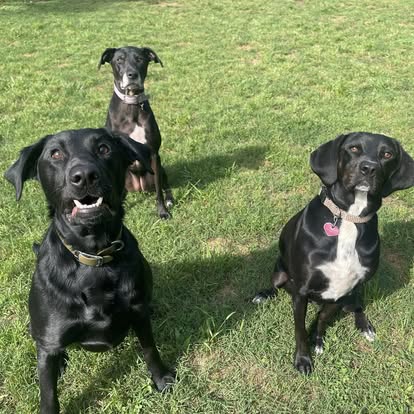
Before structure can work, the environment has to support it.
One of the biggest differences in how dogs learn is not the command being taught. It is the setting in which the dog is living day to day. Dogs cannot regulate themselves in environments that are loud, chaotic, or constantly changing. And they cannot build trust when the people guiding them keep rotating.
At Ducktown Lodge, structured dog training begins with environmental clarity.
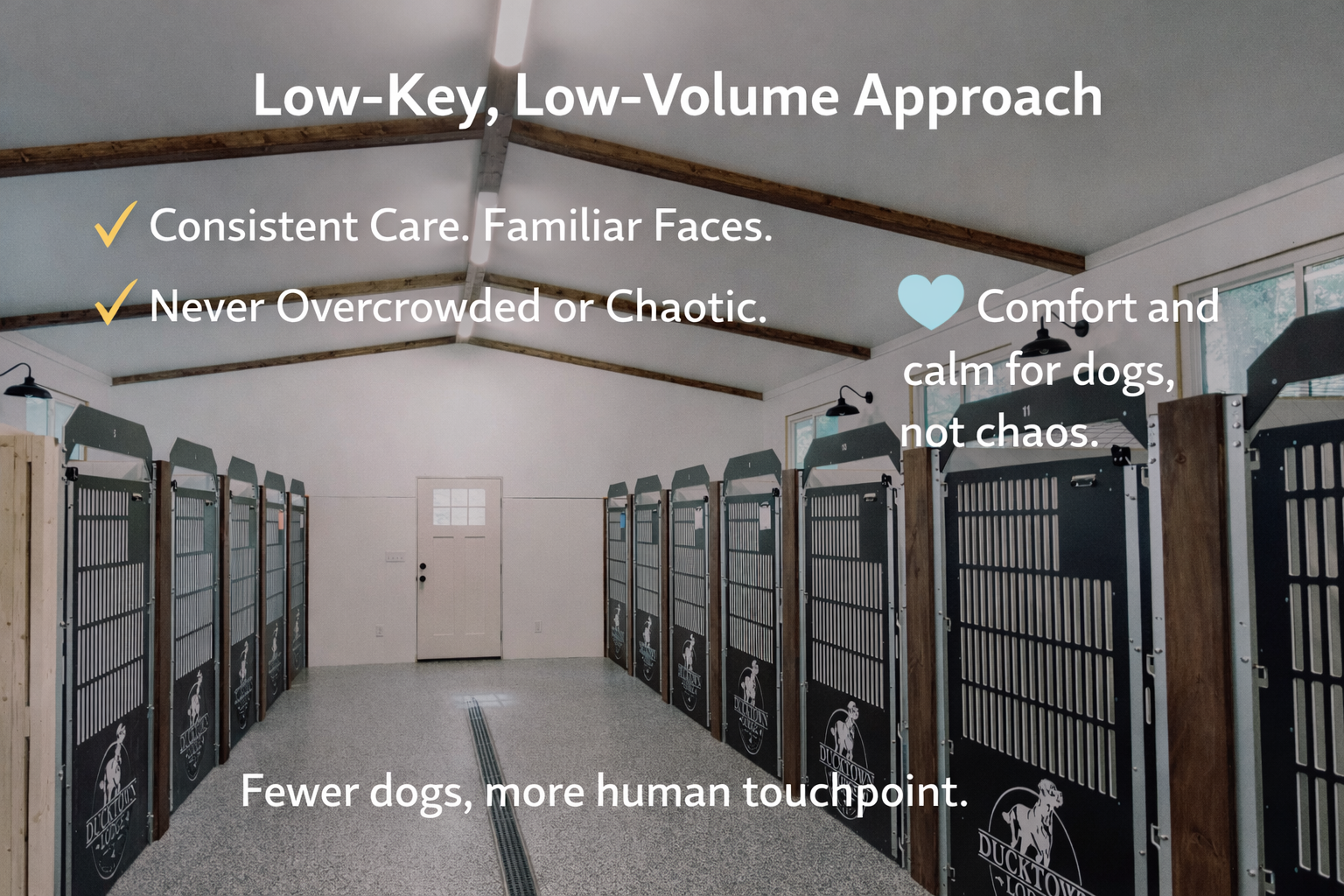
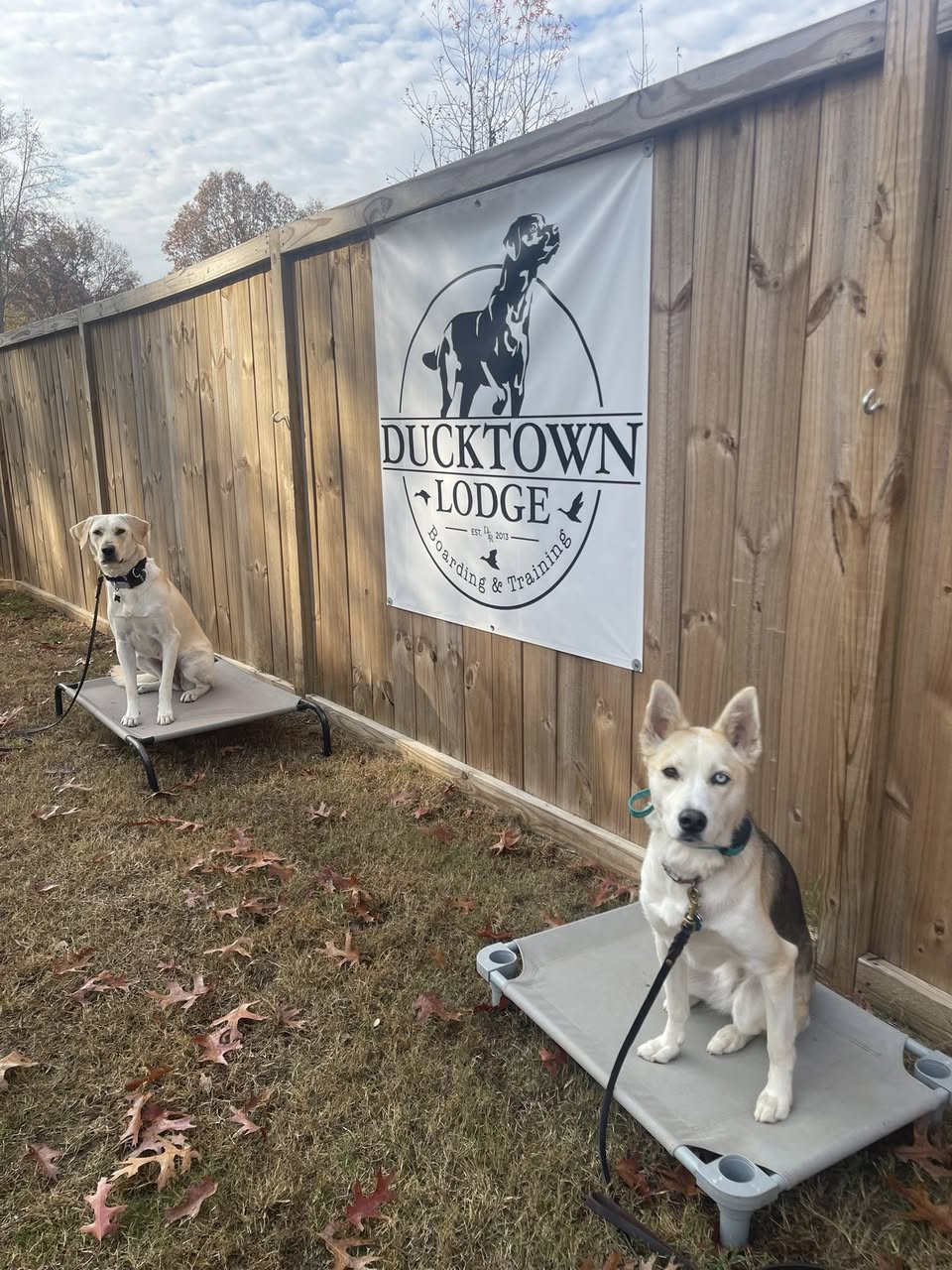
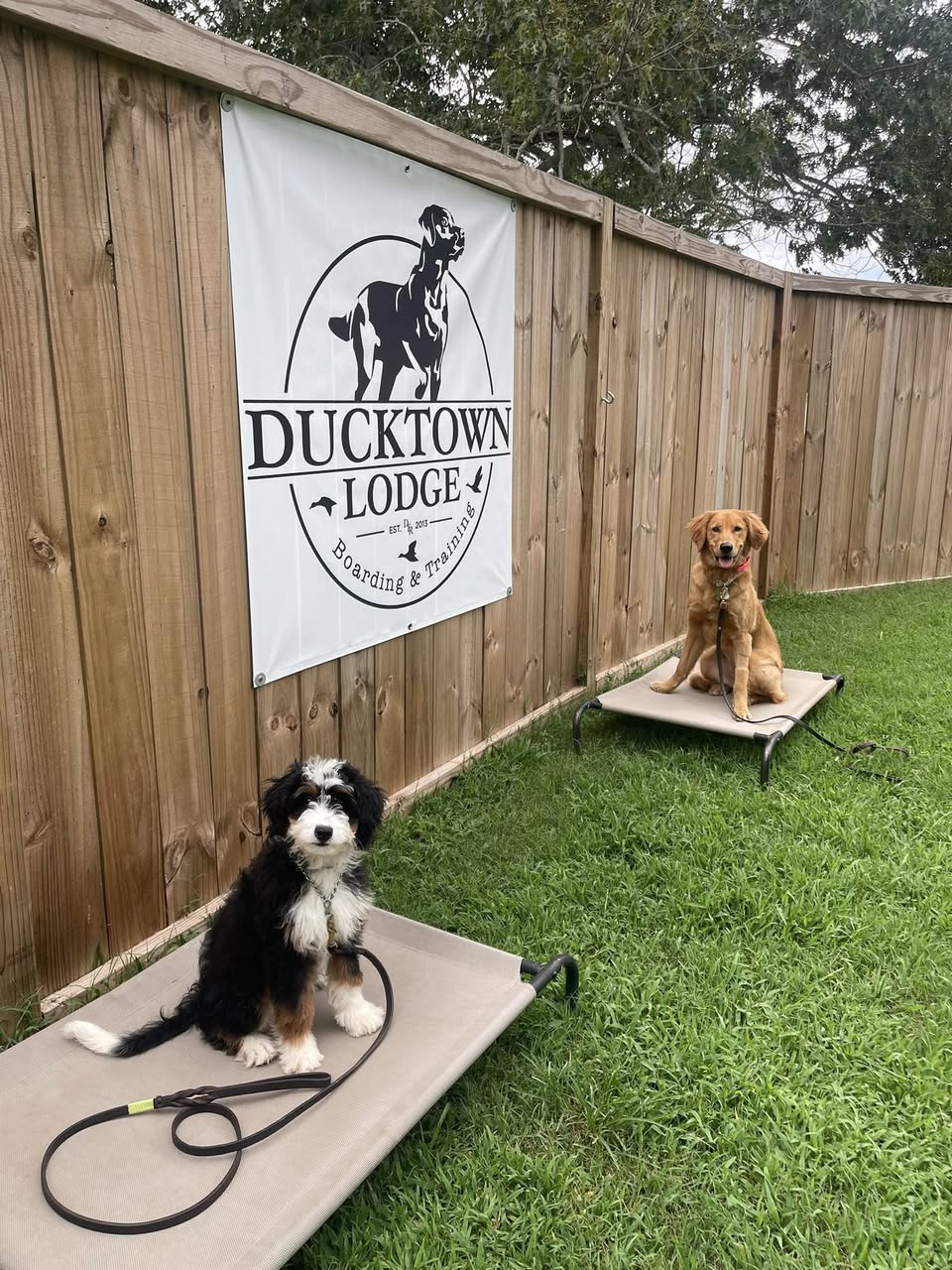
Dogs here are not passed from trainer to trainer. There is no staff turnover. There is no guessing who will be handling them that day. Each dog works with one consistent trainer, in a calm, predictable setting, with an extremely low dog-to-trainer ratio.
That consistency matters more than most people realize.
Proper environmental exposure is not about flooding dogs with distractions. It is about intentional exposure. Dogs are guided through real-world moments at a pace their nervous system can handle. They are given time to process. Time to settle. Time to understand expectations without pressure.
When dogs are exposed to life this way, learning sticks.
This structured environment allows high-energy dogs to slow down enough to think. It allows sensitive dogs to feel safe enough to engage. And it allows training to happen without constantly resetting because the environment keeps changing.
Structure works best when dogs are not overwhelmed.
And dogs regulate best when their world makes sense.
This is why our approach looks different. Not louder. Not harder. Just clearer.
What Structure Actually Means for a Dog
Structure is not punishment. It is not rigidity. And it is not about controlling a dog.
Structure means clarity.
It is made up of three simple things. Clear rules. Predictable routines. Calm, reliable leadership.
For high-energy dogs, structure is especially important. These dogs often have high drive but low tolerance for chaos. Too many choices, too much freedom, and too much stimulation create stress, not confidence.
When structure is present, dogs no longer have to guess. They know when to engage and when to rest. They know what is expected. That clarity creates relief.
Overstimulation and Its Impact on a Dog’s Well-being
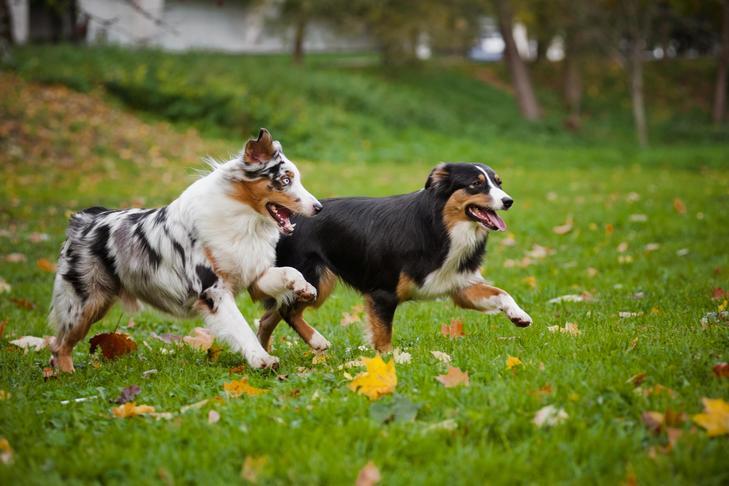
Overstimulation does not always look dramatic. Sometimes it looks like pacing. Sometimes it looks like constant movement, barking, or scanning. Sometimes it looks like a dog that cannot relax even when exhausted.
Too much input forces dogs to stay alert. Too many decisions keep the nervous system elevated. Without intentional downtime, dogs never fully decompress.
Living in this state long-term can increase anxiety, shorten emotional thresholds, and make everyday life harder for dogs and owners alike.
Calm is not something dogs magically find. It is something they are taught through structure.
Why Structure Calms High-Energy Dogs
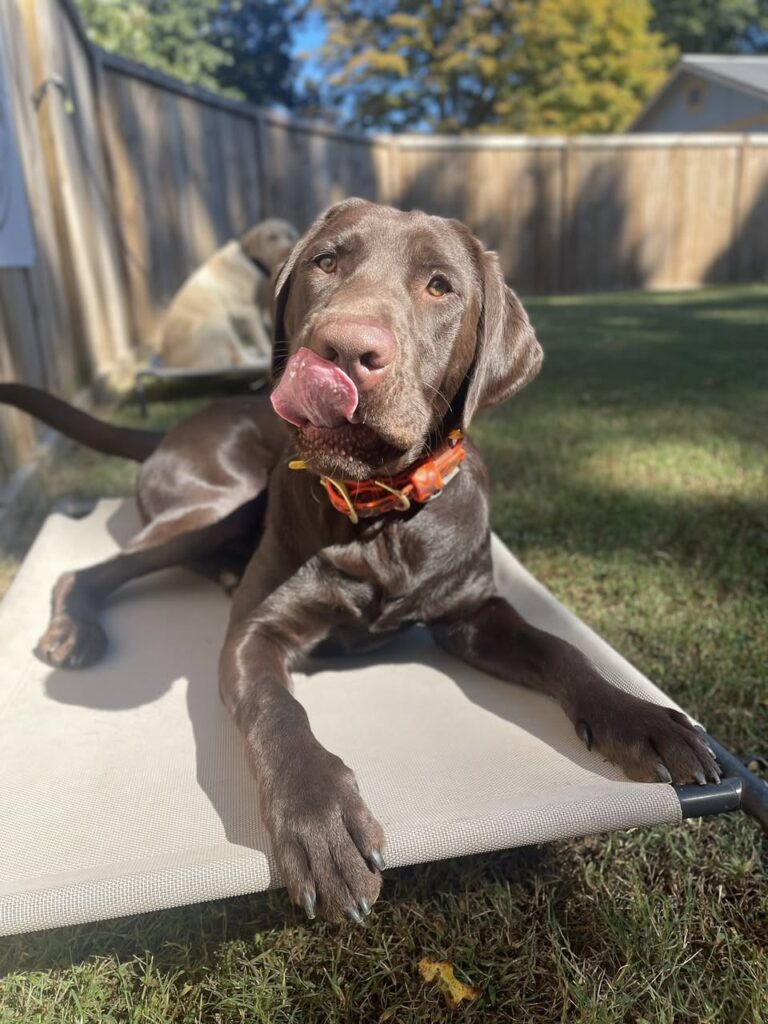
Structure removes pressure from dogs. It tells them they do not need to manage everything around them.
Predictable routines help nervous systems downshift. Clear expectations reduce decision fatigue. Calm leadership allows dogs to follow instead of constantly reacting.
True calm is not collapse from exhaustion. It is regulated engagement followed by real rest. Structure teaches that balance.
What a Structured Day Really Looks Like
A structured day is not complicated. It is intentional.
The day begins with a calm transition out of rest. Your dog goes outside or on a walk before the world gets loud. This first outing sets the tone and is purposeful rather than rushed.
Meals happen at predictable times. When you leave for work, your dog is given something quiet to do, such as a puzzle or seeking work, followed by rest in a crate or defined space if you choose. This is not punishment. It is an opportunity to fully power down.
When you return home, the day does not explode into chaos. Your dog goes outside. You spend a few minutes practicing simple commands. Then you go for a walk with intention, sometimes practicing recall, sometimes working a structured heel.
Free play comes after structure, not before. Dinner follows. One last calm outing. Then bedtime, either in a crate or on a designated bed.
This rhythm creates trust. Dogs relax when life makes sense.
Where Rules and Boundaries Fit In
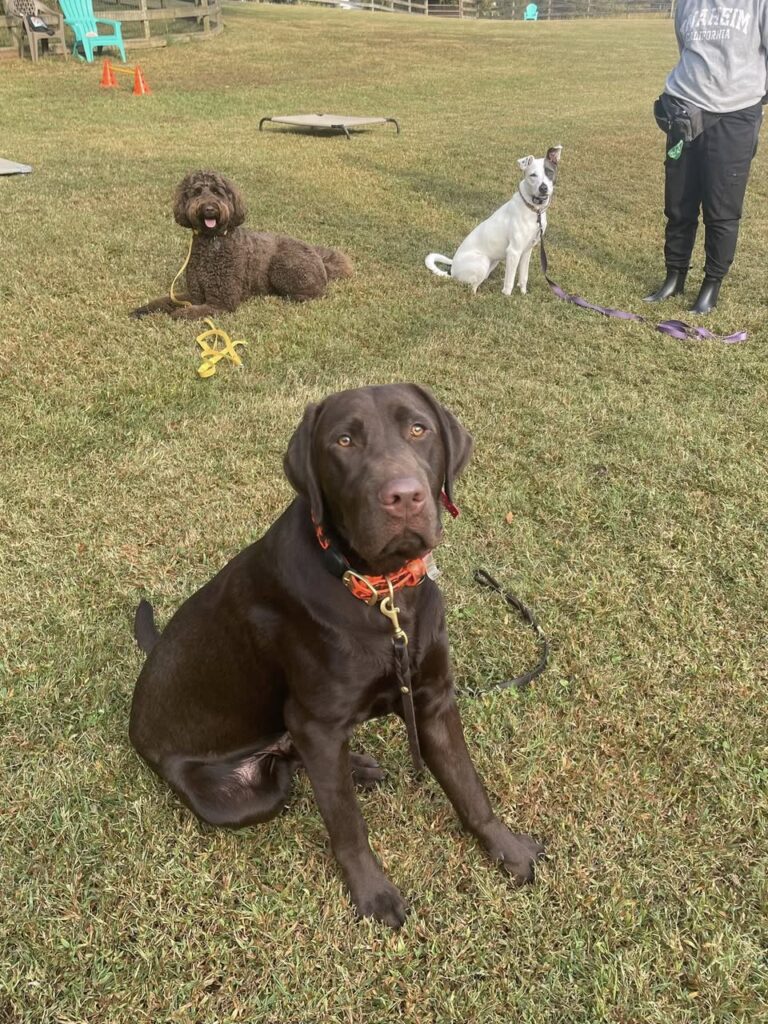
Clear boundaries reduce anxiety. Dogs feel safer when expectations do not change.
Being invited onto furniture instead of taking it freely reinforces guidance. Attention given for calm behavior grows calm behavior. Jumping guests are handled by calmly removing the dog, allowing them to settle, and giving them another chance.
Even doorways matter. A dog who charges the door is asked to pause. The door opens only when calm returns. These moments are not about correction. They are about communication.
You get what you pet. And dogs rise to what is clear.
Give the Dog a Job — Not More Chaos
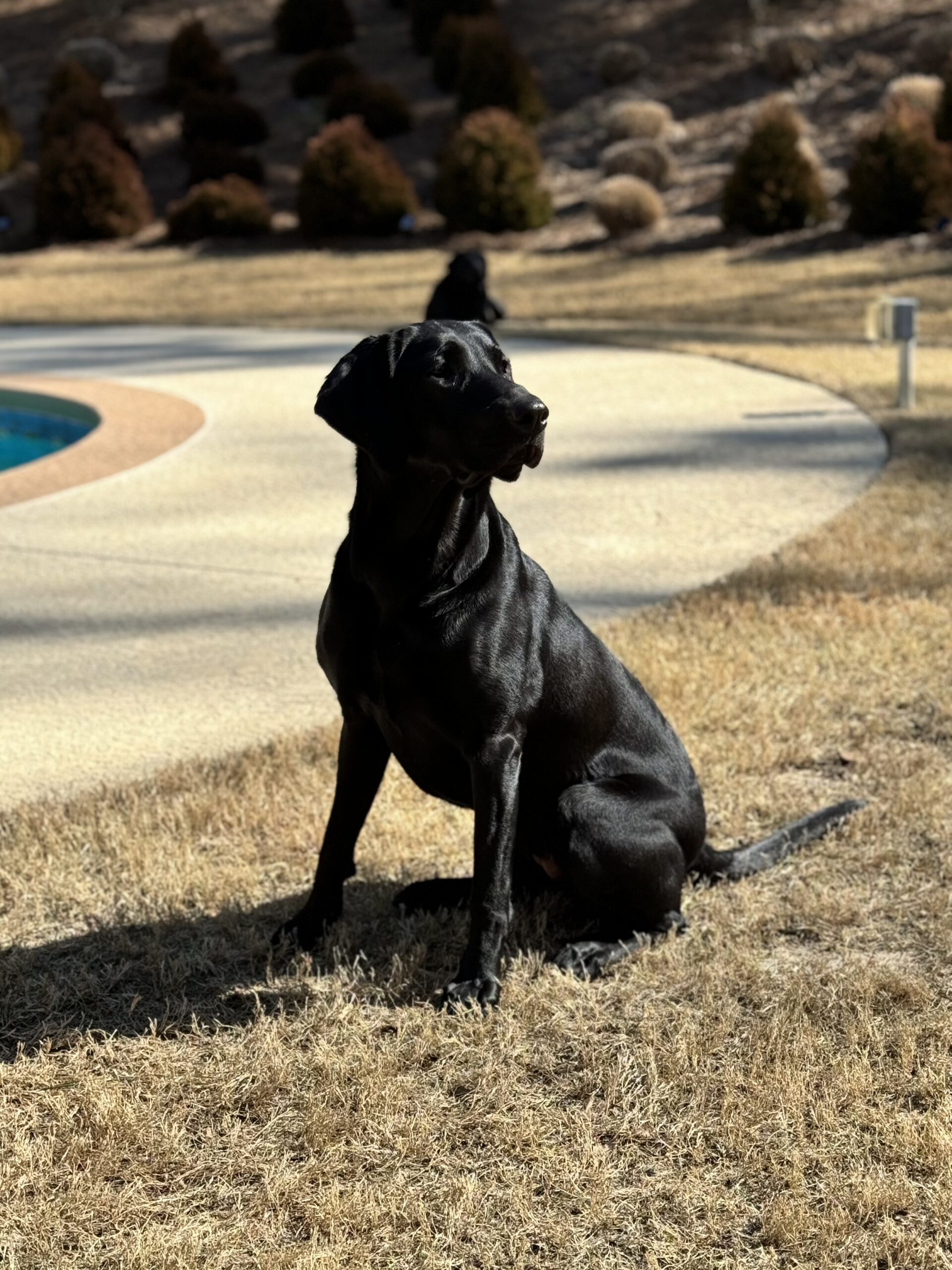
Some dogs truly are built to work. Breeds like Border Collies, Labradors, and other driven dogs often need more than casual walks to feel balanced. But that does not mean they need constant stimulation or endless activity.
It means they need purpose.
At Ducktown Lodge, this understanding runs deep. We are working-dog breeders, specifically Ducktown Retrievers, American Labrador breeders, and we specialize in raising and working with high-energy dogs. These dogs are intelligent, motivated, and capable. When that drive has nowhere to go, it often shows up as restlessness, frustration, or behavior that gets mislabeled as “too much.”
A job does not mean running until exhaustion. It means giving a dog a role they can understand.
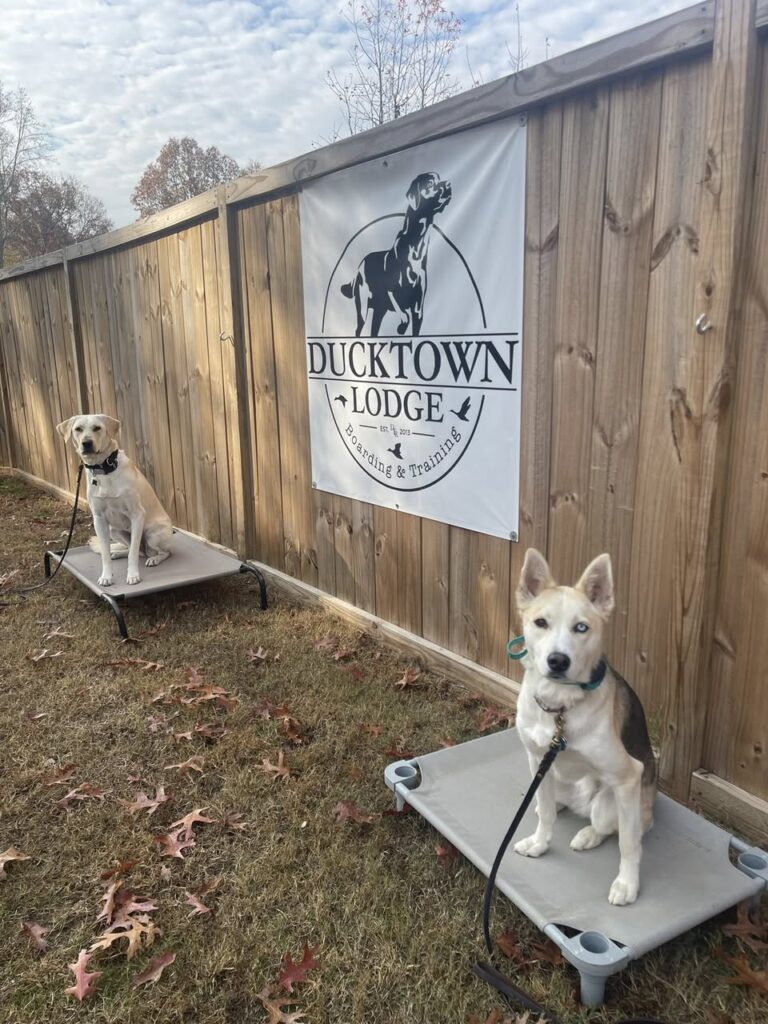
That might look like structured leash work with clear expectations. It might be place work that teaches a dog how to hold still and wait. It might be scent-based seeking work that engages the brain without overloading the nervous system. The key is that the dog is participating with purpose, not just burning energy.
For many high-energy dogs, especially those bred to work alongside humans, having a job is calming. It organizes their drive. It gives their energy direction. And it builds confidence without tipping into overstimulation.
When dogs know what they are responsible for, they stop trying to manage everything else.
This is where structure and purpose meet. And for the right dog, it makes all the difference.
Meet Paddington – Ducktown Dog Training Recent Graduate
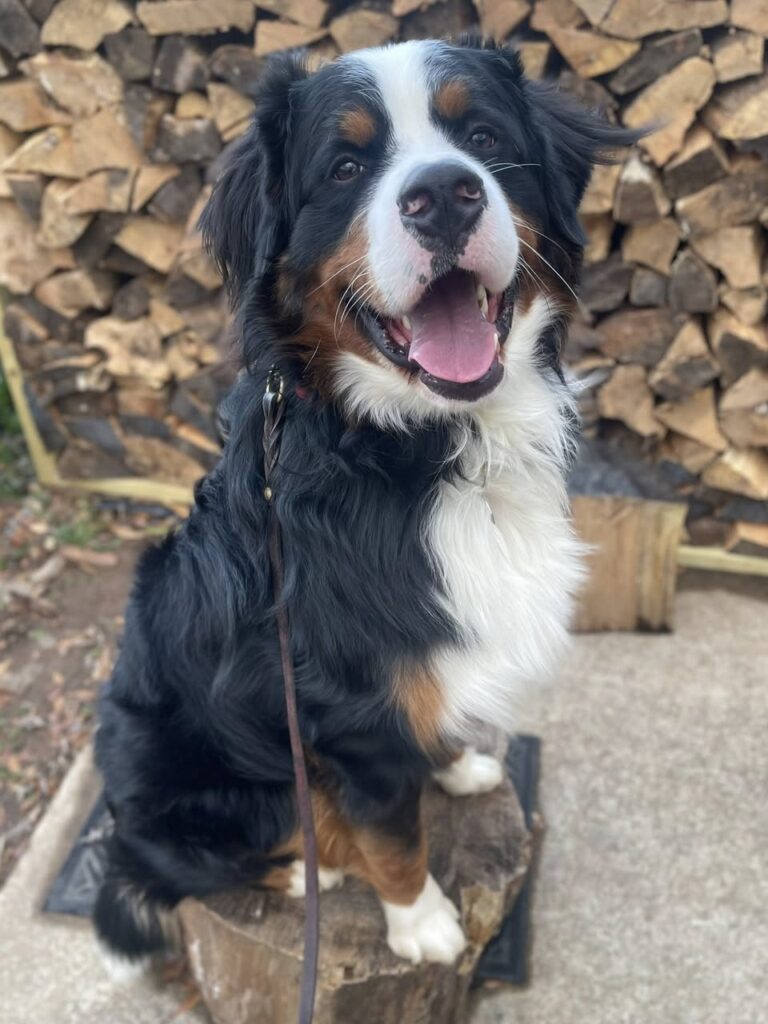
Paddington came to us like many of the high-energy dogs we see every week. Bright, social, and always moving. His body was busy. His mind was busy. Rest did not come easily.
At home, he had plenty of activity. Walks. Playtime. Attention. But when one thing ended, he immediately searched for the next. There was no pause.
When Paddington arrived at Ducktown Lodge, we did not increase his exercise. We simplified his world.
His days followed the same calm rhythm. Predictable outdoor time. Intentional leash work. Clear transitions. Defined rest periods. No rotating handlers. No constant stimulation.
Within days, Paddington began sleeping deeply. His movements slowed. His focus improved. His energy did not disappear. It became organized.
Paddington did not need more exercise.
He needed structure.
Why Structured Dog Training in Cumming, GA Looks Different Here
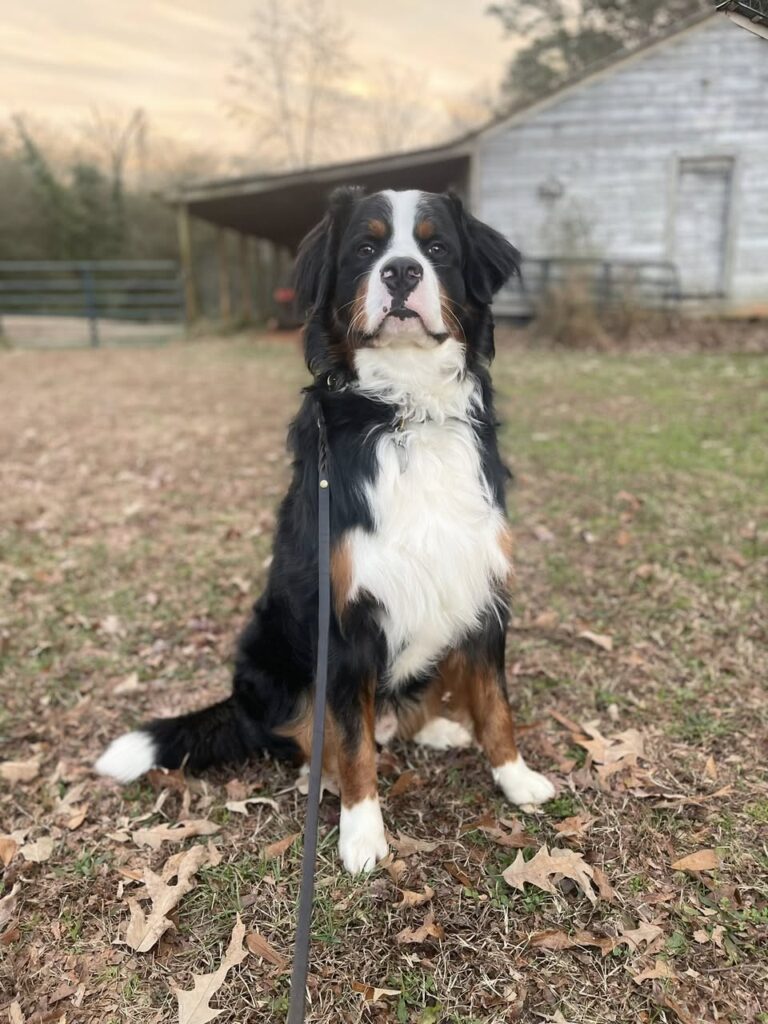
Not every dog training program works for high-energy or easily overstimulated dogs. In Cumming, GA, many dogs live busy lives. Neighborhood noise, constant movement, visitors, and packed schedules can keep dogs in a state of alert long before training ever begins.
That is why structured dog training in Cumming, GA has to be more than commands and exercise. It has to account for how a dog lives day to day.
At Ducktown Lodge, the structure starts with the environment. Fewer dogs. Fewer distractions. The same people are providing care and guidance every day. This consistency allows dogs to relax enough to actually learn.
Training here is built into a calm daily rhythm. Dogs are not rushed from activity to activity. They are guided through clear transitions between movement, rest, and engagement. This is especially important for high-energy dogs who struggle to settle in loud or chaotic settings.
Structured dog training in Cumming, GA works best when dogs feel safe first. Once the nervous system settles, behavior follows. Focus improves. Reactivity softens. Communication becomes clearer.
This is not a boot camp and not a quick fix. It is a thoughtful, relationship-based approach designed to help dogs feel regulated, not managed.
Why Structured Dog Training in Cumming, GA Works
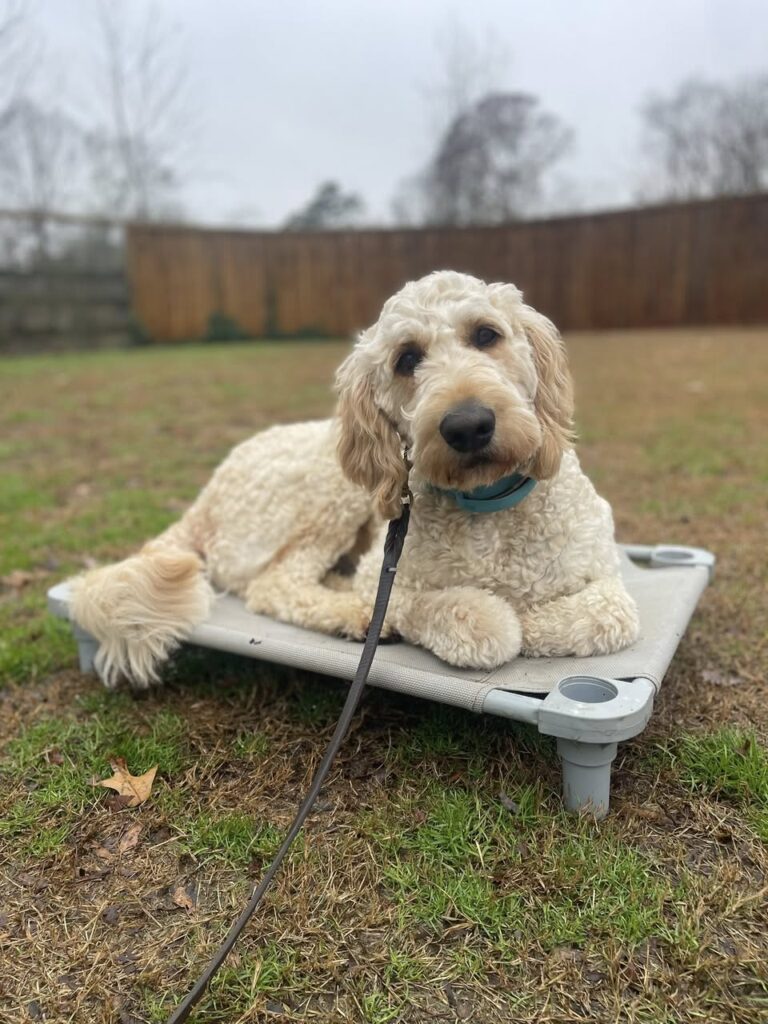
This is why structured dog training in Cumming, GA looks different at Ducktown Lodge.
We see again and again that high-energy dogs do not thrive in louder, faster environments. They thrive when life makes sense. Low volume. Calm routines. Consistent people.
Structured dog training in Cumming, GA works because it replaces chaos with clarity. It creates space for dogs to settle, regulate, and respond instead of react.
This approach is not a bootcamp. It is not a quick fix. It is training integrated into real life, built around the dog’s emotional well-being.
What Life Looks Like With Structure
Owners often notice small changes first. Walks feel easier. Evenings are quieter. Dogs rest instead of pacing.
Over time, communication improves. Dogs feel safer. Owners feel confident.
Not because anyone failed before. But because the dog finally has clarity.
A Calmer Way Forward
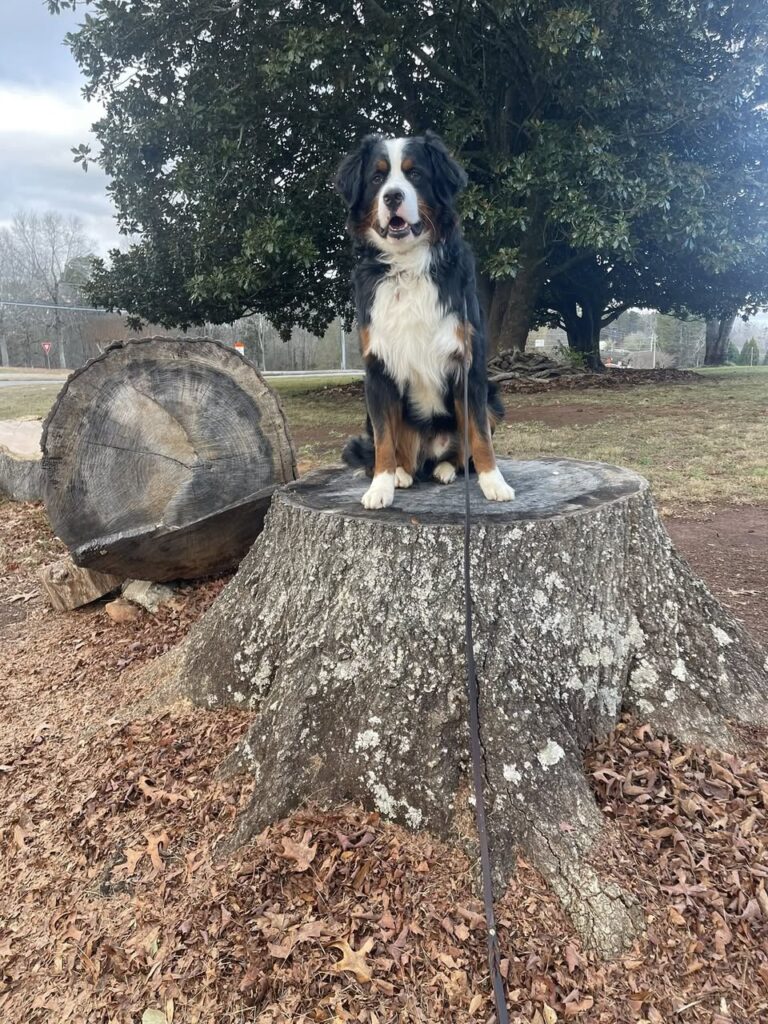
If your dog feels overwhelmed, they may simply need less stimulation and more structure. That shift changes everything.
At Ducktown Lodge, we focus on calm, relationship-based, structured dog training in Cumming, GA for dogs who need clarity, not pressure.
Start slow. Ask questions. See the environment. There is no rush and no judgment.
Sometimes the most powerful thing you can give your dog is not more movement, but a calmer, clearer day. Call today at 770-733-0836 for your meet and greet.