Why reactive behavior deserves a calmer conversation
Reactive dog behavior is often misunderstood. What looks like aggression is usually stress, fear, or overload showing up in the only way a dog knows how. Barking, lunging, freezing, or spinning on leash are signs that a dog is overwhelmed, not defiant. When the nervous system is on high alert, learning shuts down. That matters because real change can only happen once a dog feels safe enough to think.
Reactive dog behavior is a stress response, not bad manners. Low-stress training helps dogs feel safe, lowers triggers, and teaches calmer responses through structure, distance, and trust-building routines. It replaces chaos with clarity and gives overwhelmed dogs room to learn calmly. Over time. OK
Discover how low-stress reactive dog training helps dogs settle, learn, and build confidence without pressure.
The rest of this post breaks down what reactive behavior really is, why traditional high-stimulation settings can make it worse, and how calm, low-key environments support real rehabilitation. We also share how this approach played out with Snickers, a Wags and Wiggles rescue, and why consistency, space, and emotional safety made the difference for her.
What Reactive Dog Behavior Really Is
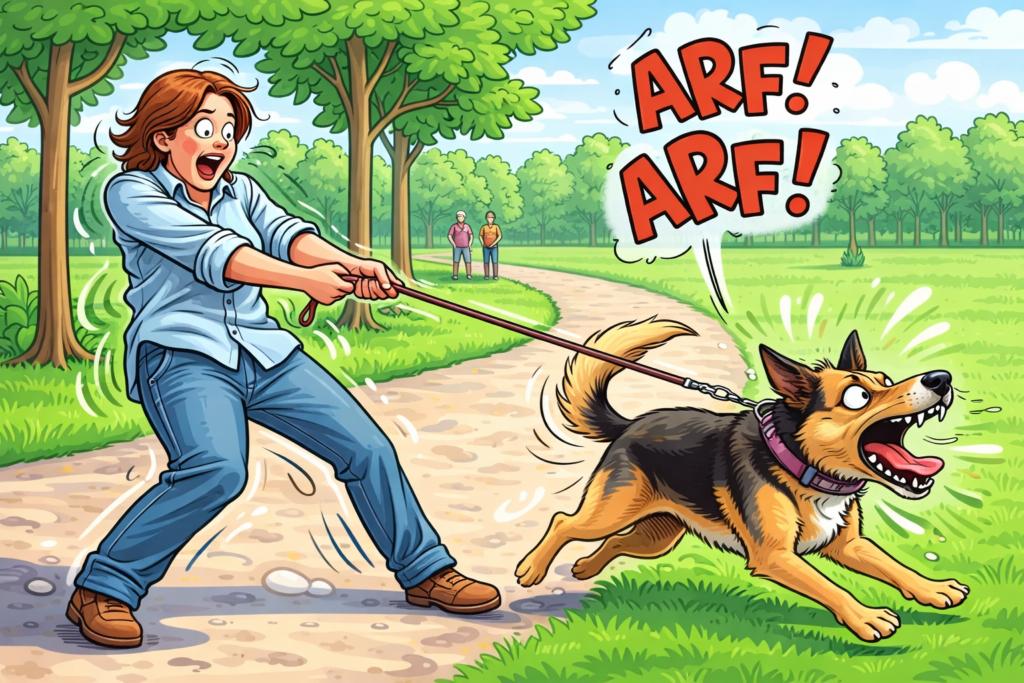
Reactive behavior is an emotional response, not a training failure. When a dog reacts, their nervous system takes over before logic ever has a chance to step in. The body goes first. The brain follows later.
This is why yelling, leash corrections, or forcing obedience in the moment rarely helps. A reactive dog isn’t choosing to ignore cues. They are already past the point where learning is possible.
Common signs of reactive dog behavior
Reactive dogs don’t all look the same. Some are loud. Some are silent. Some freeze before they explode. Others escalate quickly.
- Barking and lunging on leash
Often triggered by other dogs, people, or movement. The leash removes the dog’s ability to create distance, which increases panic. - Freezing or stiff body language
Often mistaken for calm. It is usually the moment before a reaction. - Spinning, pacing, or frantic movement
Signs the dog is trying to release built-up stress. - Overreaction to everyday stimuli
Doors, noises, or unfamiliar people can feel threatening when stress is already high.
Cornell’s canine behavior experts explain that reactive dogs are over-aroused by common stimuli and that reactivity can escalate if not addressed. Finding triggers and building positive associations is key to helping these dogs settle and learn.
Why reactivity is not about dominance or defiance
Reactive dogs are often mislabeled as stubborn or badly behaved. In reality, most reactive behavior comes from fear, uncertainty, or past experiences that taught the dog the world is unpredictable.
At Ducktown Lodge, we do not start with correction. We start with context.
Practical Do’s and Don’ts for Living With a Reactive Dog
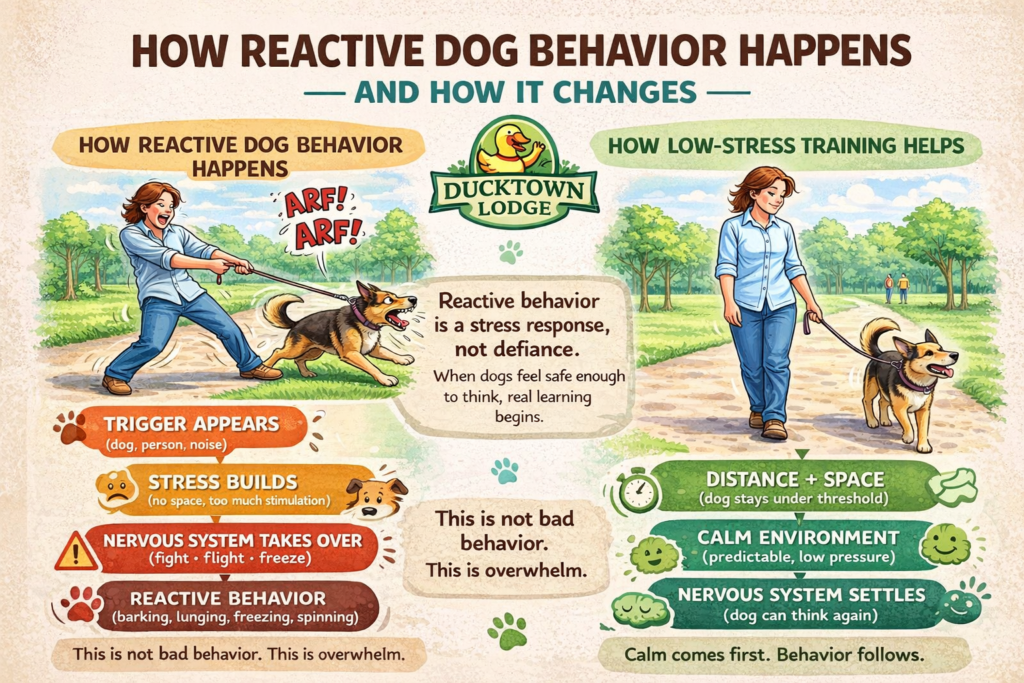
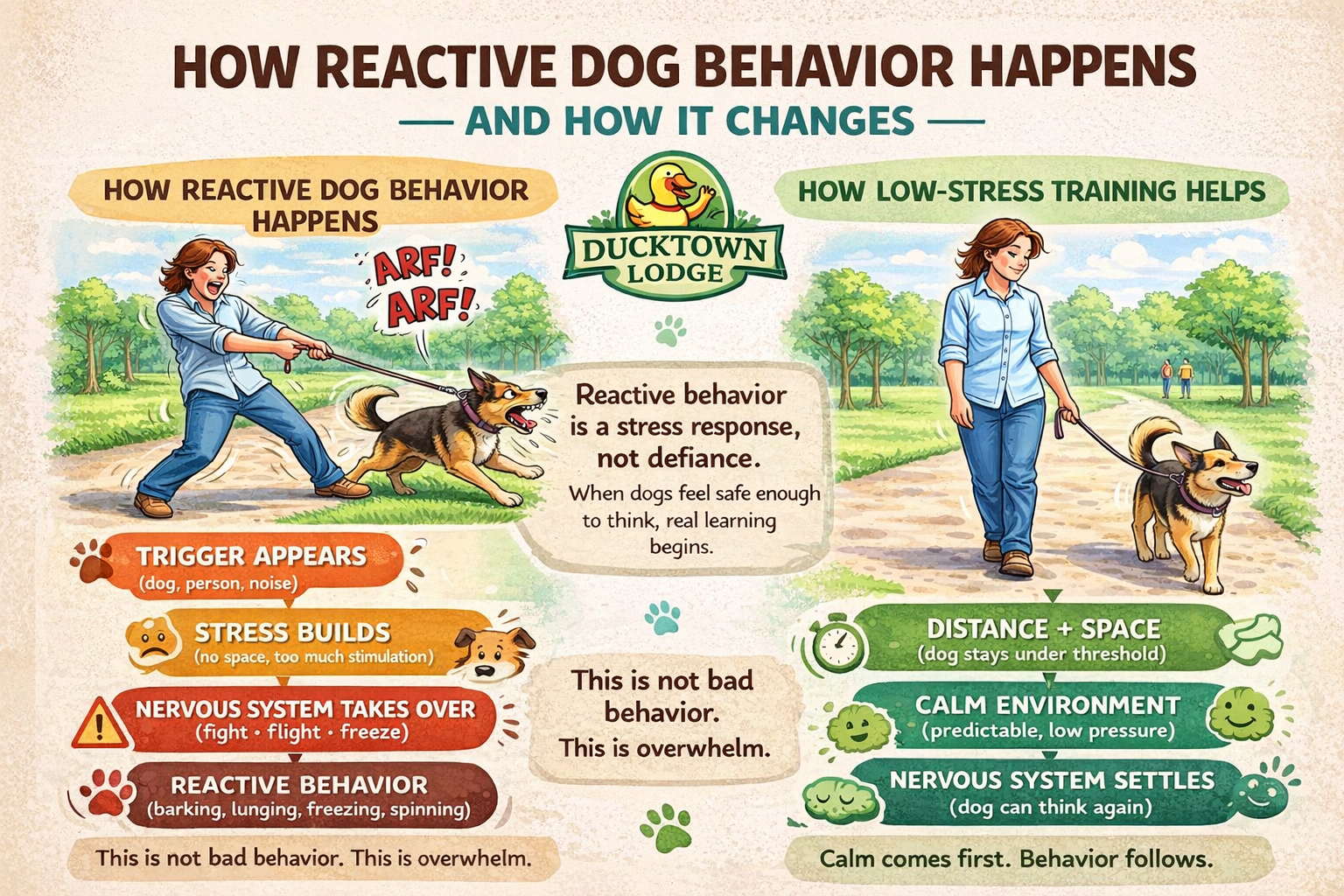
Supporting a reactive dog isn’t about fixing everything at once. It’s about making daily choices that lower stress and build trust. Small adjustments in how and where you walk, train, and interact can make a real difference over time.
When a dog is over threshold, their nervous system takes control. This visual breaks down the reactive cycle and shows how low-stress training helps dogs settle, focus, and recover faster. Sara York – Ducktown Lodge
What Helps a Reactive Dog Feel Safer
Before behavior can change, a dog needs to feel supported. These practices create space for calm and connection.
- Choose quieter routes whenever possible
Less traffic, fewer dogs, and more distance from triggers give your dog a better chance to stay regulated. - Let them explore with their nose
New smells in low-pressure areas help dogs decompress. Sniffing is calming and confidence-building. - Carry high-value rewards and use them often
Reward check-ins, eye contact, and moments of calm. Engagement matters more than perfection. - Speak up for your dog
You don’t owe anyone access. It’s okay to ask people to give you space or to step away calmly. - Practice skills at home first
Home is where learning starts. Familiar environments help behaviors become reliable before adding distractions. - Stay present and observant
Watching your surroundings helps you spot triggers early and create space before stress builds.
What Often Makes Reactivity Worse
Some common responses are well-meaning but add pressure. Avoiding these helps keep stress from spiraling.
- Don’t use force or punishment during a reaction
Pulling, yelling, or physical corrections increase fear and erode trust. - Don’t throw your dog into overwhelming situations
Pack walks, crowded outings, or forced social time can flood the nervous system and set progress back. - Don’t allow off-leash freedom in public spaces
Even friendly dogs can feel trapped or threatened without clear boundaries and control. - Don’t train when your dog is already overloaded
Learning can’t happen once a dog is over threshold. Calm always comes first. - Don’t check out mentally on walks
Being on your phone makes it easy to miss early signs of stress. Your awareness is one of your dog’s biggest supports.
A calmer path forward
Reactive dogs don’t need tougher handling. They need clearer guidance, safer choices, and humans who are paying attention. When walks feel intentional, and training respects emotional limits, progress becomes possible without pressure.
Why High-Stimulation Environments Make Reactivity Worse
Many reactive dogs aren’t highly reactive. They become that way after spending time in environments that overload their nervous system. Loud spaces, constant movement, unfamiliar dogs, and rotating handlers all add pressure. Over time, that pressure stacks.
When stimulation never lets up, a dog stays in survival mode. There is no recovery window. No chance to settle. No space to process.
The problem with chaos and constant exposure
High-volume facilities often rely on exposure alone. The idea is that dogs will get used to it. For reactive dogs, the opposite usually happens.
- Triggers become more intense
- Stress thresholds drop
- Recovery takes longer
- Behavior appears to worsen
Exposure without emotional safety does not build confidence. It builds exhaustion.
Why a calm space is not avoidance
Creating a low-stress environment is not about sheltering dogs forever. It is about giving the nervous system time to reset so learning can happen.
Calm is not the goal. Calm is the foundation.
How Low-Stress Training with Safe Distractions Helps Reactive Dogs Learn
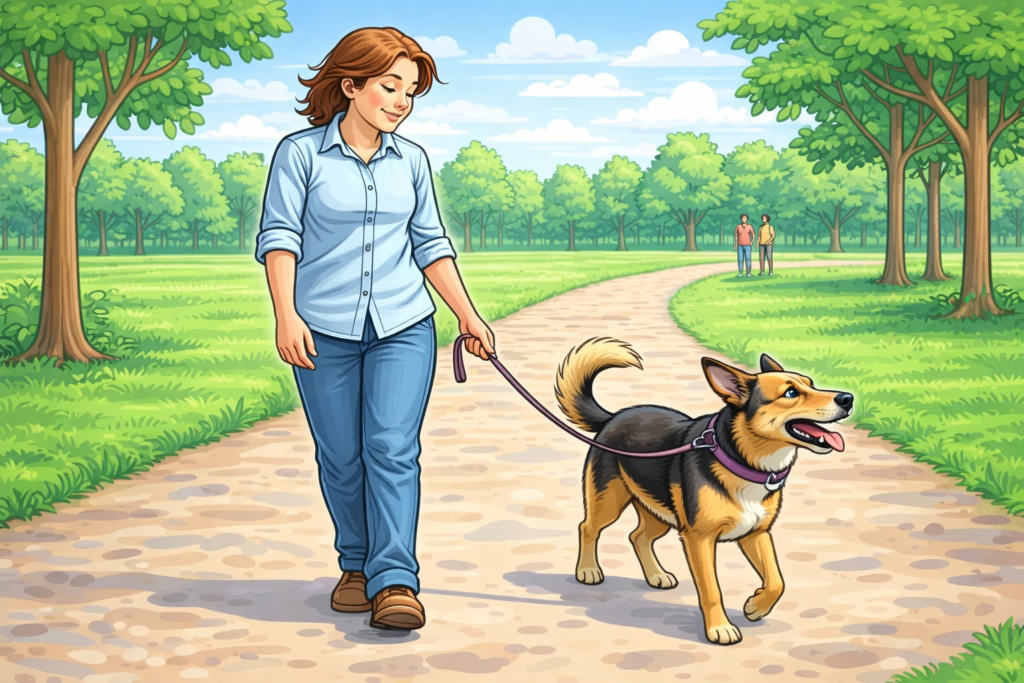
Reactive dogs need controlled exposure added slowly and intentionally. This is where our training approach makes a real difference.
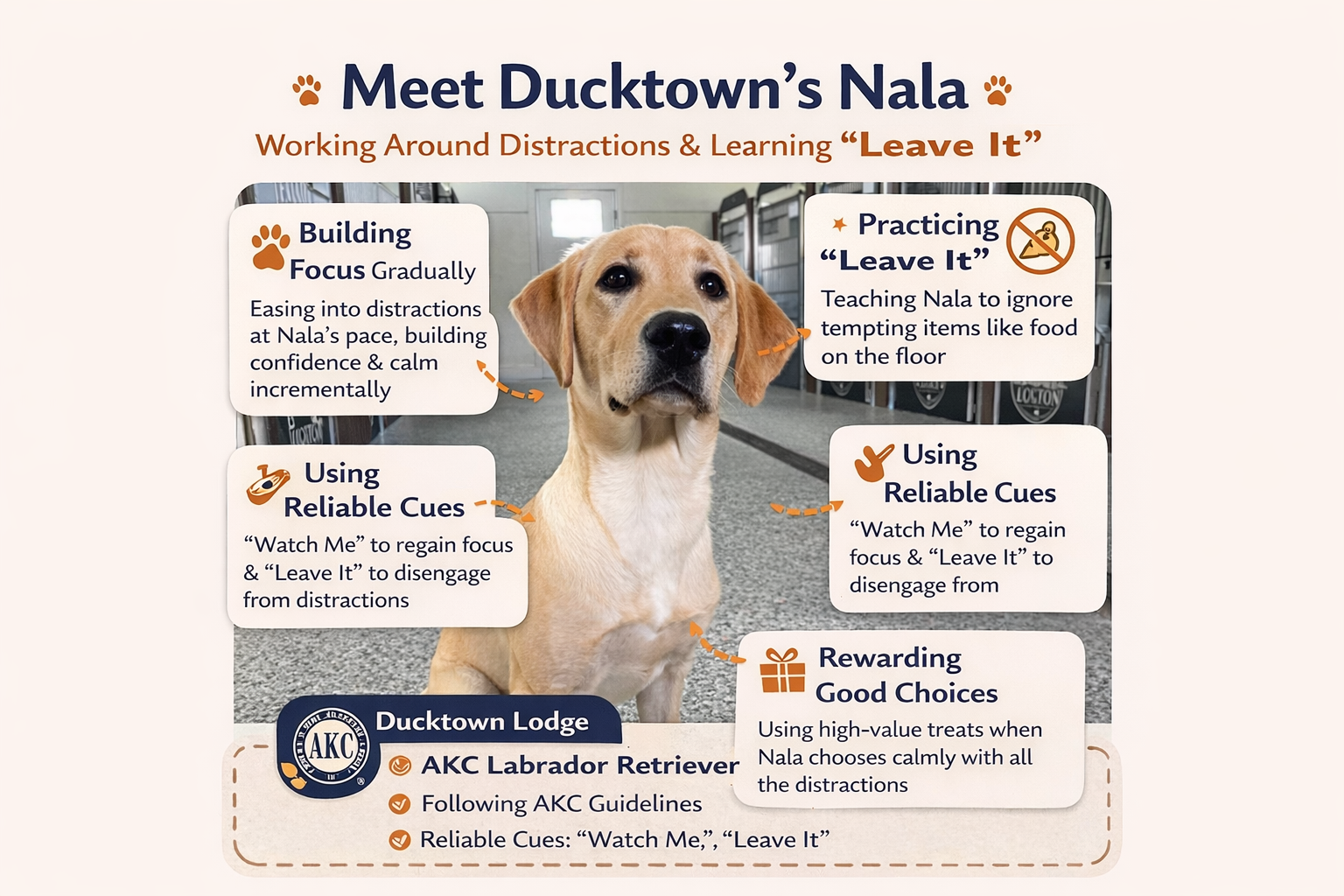
At Ducktown Lodge, distractions are never dumped on a dog. They are introduced only after the dog has settled, focused, and recovered with ease.
Adding distractions only after calm is established
Before distractions are added, dogs must show regulation. That means resting well, engaging with handlers, and recovering quickly from mild stress.
We build gradually with:
- Low-level, predictable distractions
- Clear expectations before the distraction appears
- Enough distance to stay under the threshold
- Immediate recovery time after exposure
This keeps the dog in a learning state, not a survival state.
Why safety changes how reactive dogs respond
When distractions show up in a safe environment, the dog learns something new. Triggers stop predicting panic. They start predicting clarity.
Dogs begin to:
- Check in instead of exploding
- Stay engaged longer
- Recover faster
- Trust the process
Training for real life without creating overload
Our training mirrors real life without overwhelming it.
That may include:
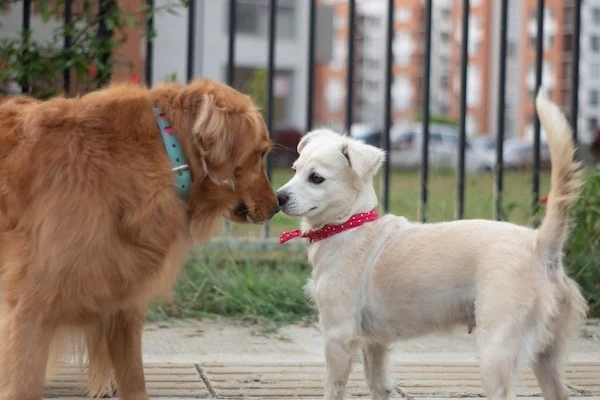
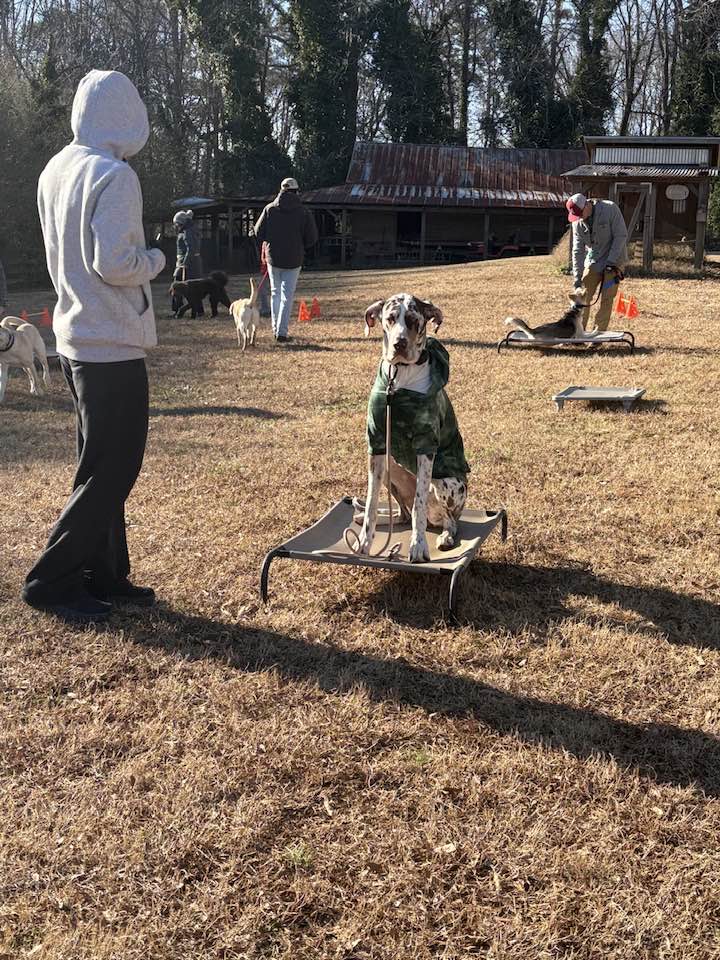
- Leash work while another calm dog moves at a distance
- Holding place as doors open and close
- Focus exercises with mild background activity
Because the environment stays steady, dogs learn they can stay regulated even when life moves around them.
How structured exposure builds long-term confidence
Reactive behavior changes when dogs learn they can handle more than they thought.
Confidence grows through clarity, not pressure.
A Real Example: Snickers and the Power of Ongoing Support
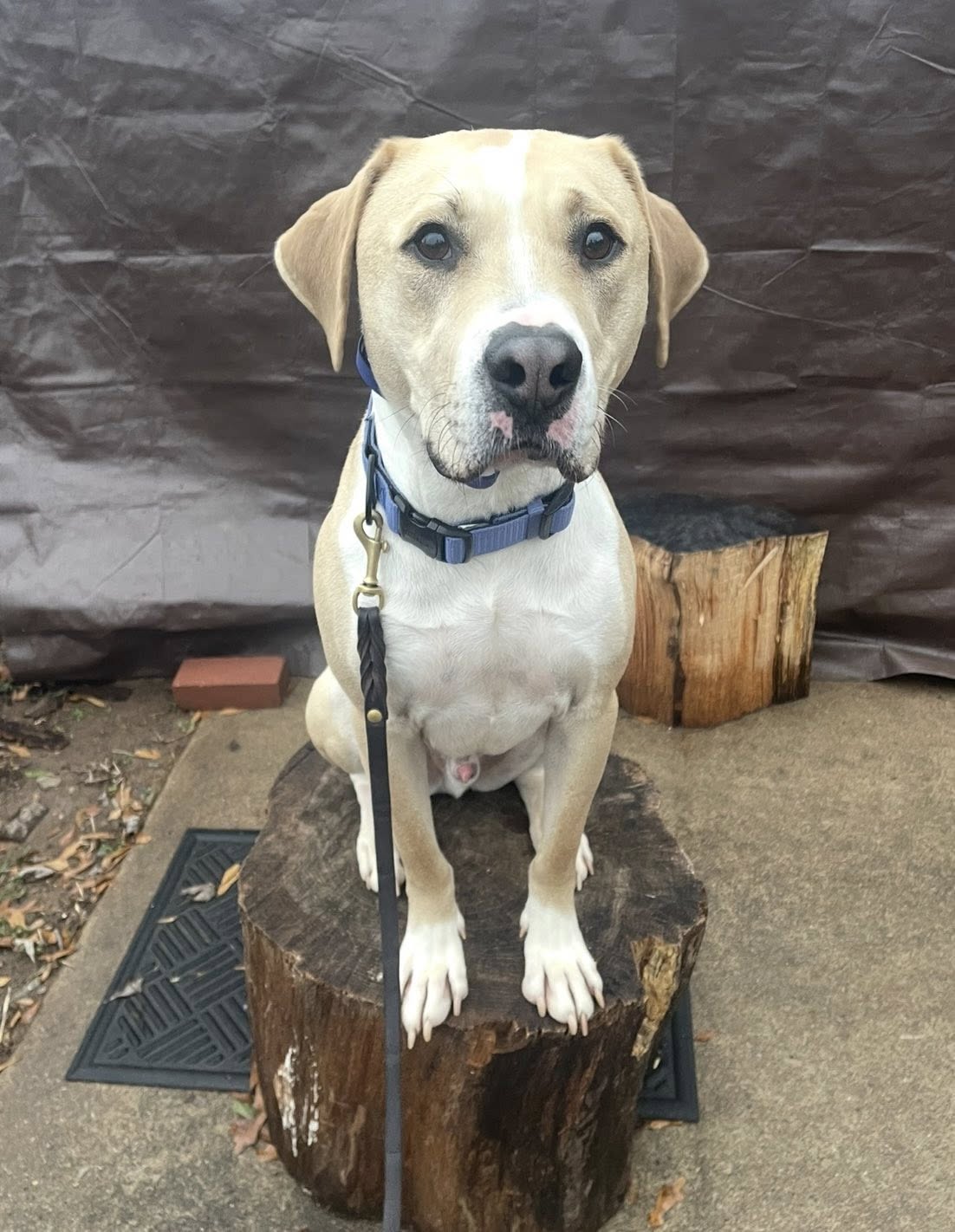
Snickers is a great example of how reactive behavior can show up later — even when a dog has been placed thoughtfully and loved well from the start. He was rescued and rehomed through Wags & Wiggles Dog Rescue, an organization known for their care, transparency, and commitment to setting dogs up for success.
When Snickers first went home, there were no obvious signs of reactivity. His family did everything right. Over time, as his world expanded and new situations came into play, stress responses began to surface. This is common, especially as dogs settle in and feel secure enough to show their full emotional range.
What mattered most was what happened next.
Instead of ignoring the signs or waiting for things to escalate, Snickers’ family leaned in. They committed to understanding what he was experiencing and how to support him in a way that felt fair and sustainable. They show up consistently, attend class every week, and focus on progress rather than perfection.
In a calm, structured training environment, Snickers has been able to build skills without pressure. With space, predictable routines, and carefully added distractions, he has made noticeable strides. His confidence has grown. His recovery time has shortened. His ability to stay engaged has improved.
Snickers isn’t being “fixed.” He’s being supported by his family, his trainers, and a system that respects his pace.
That’s what real progress looks like.
About Wags & Wiggles Dog Rescue
Snickers’ journey also highlights the role ethical rescue plays in long-term success. Wags & Wiggles Dog Rescue is dedicated to placing dogs thoughtfully and supporting them beyond adoption. Their work centers on transparency, education, and building strong matches between dogs and families.
Learn more about their mission and the dogs they support at
Why This Approach Works When Others Don’t
Quick fixes focus on stopping behavior. Low-stress training focuses on changing how a dog feels.
At Ducktown Lodge, we work with the whole dog. Their environment. Their emotions. Their pace.
This is why dogs who struggle elsewhere often settle here. And why progress lasts.
When You’re Ready for Something That Feels Better
Leaving your dog with someone else can feel heavy, especially if your dog has struggled before. You might worry they will be misunderstood. Pushed too hard. Or labeled as difficult.
You are not asking for too much. You are asking for the right kind of care.
At Ducktown Lodge, dogs are not rushed. They are not overwhelmed. They are met with consistency, clarity, and calm. Owners often tell us the biggest change is relief. Relief that they finally found a place where their dog is safe and truly seen.
If your dog needs space to settle, support to rebuild confidence, or training that respects their emotional limits, start with a conversation. No pressure. No judgment. Just honesty and care.
Let’s talk about your dog. We’ll be here when you’re ready.