Why Play in Dog Training Matters for Focus, Behavior, and Connection
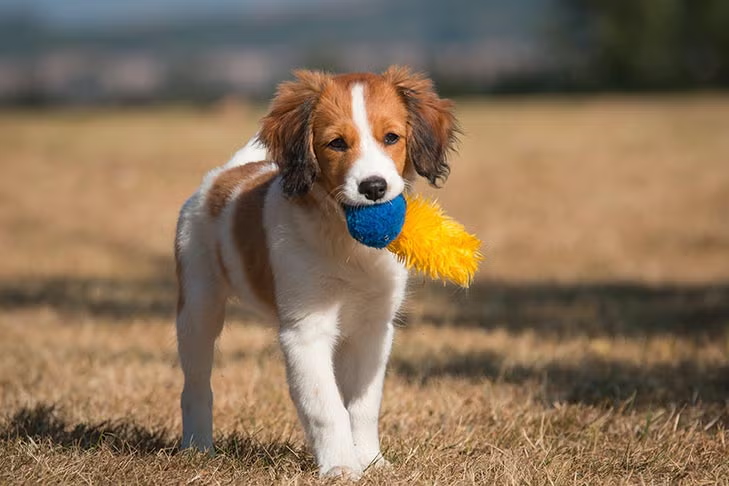
Play in dog training isn’t about being silly or unfocused. It’s about meeting dogs where they already are. Dogs are wired to learn through engagement, movement, and connection. When play is used with intention, it supports better behavior, clearer communication, and a stronger relationship between dogs and their people.
Play in dog training helps dogs learn faster, stay engaged longer, and feel safer while learning. When play is used intentionally, it builds focus, confidence, and cooperation by turning training into something dogs want to participate in, not something they endure.
How Play in Dog Training Improves Focus and Behavior
When play becomes part of training, learning stops feeling like pressure and starts feeling like a partnership. Emotionally engaged dogs pay attention more easily, respond more consistently, and retain skills longer. Understanding how play supports training helps explain why it plays such a powerful role in long-term behavior and well-being.
Why Play in Dog Training Builds Connection at a Biological Level
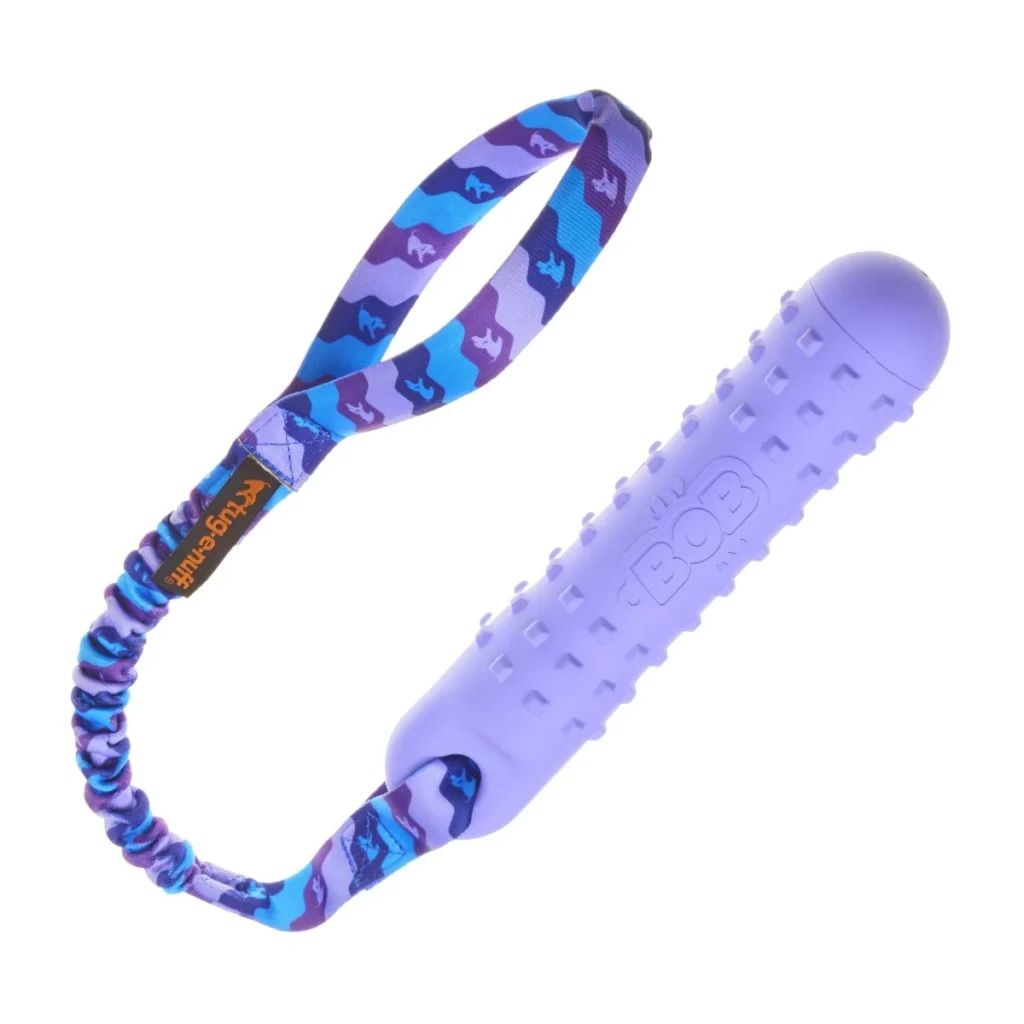
Play does more than improve focus and behavior. It changes how dogs feel in their bodies. One of the most important reasons that play works so well in dog training is that it triggers the release of oxytocin.
Oxytocin is often called the “love hormone.” It is released during positive social interactions between humans and animals. When dogs engage in play with their people, oxytocin levels rise in both the dog and the human. This chemical response helps strengthen emotional bonds and increases a dog’s desire to stay socially connected.
Research into canine social behavior shows that oxytocin amplifies a dog’s social drive. Dogs become more motivated to engage, communicate, and connect not only with other dogs, but with their human companions as well. This is one reason play feels so powerful. It biologically reinforces the relationship itself.
When play is part of dog training, learning happens in a state of connection rather than pressure. Dogs are not just responding to cues. They are responding to a relationship that feels safe and rewarding. Studies on how play boosts oxytocin in dogs show that these shared moments of interaction help create trust, cooperation, and emotional security.
This is why play-based training often feels different. Dogs are more willing to stay engaged, more resilient when they make mistakes, and more motivated to work with their people. Training supported by oxytocin-driven connection doesn’t just teach skills. It strengthens the bond that makes those skills last.
Why Play Belongs in Dog Training
Play in dog training works because it fits how dogs naturally learn. Dogs are not built to absorb information through stillness or repetition alone. They learn through movement, engagement, and emotional connection. When play is incorporated into training, learning feels cooperative rather than pressured.
This matters because dogs that feel included in the process behave differently. They stay engaged longer, recover faster from mistakes, and respond with more confidence. Play creates buy-in, and buy-in is what turns training into something that actually sticks.
What Dogs Are Wired to Do
From puppyhood on, dogs use play to understand the world. It is how they practice coordination, explore boundaries, and build social skills. That instinct does not disappear with age. Adult dogs still rely on play to regulate emotions and process information.
When training ignores this, dogs often disengage. They may comply briefly, but the learning is fragile. When training works with a dog’s natural drive to play, learning feels intuitive instead of forced.
Play supports:
- Natural curiosity and movement
- Emotional connection with humans
- Problem-solving and adaptability
- Motivation without pressure
Training through play respects how dogs are designed to learn, not how we wish they would.
Why Play Changes How Dogs Respond
Play changes the emotional tone of training. Instead of responding out of obligation, dogs respond out of interest. That shift shows up in body language, speed of response, and long-term reliability.
Dogs trained with intentional play often show:
- Faster engagement when cues are given
- Softer, more relaxed posture
- Willingness to try again after mistakes
- Stronger focus around distractions
Play lowers emotional tension. A calm dog can think. A connected dog wants to stay involved. Play does not remove structure. It supports it by making learning feel safe, clear, and worth participating in.
Play as a Reinforcer, Not a Reward
In dog training, rewards are often treated as payment. Do the behavior, get the treat. Play works differently. Play reinforces the experience of working together, not just the outcome.
When play is used in dog training, it reinforces effort, engagement, and connection. Dogs begin to associate listening and trying with something they genuinely enjoy, which changes how they show up in future training moments.
Why Play Can Matter More Than Treats
Food is useful, but it is not always the most powerful motivator. Some dogs lose interest quickly. Others become overly focused on the food itself instead of the task. Play taps into instinct and emotion.
Play as a reinforcer:
- Keeps dogs mentally engaged instead of food-fixated
- Builds motivation that lasts beyond the training session
- Feels interactive and relational, not transactional
- Works for dogs who are not strongly food-driven
When play becomes the payoff, dogs start working with you instead of waiting to be paid.
Reinforcing Willingness, Not Perfection
Play reinforces willingness. Dogs learn that trying matters, not just getting it exactly right. That makes learning feel safer and more encouraging.
When play is used intentionally:
- Dogs recover faster after mistakes
- Frustration stays lower
- Confidence builds more naturally
Play does not replace structure or clarity. It supports them by helping dogs stay emotionally open to learning.
The Role of Play in Emotional Well-Being
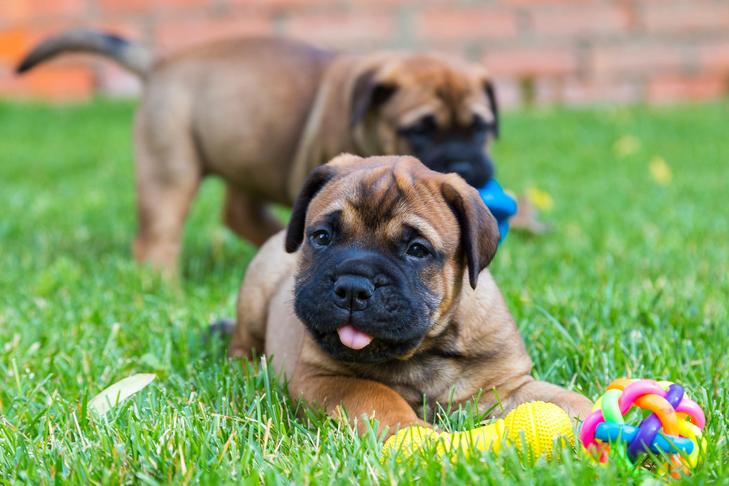
Play is not just a training tool. It is one of the most effective ways dogs regulate stress and process emotions. Dogs who play regularly tend to settle more easily and carry less tension in their behavior.
Interestingly, hide-and-seek is a favorite game of many humans and their dogs, me and mine included. Games like this aren’t just fun. Research on why play is important for dogs shows that interactive play supports emotional regulation, confidence, and resilience, especially in everyday environments.
A dog that feels overwhelmed or anxious cannot learn well. Play helps reset the nervous system and creates the emotional space dogs need to stay present.
How Play Supports Stress Regulation
Play allows dogs to release energy in a way that feels safe and controlled.
Play helps by:
- Reducing frustration that leads to unwanted behavior
- Helping dogs decompress after stimulation or change
- Creating predictable, positive interaction
For dogs in new environments, play can be grounding and familiar.
Building Confidence Through Play
Play is especially helpful for shy or sensitive dogs. It offers low-pressure opportunities to succeed and engage.
Through play, dogs learn:
- They can interact without fear of being wrong
- Exploration leads to positive outcomes
- Human interaction feels safe
Confidence built through play carries into everyday life.
How Play Improves Focus and Learning in Dog Training
Focus develops when dogs feel engaged and safe. Play creates that state naturally.
Training built on control may produce short-term results, but play-based engagement builds focus that holds under distraction.
Why Play in Dog Training Works
Play invites attention before cues are given.
When engagement comes first:
- Dogs respond faster
- Learning moves more smoothly
- Communication feels clearer
Why Enjoyment Leads to Better Attention
Dogs that enjoy the interaction want to stay involved.
Play-based training often leads to:
- Faster responses
- Stronger recall
- Greater consistency across environments
Focus becomes something dogs offer, not something forced.
Different Types of Play and What They Teach
Not all play looks the same. Matching play style to the dog matters.
Movement-Based Play
Movement play supports confidence and engagement.
It can:
- Improve coordination
- Release energy calmly
- Support recall and check-ins
Toy and Object Play
Toy play teaches clarity and impulse control when structured well.
It supports:
- Clear start and stop cues
- Focus in exciting situations
- Reinforcement for effort
Social Play With Humans
Human-led play strengthens the dog–human bond and reinforces attention.
Dogs who play with their people stay more engaged during training.
Common Mistakes When Using Play in Dog Training
Play needs structure to stay helpful.
When Play Becomes Overstimulating
Signs play has gone too far:
- Difficulty disengaging
- Ignoring familiar cues
- Trouble settling afterward
Shorter sessions and clearer boundaries help.
Ignoring Individual Play Style
Not all dogs play the same way.
Play works best when it respects:
- Energy level
- Sensitivity
- Preference
How We Use Play at Ducktown Lodge
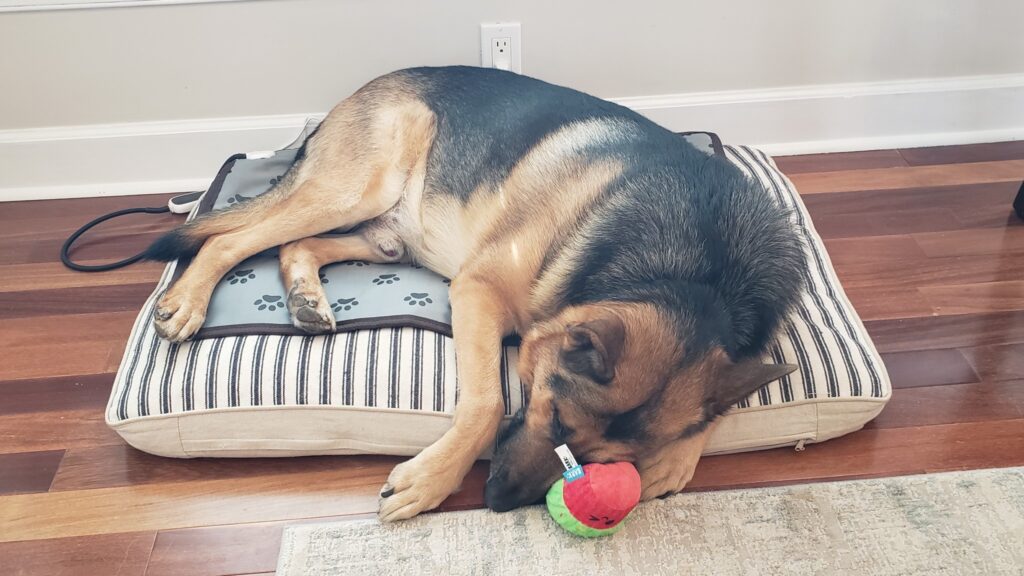
At Ducktown Lodge, play is woven into daily care and training. It supports emotional balance, learning, and trust.
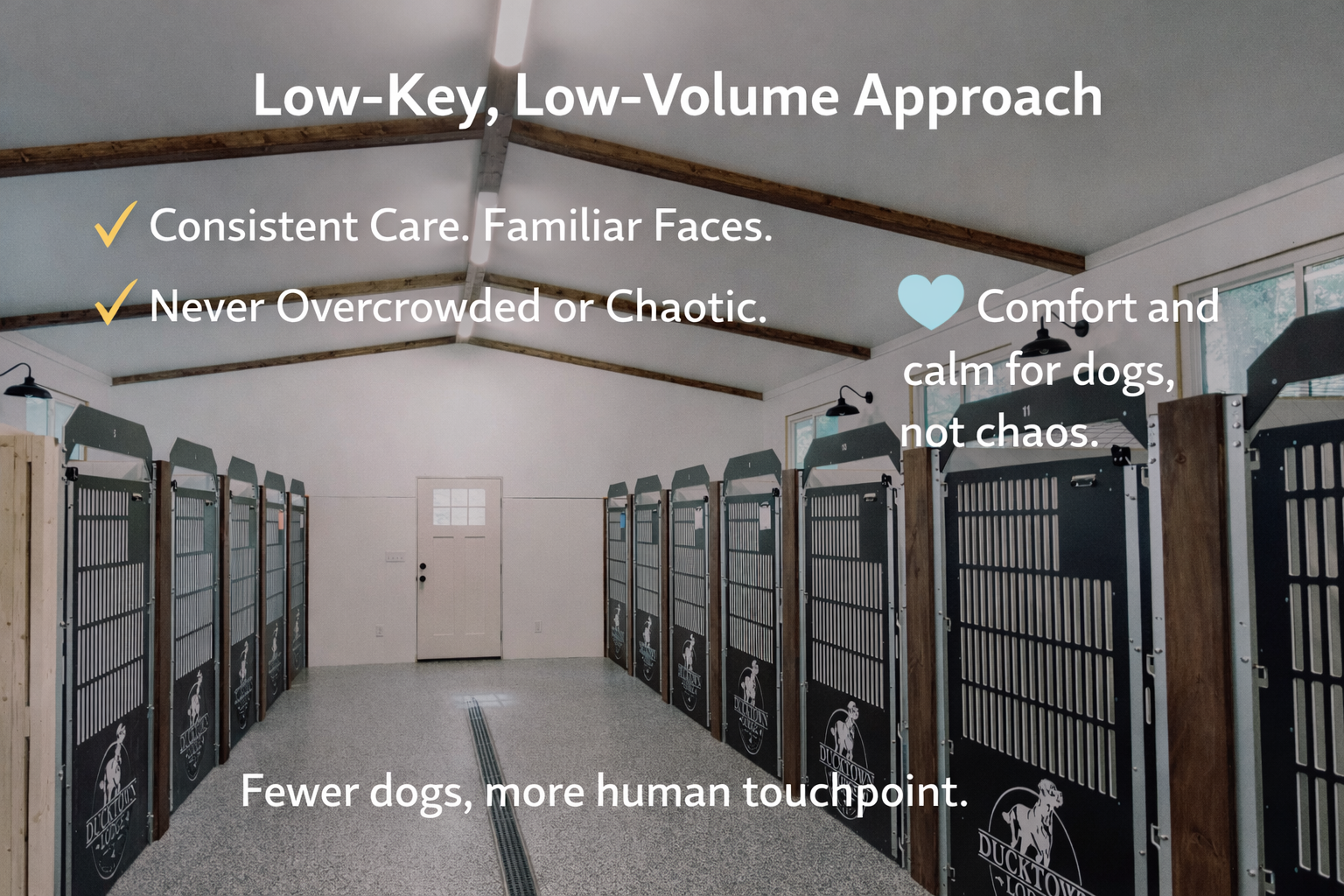
At Ducktown Lodge, play isn’t a scheduled activity or a bonus add-on. It’s part of how dogs settle, connect, and feel at home. Because we keep our care low-volume and personal, play stays intentional and responsive to each dog instead of being overstimulating or chaotic.
Every dog arrives with their own history, preferences, and comfort cues. We pay attention to those details and use play as a way to help dogs feel grounded and familiar in a new space.
Carter’s Story: Familiar Play Creates a Happier Stay
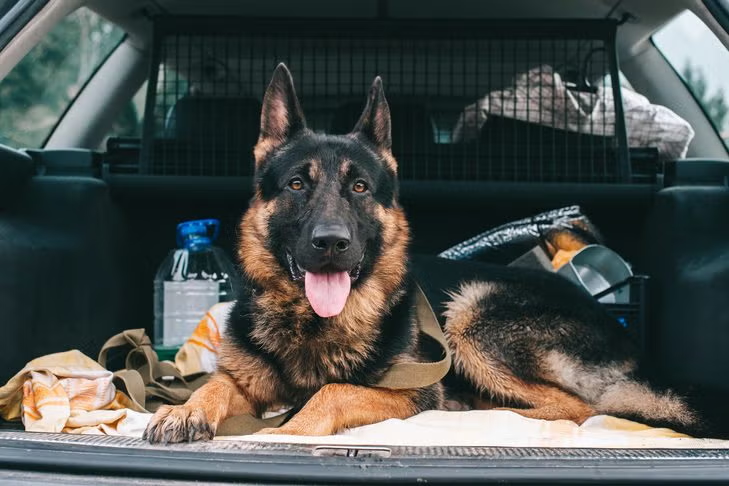
Carter, a German Shepherd who stays with us regularly, arrives each time with something familiar from home. His mom sends a new toy with him every visit. That small ritual makes a big difference.
Having a familiar play item gives Carter an immediate sense of comfort. It’s something he recognizes, something that smells like home, and something that helps him settle into his routine more easily. Play becomes a bridge between his life at home and his time here.
For Carter, play isn’t about burning off energy. It’s about connection. Short, intentional play moments help him relax, engage, and feel secure in his environment. Because play is woven into his daily rhythm, not forced or overstimulating, his stays are calmer and happier each time.
This is how we approach play with every dog. We don’t use it to hype dogs up or fill time. We use it to support emotional balance, confidence, and trust. When dogs feel safe and understood, everything else falls into place.
Play at Ducktown Lodge isn’t separate from care. It is part of the care.
Play in Dog Training Creates Better Behavior Through Connection
Play does not need to be long or intense to be effective.
Simple Ways to Start
- Brief play before walks
- Short play breaks after cues
- Turning recall into movement
What to Watch For
Healthy play looks like:
- Relaxed body language
- Easy transitions
- Improved focus afterward
Why Play Supports Long-Term Behavior Change
Play ties learning to positive emotion.
Joy Creates Memory
Dogs remember lessons linked to enjoyment.
Play helps:
- Improve recall
- Transfer skills to new environments
Sustainable Training Feels Good
Dogs trained through play:
- Stay engaged
- Offer behaviors
- Handle change better
Play in Dog Training Is Not Extra. It’s Essential.
Play supports better behavior, emotional well-being, and lasting learning. It helps dogs feel safe, confident, and connected.
Training works best when dogs want to participate. Play makes that possible.
A Calmer, More Connected Way to Support Your Dog
If you’re looking for training or care that feels steady, respectful, and clear, Ducktown Lodge offers a different approach. Dogs here are supported in a calm environment where play, structure, and consistency work together.
Whether your dog is staying for boarding, training, or both, our focus is trust, clarity, and emotional safety.
Start with a conversation.
Ask us anything. We’re here when you’re ready. Call us at 770-733-0836 or email hello@ducktownlodge.com