Dog Obedience Trainer for Families on Training Kids and Dogs Safely at Home
As a dog obedience trainer for families, I can tell you this subject matters more than most people realize. Training kids and dogs safely is not optional. It shapes the emotional wellness of your dog and directly impacts the safety of your children. The way puppies and children interact happens in the early months can either build confidence or create behavioral issues that follow your family for years.
A dog obedience trainer for families teaches that training kids and dogs safely starts with structure, supervision, and clear boundaries. Puppies and children’s interaction must be calm, guided, and consistent to prevent resource guarding, anxiety, and unsafe behaviors before they begin.
Even organizations like the American Kennel Club emphasize that positive exposure between dogs and children must be structured and supervised. Helping your dog feel safe around kids is not about tolerance. It is about guidance, boundaries, and trust. You can read their expert perspective here
Why Training Kids and Dogs the Right Way Protects Everyone
When families bring home a puppy, they focus on sit, down, and leash walking. Those skills matter. But what matters more is how that puppy learns to live with children. Every interaction between puppies and children teaches something. Without structure, you can accidentally create behavioral problems like resource guarding, fear, or reactivity. With guidance from a dog obedience trainer for families, training kids and dogs becomes intentional instead of reactive.
Why Training Kids and Dogs the Right Way Protects Everyone
When families bring home a puppy, they focus on sit, down, and leash walking. Those skills matter. But what matters more is how that puppy learns to live with children. Every interaction between puppies and children teaches something. Without structure, you can accidentally create behavioral problems like resource guarding, fear, or reactivity. With guidance from a dog obedience trainer for families, training kids and dogs becomes intentional instead of reactive.
Dog Obedience Trainer Insight: Why Training Kids and Dogs Safely Matters
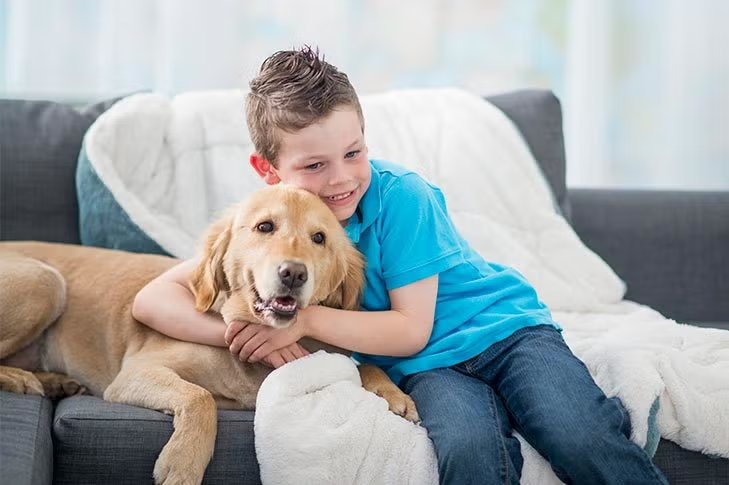
When you hire a dog obedience trainer for families, you are not just asking for better obedience. You are protecting the long term wellness of your dog and the safety of your children.
Training kids and dogs safely is foundational.
Every day I see families who love their dogs deeply. They also love their children deeply. But love without structure can create stress. Puppies and children interaction shapes behavior faster than almost anything else in the home.
Small moments matter.
A child is grabbing a toy.
A puppy is being cornered while chewing.
A parent saying, “It’s fine, he’s used to it.”
That is how patterns form.
When it comes to puppies and children’s interaction, prevention is everything. The NASC explains key obedience skills that help reduce overstimulation and unsafe reactions around kids. These are the same principles a dog obedience trainer for families applies in real homes every day.
The Wellness of Your Dog and the Safety of Your Child Are Connected
You cannot separate these two things.
A dog that feels safe and clear about boundaries is calm.
A dog that feels confused or pressured becomes tense.
Tension is where problems grow.
As a dog obedience trainer for families, I focus heavily on training kids and dogs together because that is where long term stability is built.
Accidental Behavioral Issues Families Create
No one means to create a problem. It happens slowly.
- Inconsistent Rules – One day, the puppy can jump. The next day he is corrected. Confusion builds anxiety.
- Rough Play Framed as Bonding – Wrestling may look cute, but it teaches escalation.
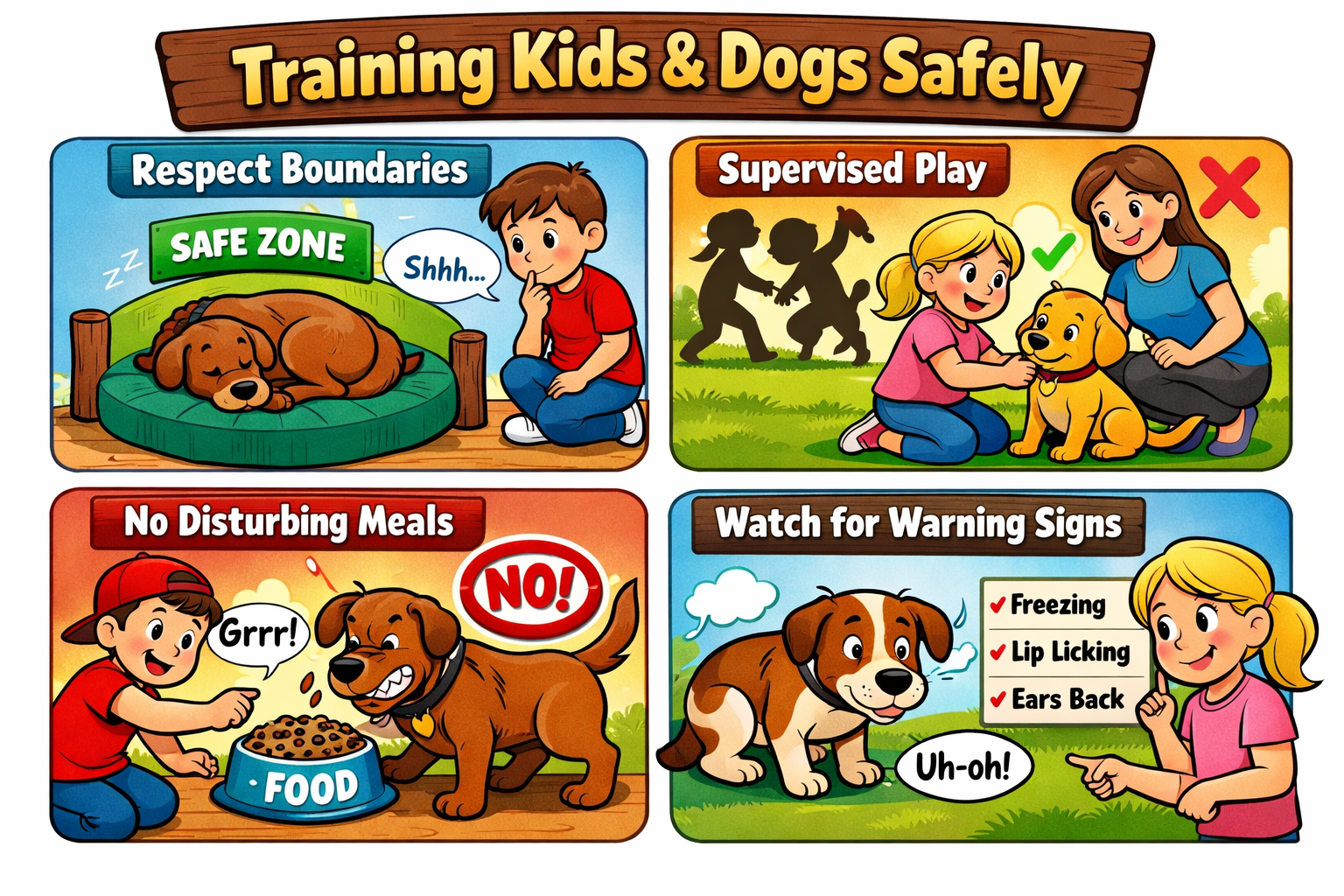
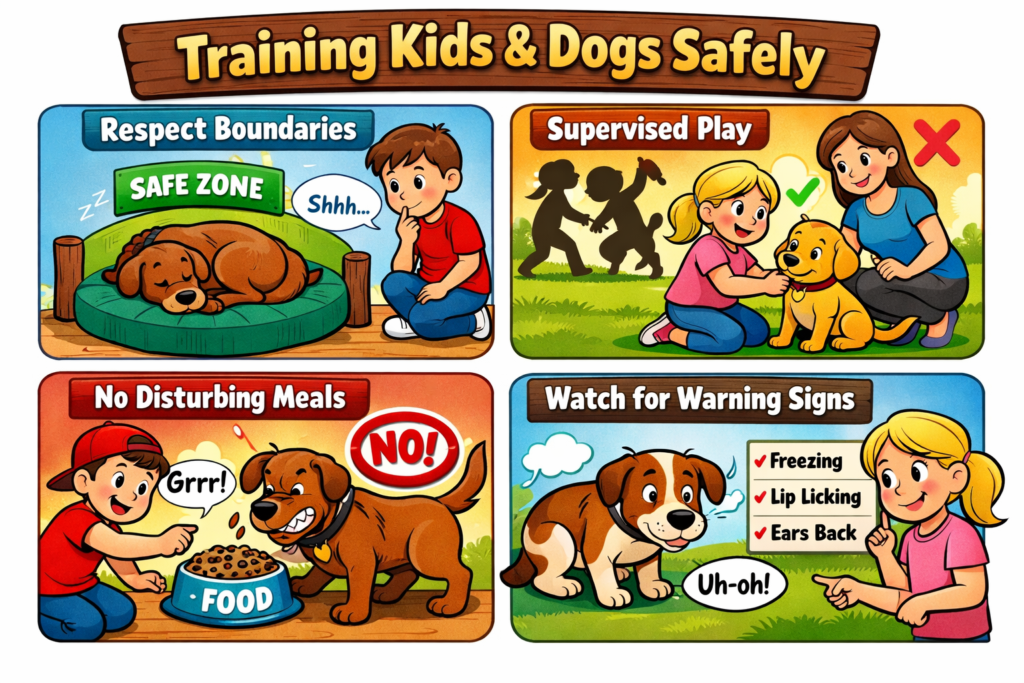
- Boundary Violations – Allowing children to disturb dogs while eating or resting.
- Ignoring Early Stress Signals – Lip licking, freezing, turning away. These are early warnings.
Dogs communicate early. We just have to notice.
The Cost of Getting It Wrong
If puppies and children’s interaction is unmanaged, you may see:
- Resource guarding
- Reactivity around movement
- Snapping when startled
- Loss of trust
- Preventable bites
Most of these outcomes are preventable with proper structure and guidance from a dog obedience trainer for families.
Raising Puppies and Children: Interaction the Right Way
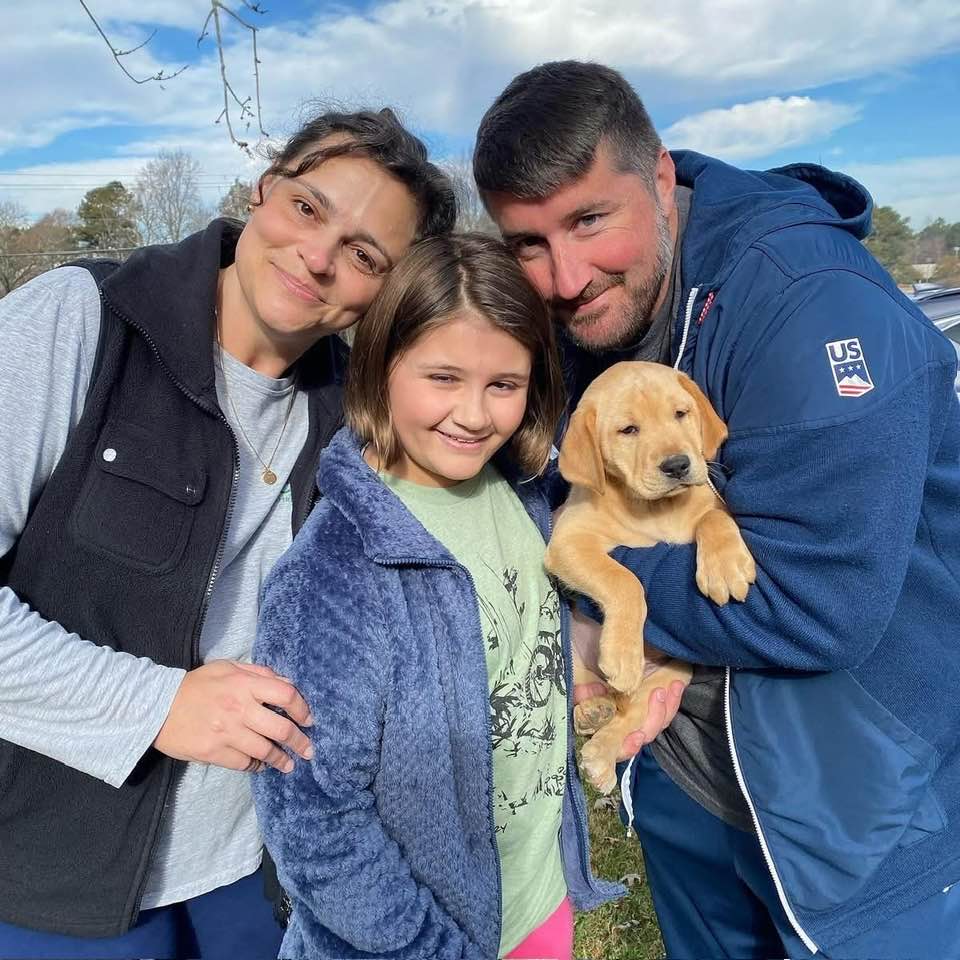
Puppies are always learning.
They are learning how the world works.
If a child grabs a bone and the puppy freezes, that puppy just learned something.
If a child screams and runs and the puppy chases, that puppy just learned something.
Repetition builds expectation.
Structure Builds Confidence
Training kids and dogs safely means slowing things down.
We focus on:
- Calm introductions
- Short, supervised interactions
- Clear rules for both dog and child
- Ending sessions before overstimulation begins
Structure creates emotional safety.
Teach the Child First
Before we ask the puppy to behave perfectly, we coach the child.
- Respect for Space – No hugging, climbing, or crowding the dog.
- Calm Energy – Fast movement excites puppies quickly.
- Hands Off During Meals – Eating time is protected. Always.
- Safe Zones Matter – A crate or bed belongs to the dog alone.
When children understand these rules, dogs relax.
Preventing Resource Guarding: A Dog Obedience Trainer for Families Explains
Resource guarding is when a dog becomes protective of food, toys, bones, or even people.
It is not dominance.
It is insecurity.
A puppy that feels something might be taken unfairly learns to hold on tighter.
How Families Accidentally Create Resource Guarding
This often starts innocently.
- A child grabs a toy from the puppy.
- A parent removes the food bowl to “test” the dog.
- A sibling teases the dog during chewing time.
From the dog’s perspective, resources feel unstable.
Early warning signs include:
- Freezing over an object
- Stiff body posture
- Quick snapping motions
- Growling when approached
These are preventable patterns.
How Training Kids and Dogs Safely Prevents Guarding
- Clear Mealtime Boundaries – Children do not approach eating dogs.
- Positive Trade Games – Puppies learn that giving something up leads to something better.
- Adult Control of High-Value Items – Special chews are supervised.
- Confidence Building – Puppies learn their resources are secure.
A dog obedience trainer for families prevents guarding before it becomes a crisis.
Sara’s Rehoming Story: Training Kids and Dogs Requires Rules for Everyone
Before Ducktown Lodge, Sara trained thousands of shelter dogs and helped place them in new homes. She interviewed families carefully, especially families with children.
One meeting stands out.
During an interview, a mother reached down and pulled the dog’s tail.
Sara calmly asked, “Why are you pulling her tail?”
The mother replied, “I want to make sure she’s okay with it if my children pull her tail.”
That family was not chosen.
Not because they were bad people. But because they misunderstood something important.
Children need rules just like dogs do.
Training kids and dogs safely does not mean testing a dog’s tolerance. It means teaching respect.
- No Tail Pulling Ever – Not as a test. Not as practice.
- No Disturbing Resting Dogs – Sleep is protected.
- No Interfering With Meals – Resource security prevents guarding.
- Ask Before Touching – Invite interaction instead of demanding it.
This is how we protect both the dog and the child.
Long-Term Results of Working With a Dog Obedience Trainer for Families

When training kids and dogs safely is done correctly, the results are steady.
Emotionally Stable Dogs
Dogs raised with structure around children:
- Relax during a family activity
- Feel secure around movement and noise
- Show fewer guarding behaviors
- Trust their environment
Confident Children
Children raised with boundaries learn:
- Respect for animals
- Emotional awareness
- Patience and self control
A Calmer Home
Families often say:
“There’s no tension anymore.”
“Our dog just seems settled.”
That is the goal.
Not perfection.
Calm.
Dog Obedience Trainer for Families: Let’s Build a Safer Home Together
This subject can make or break the wellness of your dog and the safety of your children.
We can accidentally create behavioral issues like resource guarding. Or we can prevent them.
With experience in puppy and children interaction, shelter dog placement, and training kids and dogs safely, we help young families make confident, informed choices. Want help training kids and dogs safely in your own home? Visit our Dog Training page to see how we guide families through structured, relationship-based obedience training.
You do not have to guess.
You do not have to hope it works out.
Let’s build a structure that protects your dog and keeps your children safe.