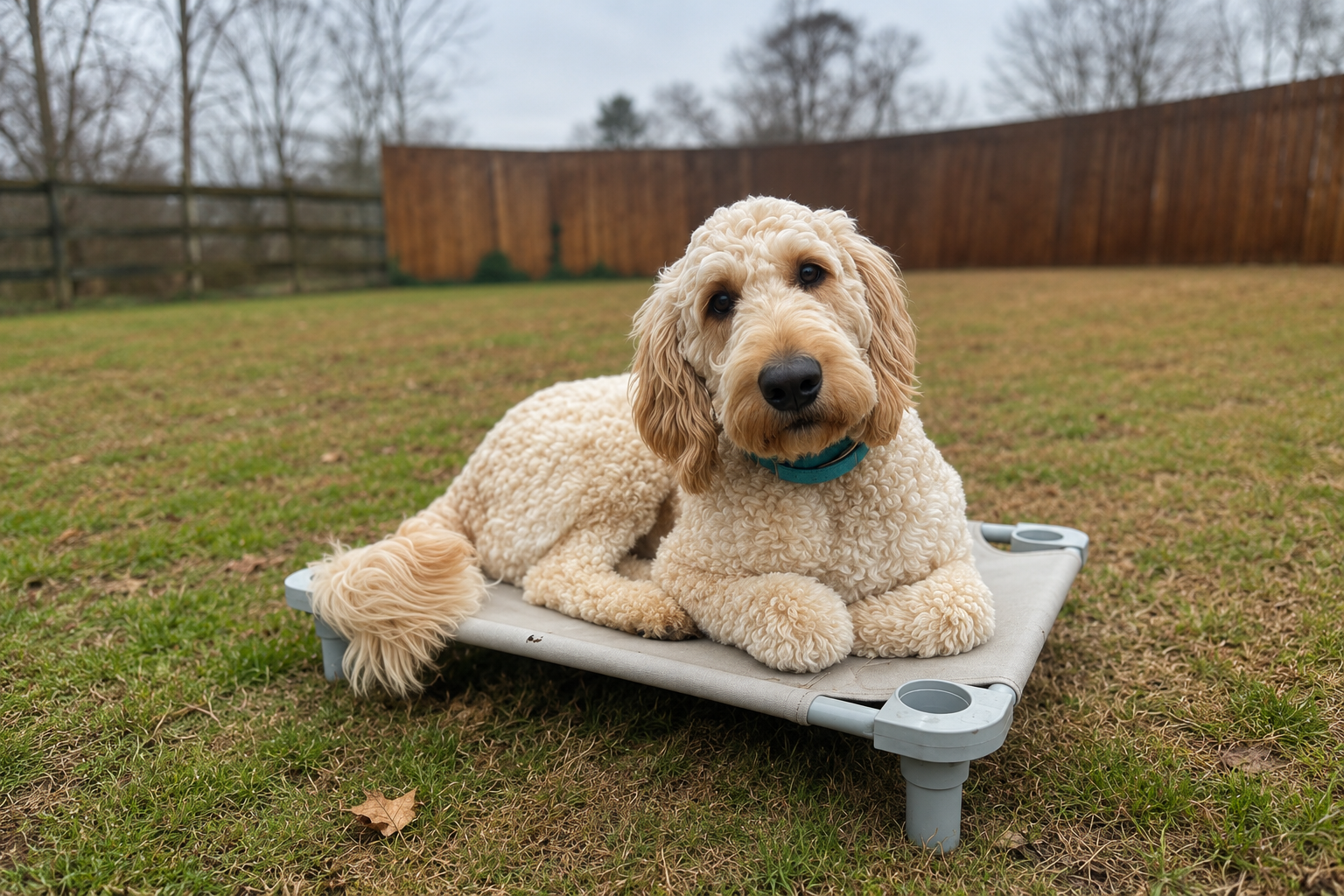
We get asked a lot about therapy dog training at Ducktown Lodge.
What makes a good therapy dog? Does my dog need special training? How does my dog become certified? What is the difference between a therapy dog and a service dog? Does my dog need a Canine Good Citizen title? And where can we actually volunteer once we are ready?
We understand why this topic can get confusing. Terms like therapy dog, service dog, Canine Good Citizen, certification, registration, and AKC Therapy Dog title are sometimes used as though they all mean the same thing.
They don’t.
As an AKC breeder and dog trainer, we spend a lot of time thinking about temperament, socialization, good manners, and the relationship between a dog and the person holding the leash. We have also become more personally involved in therapy dog work through our volunteer involvement with Pet Partners in Roswell, Georgia.
So we wanted to put together a straightforward guide to therapy dog training based on the questions dog owners ask us most.
We’ll talk about what makes a good therapy dog candidate, what skills matter, how Canine Good Citizen fits into the picture, how therapy dog certification actually works, and where you and your dog may eventually volunteer.
Most importantly, we’ll talk about preparing both ends of the leash.
Because therapy work is not just about having a well trained dog.
It is about becoming a good dog and handler team.
What Is a Therapy Dog?
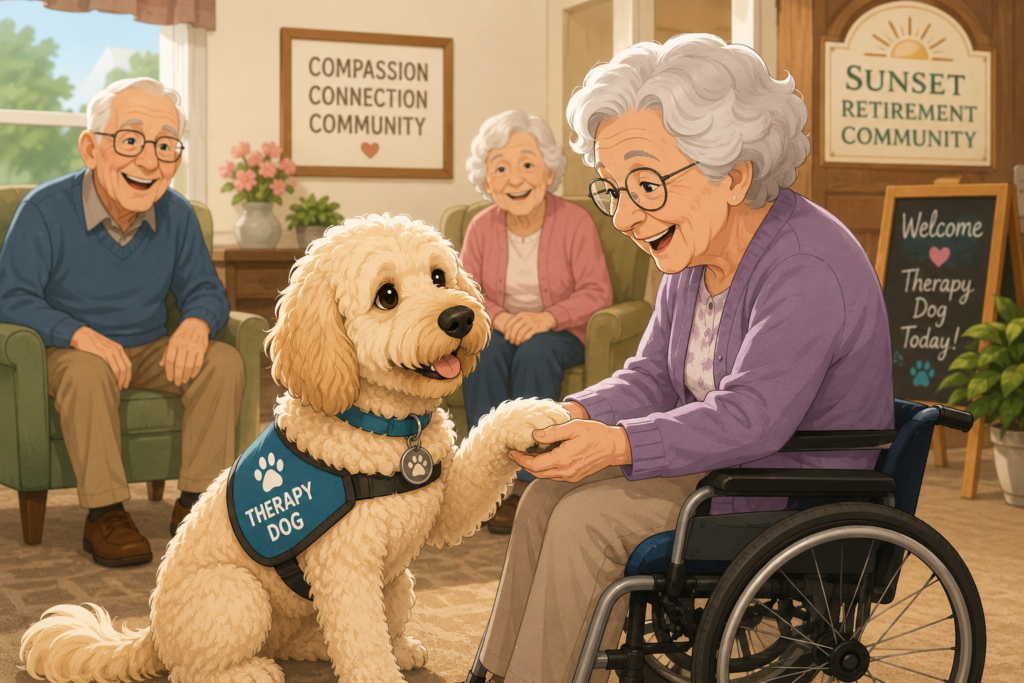
A therapy dog works alongside a human handler to provide comfort, affection, and positive interaction to other people.
Therapy dog teams may volunteer in nursing homes, assisted living communities, hospitals, schools, libraries, hospices, and other approved environments. The American Kennel Club describes therapy work as volunteer work performed by dogs and their owners together as a team.
If you have a calm, friendly, well behaved dog who genuinely enjoys people, therapy dog training may be something worth exploring.
But being friendly is only the beginning.
Therapy Dogs Are Not Service Dogs
This is probably the question we hear most often.
A therapy dog is not a service dog.
Service dogs are individually trained to perform tasks for a person with a disability. Therapy dogs and their handlers generally volunteer together to interact with and provide comfort to other people.
Therapy dogs also do not receive the same public access rights as service dogs. Having a therapy dog certification, registration, or title does not automatically give your dog permission to enter restaurants, stores, or other places where pets would otherwise be prohibited.
An emotional support animal is different too. Emotional support animals provide comfort to their individual owners rather than working as volunteer therapy dog and handler teams.
Understanding those differences is an important first step in responsible therapy dog training.
Does My Dog Have What It Takes for Therapy Dog Training?
Before worrying about certification, titles, or evaluations, look at the dog in front of you.
Temperament matters.
The AKC describes a good therapy dog candidate as calm and friendly, comfortable with handling, and happy around a variety of unfamiliar people. Age requirements can vary between therapy organizations, and therapy dogs can be purebred or mixed breed.
We think one question is especially important:
Does your dog actually enjoy people?
There is a difference between a dog who tolerates being approached and a dog who genuinely enjoys appropriate interaction.
Therapy work should not be something we force a dog to do because we like the idea of it.
A potential therapy dog should also be able to recover when something unexpected happens. A wheelchair may move. A walker may make an unfamiliar sound. Someone may approach differently than your dog expects. A hallway may suddenly become busy.
We are not looking for a robot.
We are looking for a dog who can experience something new, recover, and reconnect with the handler.
What Skills Does a Dog Need for Therapy Dog Training?
Good therapy dog training begins with practical everyday manners.
The exact requirements depend on the organization you eventually choose, but a strong foundation may include:
- Sit, down, and stay. Your dog should respond to basic direction even when the environment becomes interesting.
- Loose leash walking. A therapy dog needs to move calmly with the handler rather than pulling toward every person or distraction.
- Recall. Your dog should respond reliably when called.
- Leave it. Hospitals, nursing homes, schools, and other facilities may contain food, medication, or objects that do not belong in your dog’s mouth.
- Polite greetings. Loving people is wonderful. Launching yourself at them is another story.
- Settling. Sometimes the most useful thing a therapy dog can do is simply lie quietly beside someone.
- Handler focus. When something changes, your dog should be able to reconnect with you.
These are the kinds of practical skills we value in everyday dog training at Ducktown Lodge too.
Training should work when real life shows up.
Canine Good Citizen and Therapy Dog Training
The AKC Canine Good Citizen program is a great place to build and evaluate foundational manners.
The CGC test covers ten skills designed around good manners at home and in the community. AKC specifically describes CGC as a useful starting point for potential therapy dogs, and some therapy organizations require CGC before their own therapy evaluation.
But here is an important distinction:
Passing the CGC does not automatically make your dog a therapy dog.
The CGC establishes a strong foundation. Your chosen therapy dog organization may have additional requirements and evaluations.
And you are not required to use one particular trainer to take the CGC test. AKC states that the test can be administered by any AKC Approved CGC Evaluator.
That gives owners flexibility when deciding where to train and who they want to work with while building those foundational skills.
Therapy Dog Training Has to Work in the Real World
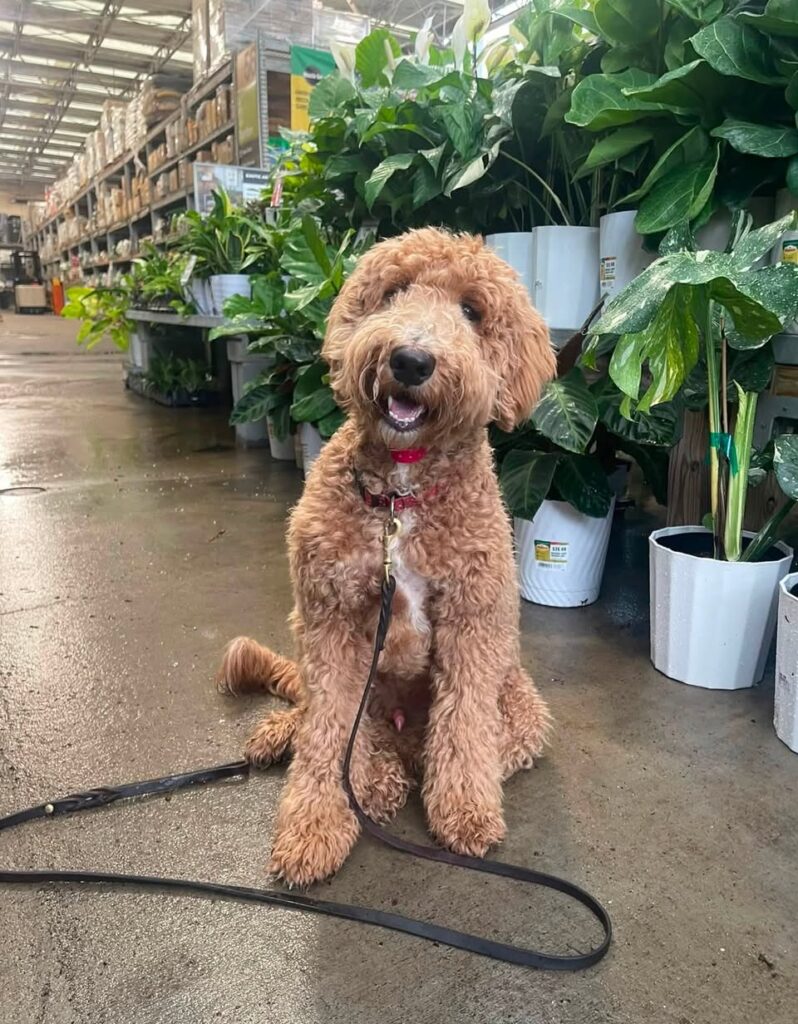
This is where training gets interesting.
Your dog may perform a beautiful down stay in your living room.
Now add a wheelchair.
Add a person using a walker.
Add an unfamiliar floor.
Add people talking.
Add a door opening behind you.
Add someone who is very excited to meet your dog.
Can you and your dog still communicate?
AKC guidance on preparing dogs for therapy work specifically discusses building positive experiences around medical equipment such as wheelchairs, walkers, canes, and crutches. It also emphasizes skills such as “leave it,” which can become particularly important in healthcare environments.
Depending on where you hope to volunteer, therapy dog training may include appropriate preparation around:
- Wheelchairs, walkers, and crutches
- Children and groups of people
- Different flooring and surfaces
- Unfamiliar noises
- Tight hallways and doorways
- People moving differently
- Food and other distractions
- Long periods when your dog simply needs to settle
You cannot rehearse everything that will ever happen.
That is not the goal.
The goal is teaching your dog how to recover, reconnect with you, and accept guidance when something unexpected happens.
How Does Therapy Dog Certification Actually Work?
This is another area where terminology gets confusing.
The American Kennel Club does not certify therapy dogs.
Instead, AKC recognizes therapy work performed by dogs who are certified or registered through an AKC recognized therapy dog organization. AKC then awards Therapy Dog titles based on documented qualifying visits.
So think of the process as separate pieces:
Training builds the skills.
CGC can demonstrate a strong foundation and may be required by some organizations.
A therapy dog organization determines its own certification or registration requirements.
AKC Therapy Dog titles recognize qualifying volunteer work after a dog is certified or registered through a recognized organization.
Those are related, but they are not interchangeable.
Choosing a Therapy Dog Organization
Before getting too far into therapy dog training, research the organization through which you hope to volunteer.
Different organizations have different processes.
Pet Partners is one option. Alliance of Therapy Dogs is another.
For example, Alliance of Therapy Dogs currently evaluates both the dog’s manners and the handler’s skills and requires supervised observations as part of its certification process.
The important takeaway is simple:
Choose your organization and learn its requirements instead of assuming there is one universal therapy dog certification process.
That can save you a lot of confusion later.
Where Can I Volunteer With a Therapy Dog?
This is one of our favorite questions because people sometimes think therapy dog work means only one thing.
It doesn’t.
AKC lists therapy dog visits in places including nursing homes, classrooms, libraries, assisted living centers, hospices, schools, shelters, and even courtrooms.
Depending on the therapy organization, facility requirements, and opportunities in your community, you may be interested in working with:
- Seniors in nursing homes or assisted living
- Hospital or healthcare patients
- Children in school or reading programs
- College students
- Hospice programs
- Libraries
- Community programs
- Other approved facilities
This is worth thinking about before you finish your therapy dog training.
What kind of environment does your dog enjoy?
A dog who loves quietly sitting beside an older adult may have different strengths from a dog who is comfortable around active groups of children.
There is no prize for choosing the busiest or most impressive setting.
Find work that suits the dog and handler team.
Pet Partners helps registered therapy animal teams connect with volunteer opportunities, and handlers can also reach out to local facilities to ask about existing or potential therapy animal programs.
The important thing is to find a volunteer environment that is a good fit for both you and your dog. A dog who loves quietly visiting seniors may enjoy different work than a dog who thrives around students or busy community programs.
Therapy dog training prepares you for the work. Finding the right place to volunteer allows you to put that preparation to good use.
Therapy Dog Training Includes the Handler Too
This part does not get talked about enough.
You are half of the therapy team.
Having a beautifully trained dog is not enough if the person holding the leash cannot read the dog or manage an interaction appropriately.
A good handler needs to recognize when the dog is comfortable, when the dog needs space, and when an interaction should end.
You need to be able to advocate for your dog.
You also need to communicate with the people you are visiting, position your dog appropriately, manage the leash, and make decisions when something unexpected happens.
Alliance of Therapy Dogs, for example, assesses handling skills as well as the dog’s manners during its process. AKC likewise notes that therapy evaluations look at the dog and handler working together rather than assessing only the dog.
That is why we keep coming back to the same idea:
Therapy dog training happens at both ends of the leash.
What Happens After Therapy Dog Certification?
Hopefully, a lot.
Certification or registration is not the finish line. It allows you to begin doing the work.
This is also where the AKC Therapy Dog title program comes into the picture.
Dogs certified or registered with an AKC-recognized therapy organization can work toward AKC titles by completing and documenting qualifying visits. The current levels begin with Therapy Dog Novice at 10 visits and progress through additional titles at 50, 100, 200, 400, and 600 visits.
But the numbers are not what interests us most.
The real question is what happens during those visits.
How well do you and your dog work together?
Can you handle an unexpected situation?
Can you recognize when your dog needs a break?
Are you continuing to practice the skills that got you there?
And is your dog still enjoying the work?
A title is something to be proud of.
The relationship behind it matters more.
Why Therapy Dog Training Has Become Personal to Us
Our interest in therapy work is not just academic.
We volunteer with Pet Partners in Roswell, Georgia, and we are continuing to become more involved in therapy dog work, including connecting with Alex and Sit Means Sit North Georgia.
We want to keep learning about what makes good therapy teams successful after the evaluation is over.
How do you prepare for realistic visits?
Which cues become especially useful in different environments?
How do you help a dog navigate an interaction without micromanaging every second?
How do you recognize when your dog has had enough?
Those experiences are part of why therapy dog training interests us so much.
It brings together many of the things we already value at Ducktown Lodge: temperament, practical obedience, real world skills, clear communication, and a strong relationship between dog and owner.
Interested in Therapy Dog Training in Cumming, GA?
If you have been wondering whether your dog might have potential for therapy work, you do not have to start by figuring out every certification requirement.
Start with the foundation.
Does your dog genuinely enjoy people?
Can your dog walk calmly on leash?
Can they settle?
Can they listen when the environment becomes distracting?
Do they recover when something unexpected happens?
And can the two of you communicate when things are not perfectly controlled?
At Ducktown Lodge, our board and train program focuses on practical obedience, leash manners, recall, distractions, structured routines, and skills that owners can continue using when their dogs return home. We also include owner handoff and continued support because training has to transfer back to real life.
If therapy dog training is one of your goals, we can help you work on that foundation while you research the therapy organization and volunteer path that make sense for you and your dog.
You do not need to start with a title.
Start with your dog.
Let’s Talk About Your Therapy Dog Training Goals
Maybe you have a dog who seems made for this kind of work.
Maybe you are not sure yet.
That’s okay.
Let’s talk about your dog, where you are now, and what you hope to do together.
Ducktown Lodge
6140 Dahlonega Highway
Cumming, GA 30928
(770) 733-0836
hello@ducktownlodge.com
Start with a conversation, not a contract.