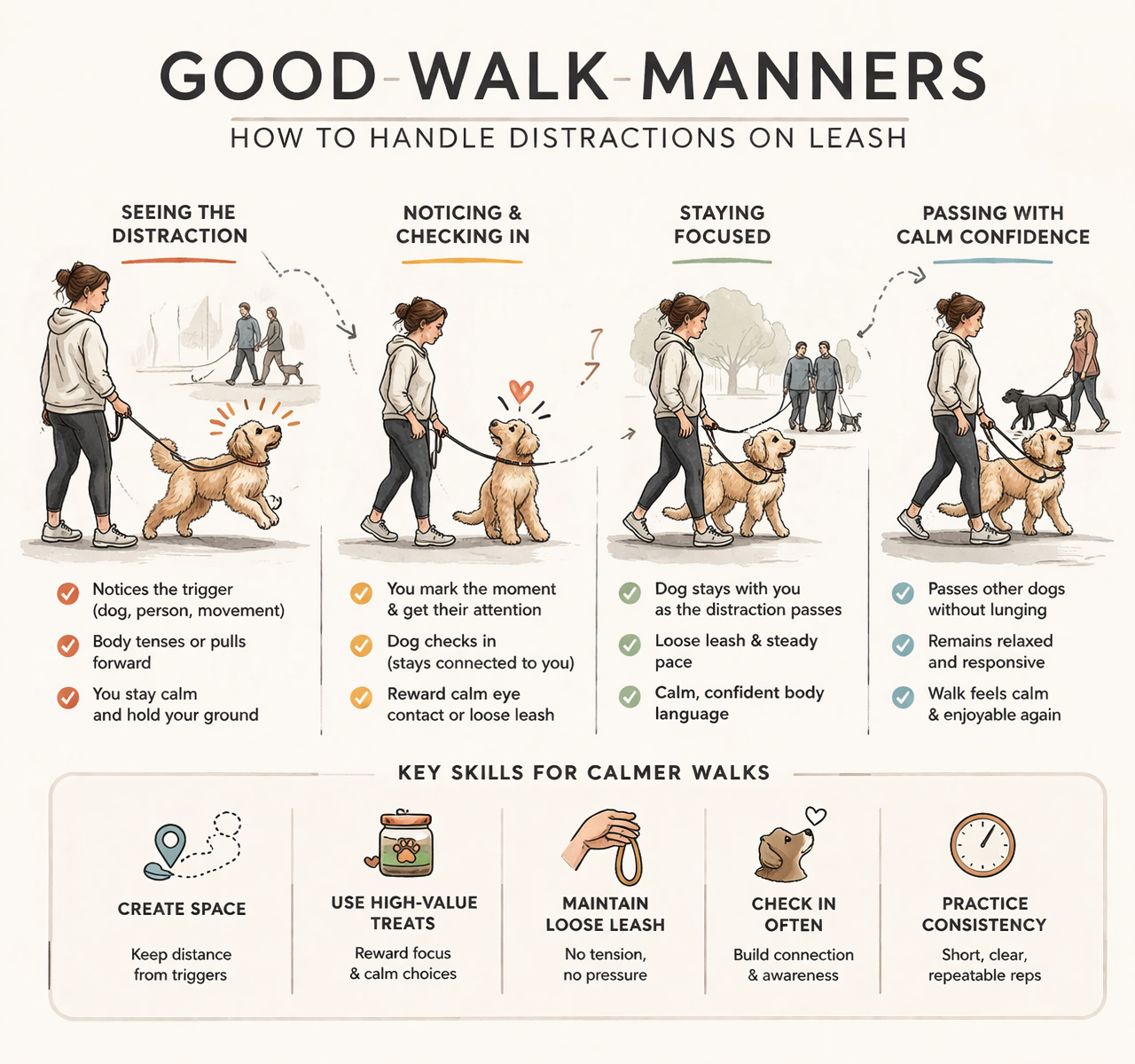
Dog Lunging on Leash: It’s Not About Control. It’s About Clarity.
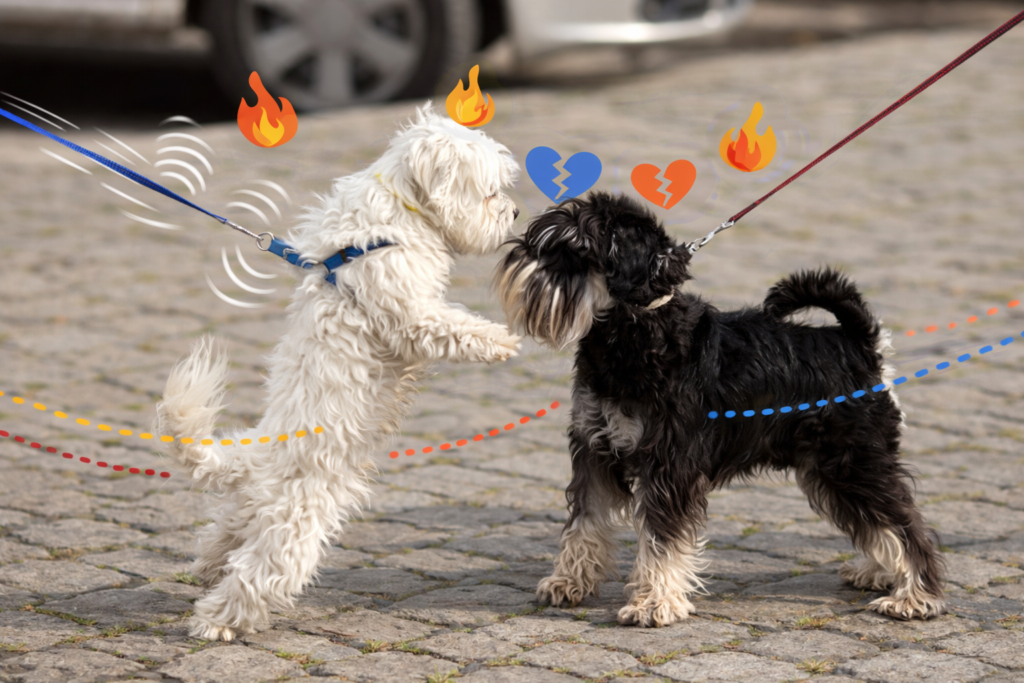
Dog lunging on leash usually isn’t about disobedience. It’s a sign your dog is overwhelmed, overexcited, or unsure how to respond. The goal isn’t to correct the reaction—it’s to help your dog stay calm before it happens. A dog lunging on a leash can turn a simple walk into something tense and unpredictable. One minute, your dog is fine, the next, they’re pulling, barking, or reacting to something you didn’t even notice yet.
What This Means for Your Walks
If your dog lunges on leash, you’re not alone—and you’re not doing anything wrong. In this guide, we’ll break down why it’s happening, what your dog is actually trying to communicate, and how to create calmer, more connected walks without adding pressure or confusion.
What We’ll Walk Through Together
If your dog reacts on walks, you’re not alone. And you’re not doing anything wrong. In this guide, we’ll break down why it’s happening, what your dog is actually trying to communicate, and how to start creating calmer, more connected walks—without adding pressure or confusion.
Dog lunging on leash is often driven by excitement, frustration, or uncertainty—not bad behavior. As the American Kennel Club explains, many dogs react because they feel overwhelmed or don’t know how to respond calmly in the moment (AKC guide to leash lunging).
What Leash Reactivity Actually Is (And What It Isn’t)
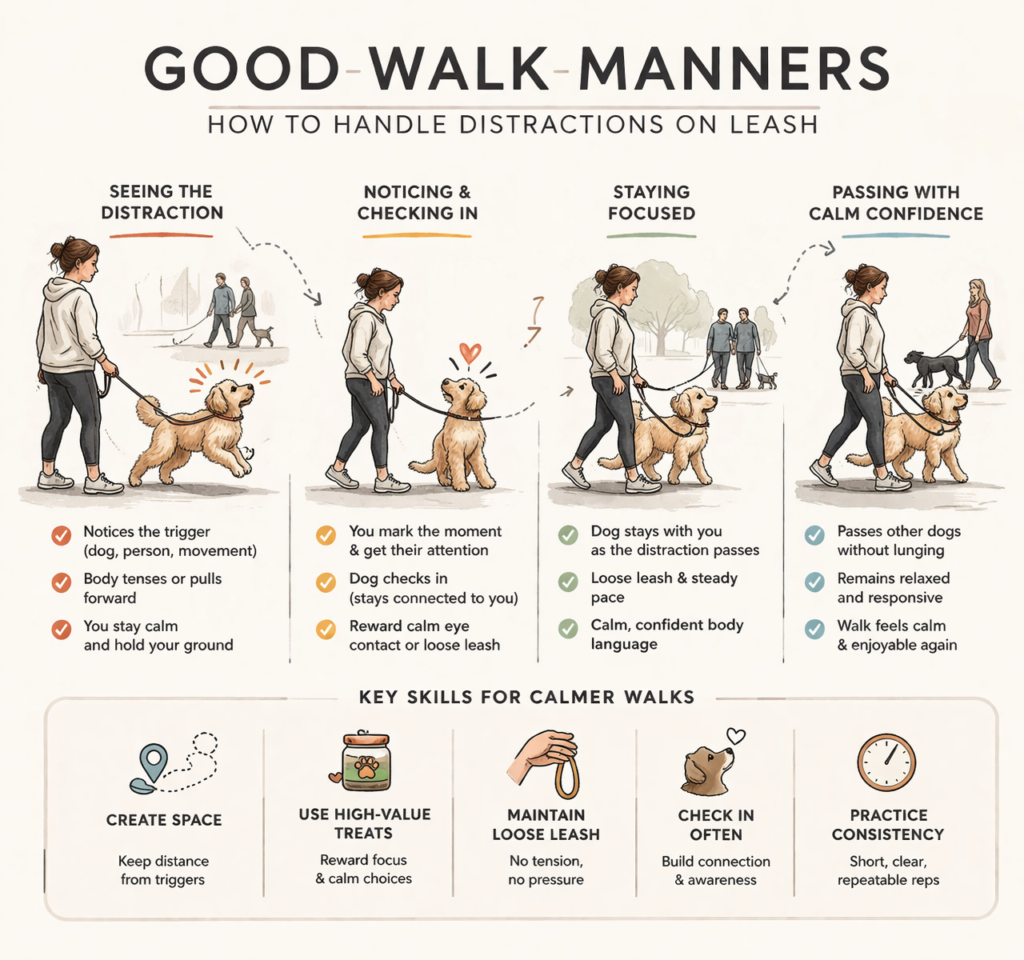
Leash reactivity can feel intense when you’re in the middle of it. But once you understand what’s really going on, it starts to make more sense—and feel more manageable.
It’s Not Just “Bad Behavior”
It’s easy to assume your dog is being stubborn or difficult. But lunging is usually a reaction, not a choice made calmly.
Dogs don’t stop and think. They react because something feels too exciting, too frustrating, or too overwhelming in that moment.
That shift matters. Because if it’s not intentional misbehavior, then correction alone won’t solve it.
What Your Dog Is Experiencing in the Moment
When a dog lunges, they’re often already past the point of thinking clearly.
You might notice:
- Fast escalation – one second they’re fine, the next they’re reacting
- Tunnel vision – locked onto a dog, person, or movement
- Reduced responsiveness – they don’t hear you, even if they normally would
At that point, the lunge is just the outcome. The real issue started earlier.
The Most Common Triggers on Walks
Every dog is different, but most leash reactivity follows patterns:
- Other dogs
- People or movements like bikes or runners
- Tight or busy environments
- It’s not just what your dog reacts to. It’s how close, how fast, and how prepared they are in that moment.
When Lunging Starts to Feel Bigger Than Just Frustration
We get calls like this more often than you’d think.
“Yikes… I can’t even take my dog for a walk anymore.”
If that’s where you are, you’re not alone. And it doesn’t mean your dog is “bad.” But it does mean it’s time to pay attention.
For some dogs, lunging isn’t just excitement or frustration. It can start to shift into something more intense—where the reaction feels sharper, faster, and harder to interrupt.
When Reactivity Turns Into Aggression on Leash
In some cases, what you’re seeing may be leash aggression.
That can look like:
- More intense barking or growling
- Stronger lunging with less warning
- Difficulty calming down after the moment passes
This usually comes from a mix of fear, pressure, and repeated reactions over time. The leash removes your dog’s ability to move freely, and that can make their response feel bigger.
Left unaddressed, it can become a pattern that’s harder to break.
Why Getting Help Matters
This is the point where guessing your way through it can actually make things harder.
Not because you’ve done anything wrong—but because your dog needs clearer guidance than trial and error can provide.
Working with someone experienced gives you:
- A clear read on what’s actually driving the behavior
- A plan that lowers stress instead of adding pressure
- Support so you’re not trying to figure it out alone
At Ducktown, we see a lot of dogs right at this stage. Not out of control—just stuck in a pattern that needs to be redirected the right way.
And when that happens, walks don’t have to stay overwhelming.
Why Dogs Lunge on Walks
Once you see the pattern, it stops feeling random. Most dogs aren’t lunging for one single reason.
Excitement That Spills Over
Some dogs are just too excited.
They want to get closer but can’t, and that frustration builds into lunging.
- Friendly dogs who love others
- Young or high-energy dogs
- Dogs who haven’t learned patience yet
It’s not aggression. It’s overflowing.
Anxiety or Uncertainty
Other dogs lunge because they feel unsure.
- Stiff body language before reacting
- Hesitation that turns into barking
- Stronger reactions in tight spaces
For these dogs, lunging creates space.
Lack of Clear Structure on Walks
Without structure, dogs take over decision-making.
- They scan everything
- They decide what matters
- They react before you can guide
Structure gives them something steady to follow.
The Role of Repetition
Lunging works for your dog.
- Trigger appears
- Dog reacts
- Trigger moves away
That pattern repeats—and becomes a habit.
What Doesn’t Work (And Often Makes It Worse)
Some approaches feel right in the moment but don’t hold up long-term.
Waiting Until the Lunge Happens
By the time your dog lunges, it’s too late.
They’re already overwhelmed and not able to learn.
Overcorrecting Without Clarity
Pressure without guidance creates confusion.
- Bigger reactions
- More tension
- Less understanding
Clarity always comes first.
Avoiding Everything Forever
Avoidance can help short-term, but long-term:
- Your dog never learns
- Their world gets smaller
- The behavior stays
Dogs need exposure—just done the right way.
How to Stop Dog Lunging on Leash (A Calm, Structured Approach)
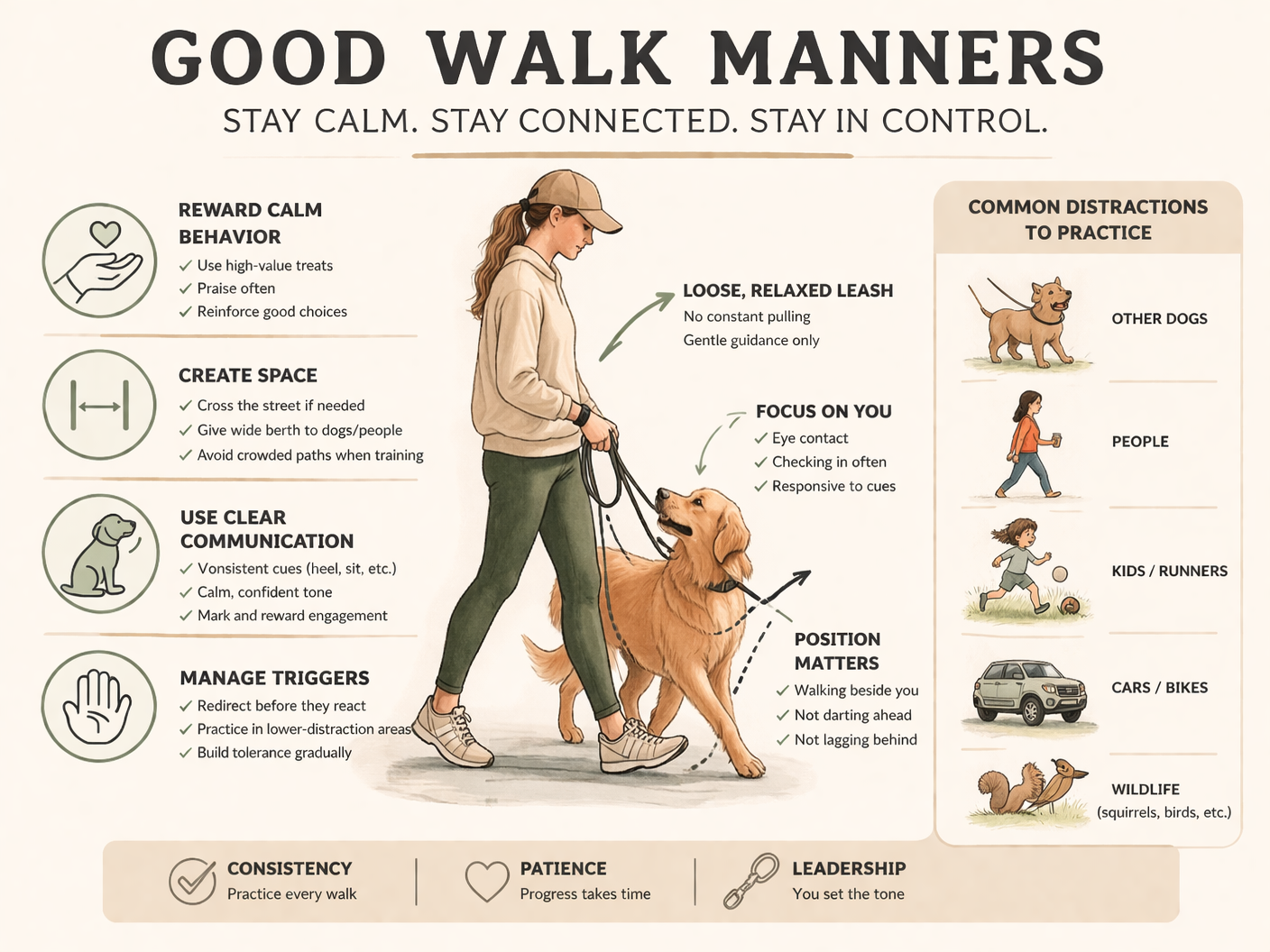
This is where things start to shift.
Start With Distance and Awareness
Distance gives your dog space to stay calm.
- Create space early
- Watch for early signs like staring or stiffening
- Move before the reaction happens
Build Engagement First
Your dog needs to stay connected to you.
- Reward check-ins
- Use movement and voice
- Create a reason to focus on you
Reward Calm, Not Chaos
Look for quiet wins:
- Neutral behavior around triggers
- Glance and disengage moments
- Soft body language
That’s what you reinforce.
Add Structure to Your Walks
Structure reduces pressure.
- Walk with purpose
- Keep expectations clear
- Stay consistent in pace and direction
Keep It Consistent
Progress takes repetition.
Look for:
- Fewer reactions
- Faster recovery
- More awareness
Loose Leash Walking Training for Reactive Dogs
Loose leash walking is about connection, not perfection.
What “Loose Leash” Really Means
- No constant tension
- Awareness of you
- Less scanning for triggers
Foundational Skills That Make Walking Easier
Start simple:
- Heel or close walking
- Basic obedience like sit and down
- Pause or place work
Build these in calm environments first.
Bringing Skills Into the Real World
Dogs need practice in real life.
- Increase distractions gradually
- Work at a distance first
- Repeat in different environments
Why This Changes Everything
You’ll start to notice:
- More check-ins
- Fewer reactions
- Calmer walks overall
When You Might Need Extra Support
Some dogs need more structured help—and that’s okay.
Signs Your Dog Is Struggling More Than Average
- Reactions are getting worse
- Recovery takes a long time
- Walks feel stressful before they even start
Why Training Isn’t Just for “Problem Dogs”
Training is support.
It helps:
- Your dog feel more clear
- You feel more confident
- The relationship feel easier
What Progress Actually Looks Like
Progress isn’t perfect. It’s gradual.
It’s Not Instant—and That’s Okay
You’ll start to see:
- Slower reactions
- Less intensity
- Brief moments of focus
Then over time:
- Faster recovery
- More consistency
- Better choices
A Calmer Walk Changes Everything
For you:
- Less stress
- More confidence
For your dog:
- More clarity
- Less overwhelm
We work with a lot of rescue dogs, and we know those first few weeks can feel like a mix of excitement and uncertainty. You’re learning your dog, they’re learning you, and sometimes things like lunging on leash show up before everything feels settled. That’s more common than people realize—and it doesn’t mean anything is wrong.
With the right structure, patience, and support, those early challenges can turn into clarity instead of becoming long-term habits. As the Atlanta Humane Society often recommends, simple things like creating space, using high-value rewards, and keeping leash tension low can make a real difference in helping dogs feel more at ease on walks.
You Don’t Have to Dread Walks Anymore
If your dog lunges on walks, it can feel exhausting. The tension, the second-guessing, the constant awareness of your surroundings—it wears on you.
But it doesn’t have to stay that way.
With the right structure and support, walks can feel steady again. Your dog can learn what to do instead of reacting. And you can finally feel like you’re not just managing the problem—you’re actually moving forward.
At Ducktown Lodge, this is what we help dogs and their owners work through every day. Calm, clear, and consistent.
Let’s talk about your dog.