Dog Training Distractions and Why They Matter More Than You Think
You can have a dog that listens perfectly in your living room and still feels completely out of control outside. That gap almost always comes down to one thing: dog training distractions. If you don’t train with distractions, you’re not training for real life.
Dog training distractions are what turn basic obedience into real-world reliability. Without practicing focus around distractions, dogs only learn commands in controlled environments, not in everyday situations where it actually matters most.
Why This Changes Everything
Most people don’t realize this at first. Your dog isn’t ignoring you to be difficult. They’re responding exactly how they’ve been trained.
If training only happens in calm, quiet spaces, your dog learns:
- Sit means sit… in the house
- Come means come… with no distractions
- Focus means focus… when nothing else is happening
That’s not reliability. That’s rehearsal.
This is where dog training distractions come in—and why they’re not optional if you want a calm, responsive dog in real situations.
Dog Training Distractions: The Missing Link in Most Training
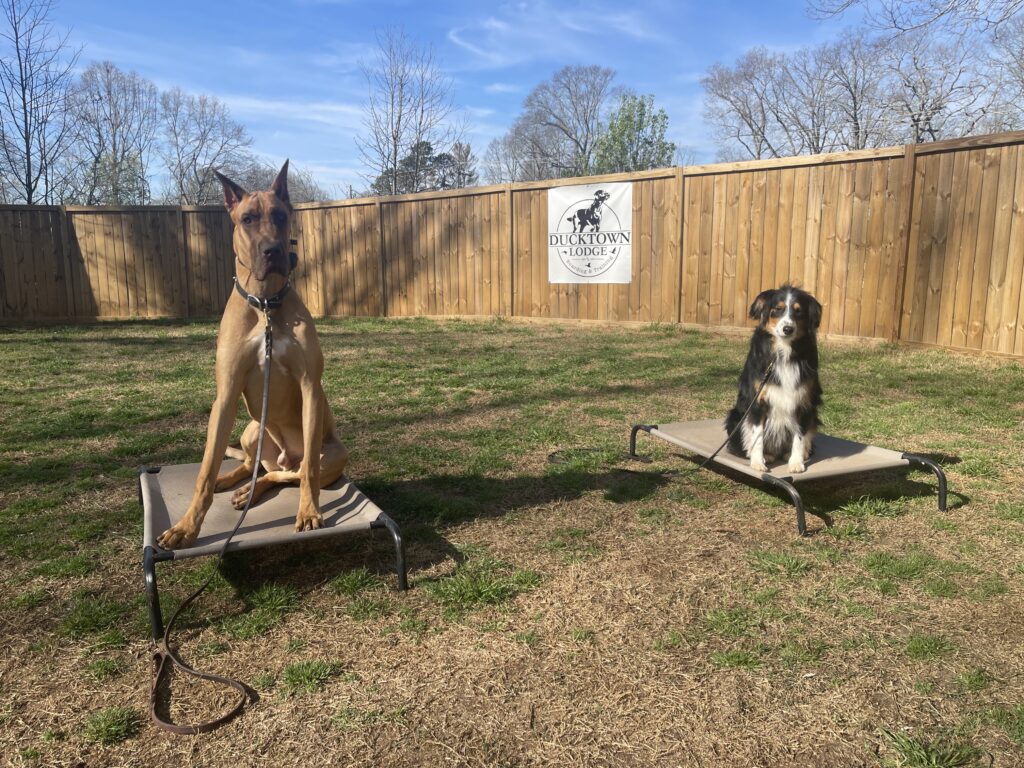
Dog training distractions are not something to avoid. They are the entire point of training once your dog understands the basics.
Without dog training distractions, you never answer the real question:
Will your dog listen when it actually counts?
What Counts as a Distraction?
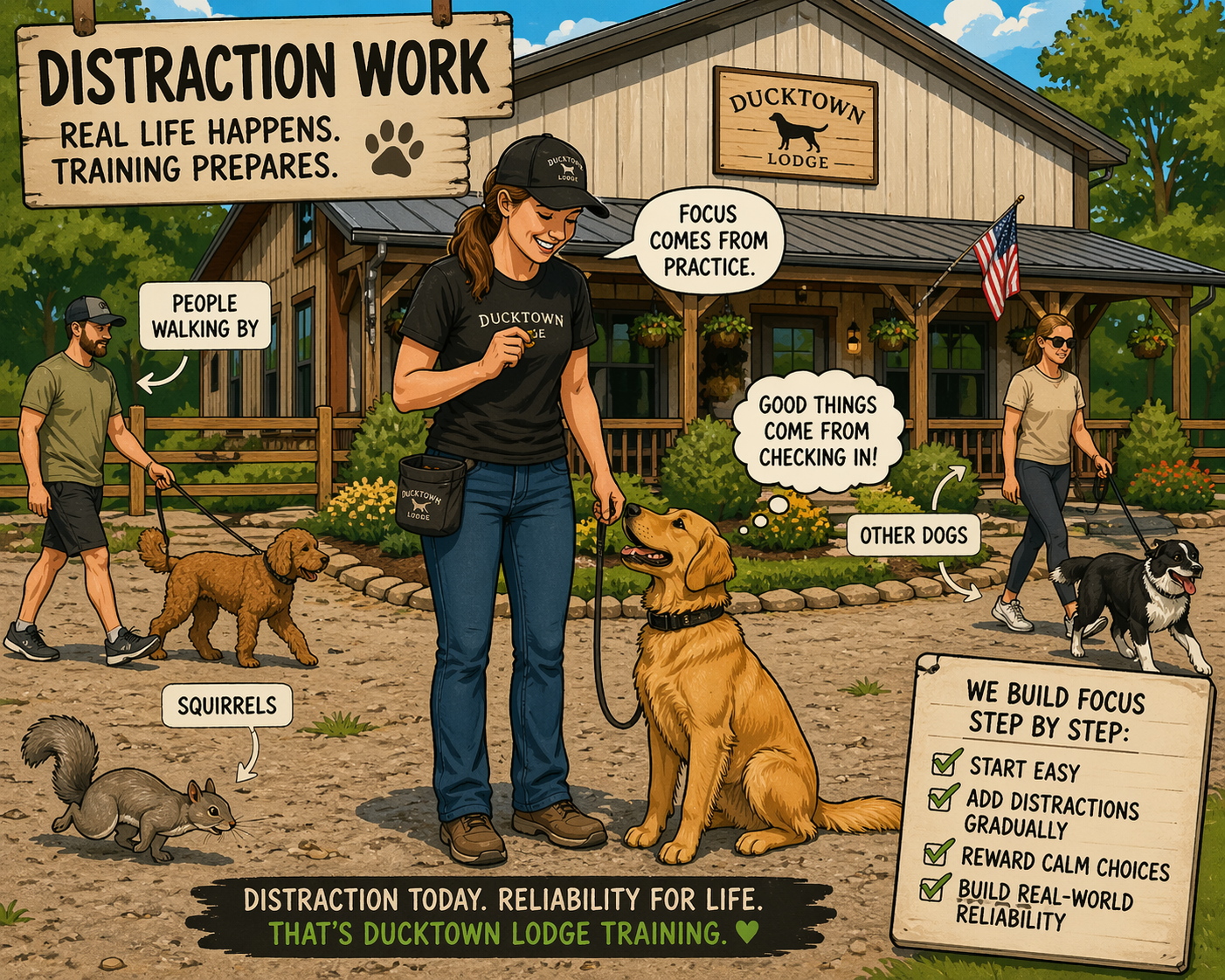
Distractions are anything that competes with your dog’s attention:
- Other dogs
- People walking by
- Smells on the ground
- Movement, noise, or new environments
- Even excitement or anticipation
In a real-world setting, these are always present. That’s why dog training distractions have to be part of the process.
The Truth Most Owners Miss
A dog that “knows” a command but ignores it outside isn’t being stubborn.
They just haven’t learned it with dog training distractions present.
That’s a completely different skill.
Using Treats to Build Focus Around Dog Training Distractions
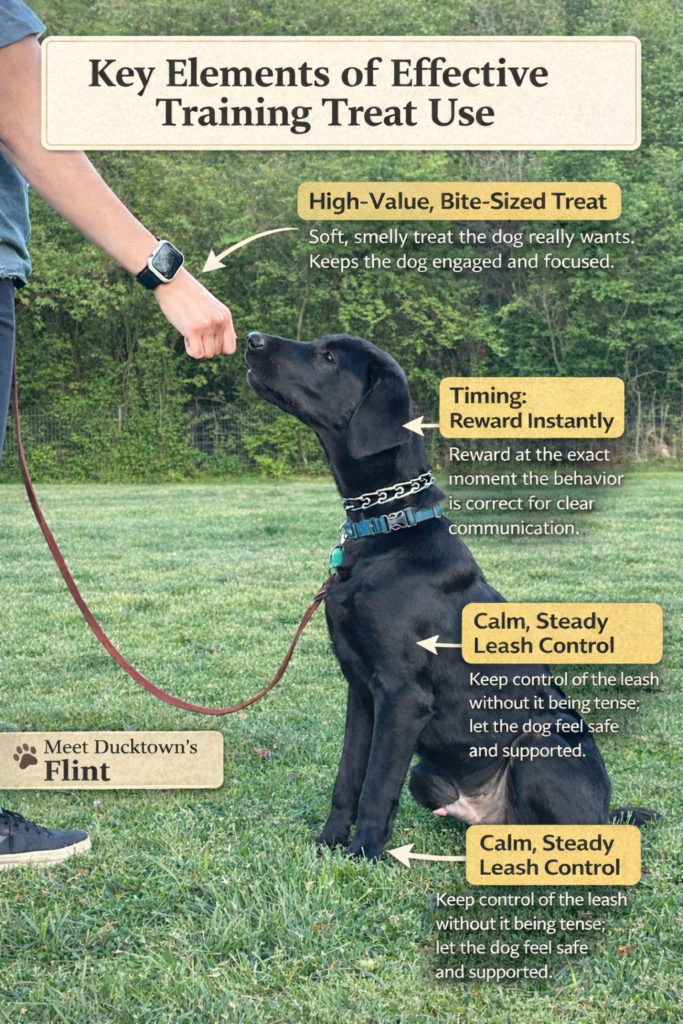
One of the most effective ways to start working through distractions in dog training is with food motivation.
But this is where a lot of people get it wrong.
Treats are not the goal. Focus is the goal.
Why Food Helps with Dog Training Distractions
When distractions increase, your dog naturally shifts attention away from you. Food helps rebalance that.
Used correctly, it can:
- Reinforce eye contact so your dog learns to check in
- Make you more relevant than the environment
- Create a habit of focus instead of scanning for distractions
This is especially important in the early stages of dog training, as distractions.
According to AKC – “Dog training distractions are managed by teaching focus through gradual exposure, using cues like “watch me” and rewarding attention. Start in low-distraction settings and build up, so your dog learns to respond reliably even when real-world distractions are present.“
How to Build Eye Contact the Right Way
The goal is not to lure your dog. It’s to reward the decision to focus.
Start simple:
- Stand still and wait
- The moment your dog looks at you → reward immediately
- Repeat until eye contact becomes automatic
Then begin layering in dog training distractions slowly.
Progressing with Distractions
As your dog improves, increase difficulty:
- Start inside (low distraction)
- Move to your yard (mild distraction)
- Then quiet public spaces
- Then busier environments
Each step introduces more dog training distractions while keeping your dog successful.
The Key Shift
You’re teaching your dog:
That’s the foundation of real-world focus.
Dog Training Distractions and Real-World Reliability
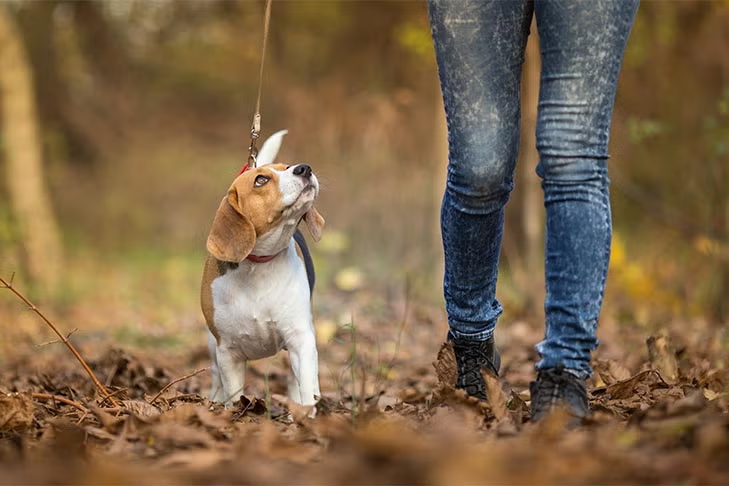
Dog training distractions are what separate a “trained dog” from a dog you actually trust.
Because real life doesn’t pause for your commands.
What Reliability Really Looks Like
A reliable dog can:
- Ignore a squirrel and stay with you
- Walk past another dog without losing control
- Come when called, even when something exciting is happening
- Stay calm in unfamiliar environments
None of that happens without practicing dog training distractions.
Why Most Training Falls Apart
Most programs stop too early:
- The dog learns the command
- The dog performs it in a quiet space
- Training ends
But without dog training distractions, the behavior never becomes stable.
It stays fragile.
Dog Training Distractions Done Right
There is a right way to introduce dog training distractions—and a wrong way.
The goal is not to overwhelm your dog. It’s to stretch their ability to focus.
What to Focus On
- Start where your dog can win
Don’t jump straight into chaos - Increase difficulty gradually
Add one layer of distraction at a time - Keep communication clear
Your dog should understand what you’re asking - Reward the right choices
Especially when distractions are present
What to Avoid
- Moving too fast
- Training only in one environment
- Expecting focus without teaching it
- Relying on commands instead of building engagement
Dog training distractions should build confidence—not confusion.
Why This Approach Works Long-Term
When you train with dog training distractions, you’re not just teaching commands.
You’re teaching your dog how to handle the world.
That’s a different level of understanding.
It creates:
- A calmer dog
- A more confident owner
- A relationship built on clarity, not control
And most importantly, it gives you something most people don’t have:
Trust.
Let’s Talk About Your Dog
If you’re dealing with a dog that listens in some situations but not others, you’re not alone. Most of the time, it comes down to how dog training distractions were handled—or skipped entirely.
At Ducktown Lodge, training happens in real environments, not isolated setups. Dogs learn how to focus, settle, and respond in the same kind of situations they’ll face at home and out in the world.
If you’re ready for something that actually holds up outside the house, reach out. We’ll talk through what’s going on and what your dog really needs.