Dog training with distractions is where most well-meaning training programs fall apart. Not because dogs are stubborn. Not because they “know better and choose not to listen.” But because they were never taught how to think when pressure shows up.
The 3 D’s form the foundation of dog training, but in this post, we’re focusing specifically on distraction—because that’s where real-world reliability is built.
Training in quiet spaces builds understanding.
Training with structured distractions builds reliability.
A dog that sits perfectly in the living room but shuts down outside isn’t being defiant. They’re overwhelmed. The skill wasn’t generalized. The environment changed, and the training didn’t come with it.
Why Dog Training With Distractions Fails When It Starts Too Fast
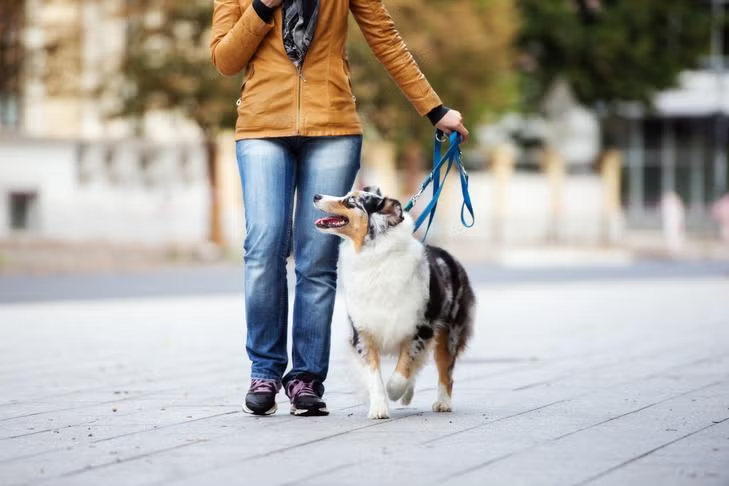
Dog training with distractions fails when it starts too fast because piling on pressure overwhelms the dog’s ability to think, causing confusion and shutdown instead of reliable learning.
One of the most common frustrations we hear is, “My dog knows this. They just won’t do it in public.”
Here’s what’s actually happening.
At home, distractions are minimal and familiar. Outside, everything competes for your dog’s brain at once—smells, movement, sounds, novelty. Dogs don’t automatically understand that a cue applies everywhere. Sitting in the kitchen and sitting on a sidewalk are two different experiences for a dog.
This isn’t selective hearing. It’s sensory overload.
Dog training with distractions teaches dogs how to stay mentally available when the environment gets louder than the handler.
Structured vs Chaotic Dog Training With Distractions
Quiet environments are valuable. They’re where dogs learn what cues mean. They’re where timing improves, and communication gets clear.
But quiet training alone does not prepare dogs for real life.
- Quiet spaces remove decision-making
- Dogs don’t have to filter information
- Focus is easy because nothing competes
Understanding a behavior and being able to perform it under pressure are not the same thing. Until distraction is introduced intentionally, training remains theoretical.
This is why dogs appear “trained” until the world shows up.
Dog Training With Distractions Builds Thinking, Not Just Compliance
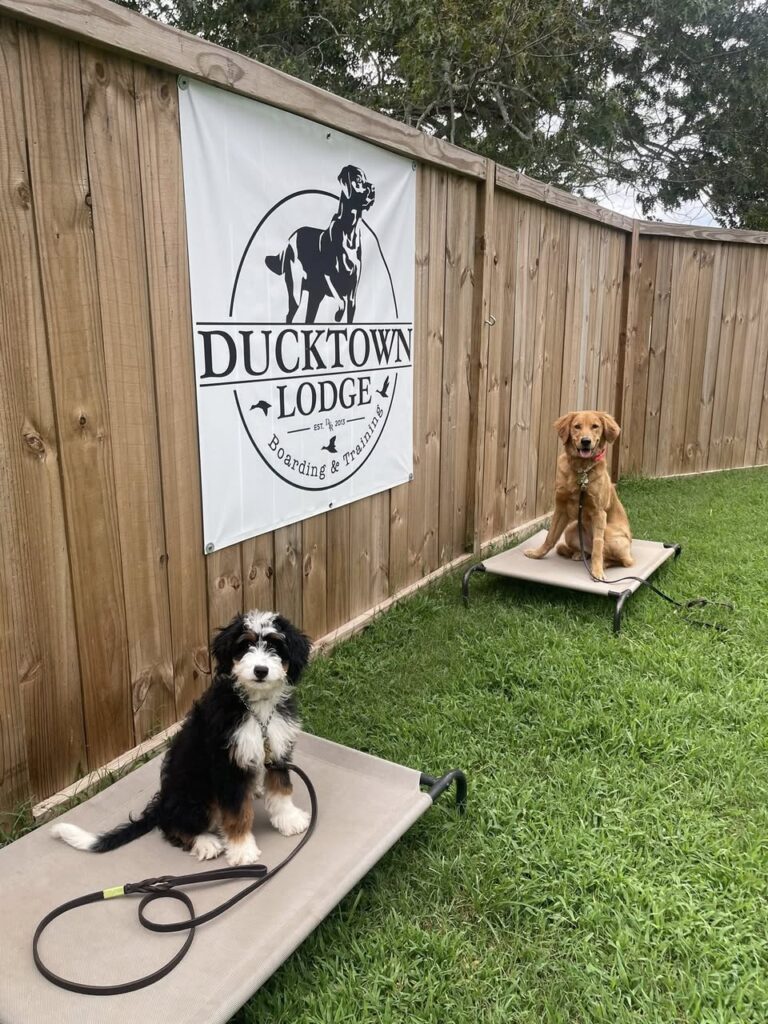
Distraction dog training isn’t about forcing obedience in chaos. It’s about teaching dogs how to process information instead of reacting to it.
Thinking dogs stay connected under pressure. They pause. They assess. They choose engagement instead of impulse.
Reliable dogs aren’t controlled dogs. They’re calm because they understand how to navigate pressure. Structure gives them clarity when the environment feels busy.
That clarity reduces stress—for dogs and for owners.
Dog Training With Distractions and the Importance of the 3 D’s

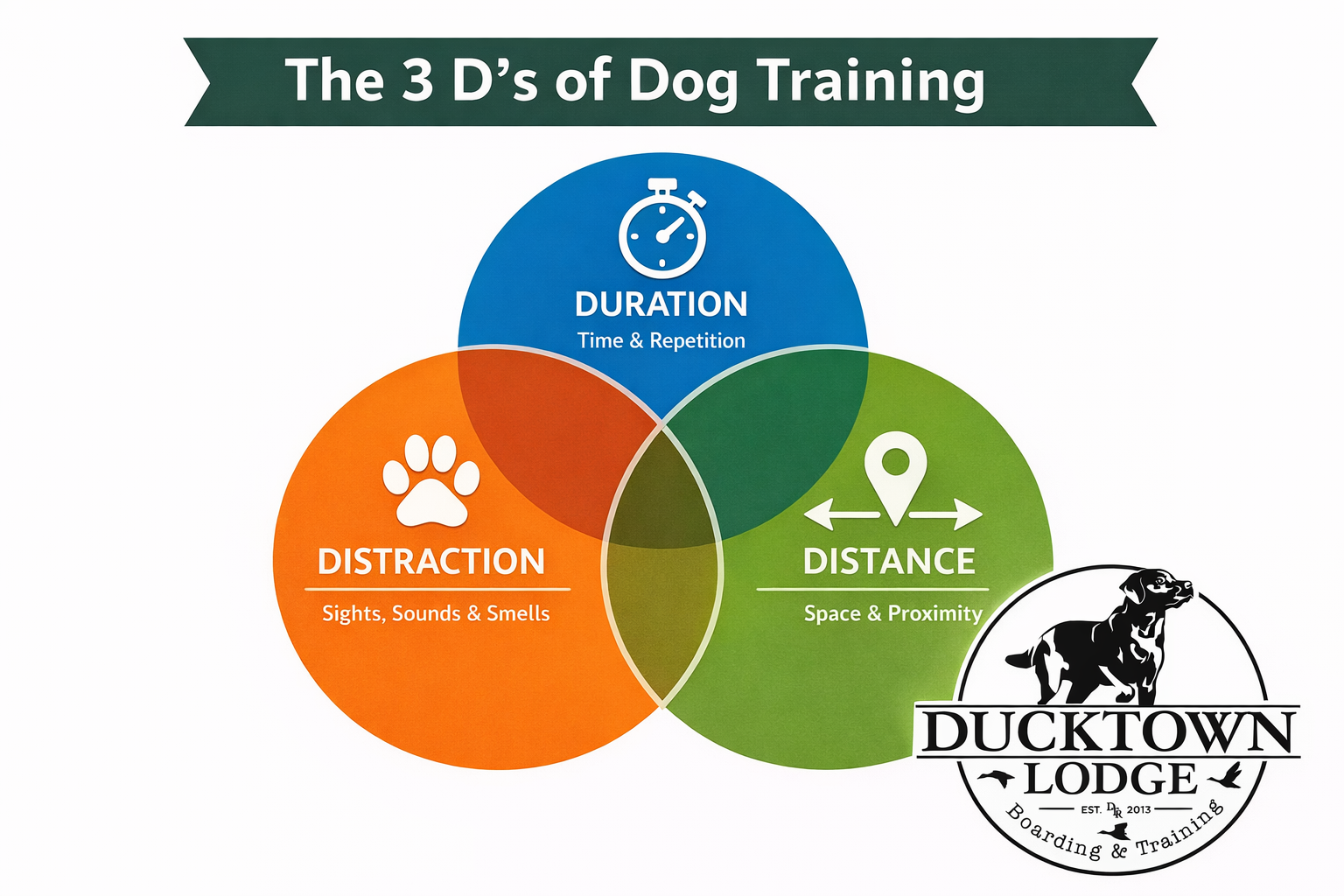
Dog training with distractions works best when owners understand the 3 D’s of dog training:
- Distraction
Anything competing for your dog’s attention. Smells, movement, new locations, people, and other dogs. Even changing environments counts as a distraction. - Duration
How long your dog holds a behavior, how many repetitions they can handle, or how long they can stay mentally engaged. - Distance
The space between you and your dog—or between your dog and the distraction. More distance usually means easier focus.
Why Increasing All 3 D’s at Once Causes Dogs to Fail
A common mistake in training dogs around distractions is increasing the difficulty too fast.
New location. Longer duration. Closer distraction. All at once.
That’s not proof your dog is difficult. It’s proof the pressure exceeded their capacity.
The general rule is simple: increase only one D at a time while keeping the others easy. This protects confidence, keeps learning active, and prevents overwhelm.
Dogs don’t opt out of training. They hit their limit.
How to Introduce Distractions Without Overwhelming Your Dog
Effective dog training with distractions looks boring at first—and that’s a good thing.
- Start where success is almost guaranteed
- Keep the duration short while adding a distraction
- Adjust distance to protect focus
- End sessions before failure appears
If it feels easy, you’re probably doing it right.
Every time a dog succeeds, they learn the value of staying engaged. Every time they fail, they practice ignoring cues. Training should always favor success.
Real Examples of Structured Distraction Training
For a distraction-driven dog, training might look like this:
- A distraction visible but far away
- The same distraction closer
- The distraction in motion, predictably
- Increased intensity only after consistency
For example, with a ball-obsessed dog:
- Ball on the ground at a distance
- Ball closer but still
- Ball in your hand
- Ball moving slightly
- Ball tossed past the dog
This progression can take weeks. That’s not slow training. That’s reliable training.
Why Owner Participation Is Essential
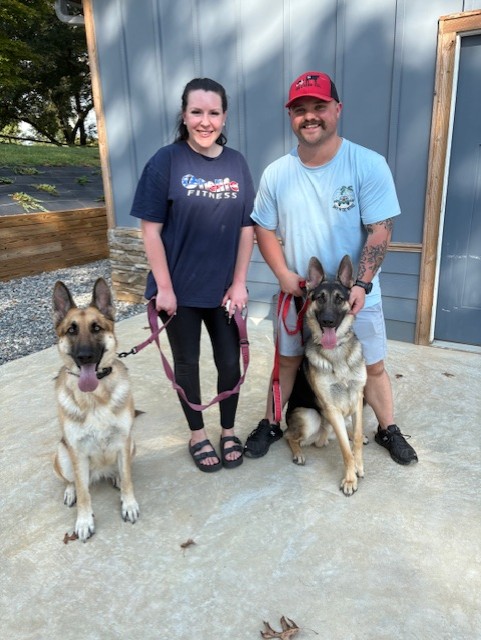
Dog training with distractions doesn’t live in a session—it lives in daily life.
Owners play a critical role by:
- Managing environments
- Resisting the urge to “test” too early
- Protecting progress outside training time
Knowing when not to ask for a behavior is just as important as knowing when to ask. Participation builds trust, not pressure.
What Real-World Dog Training Looks Like at Ducktown Lodge
At Ducktown Lodge, distractions are introduced intentionally and gradually. Dogs are never flooded to “see what happens.” Training is layered so dogs learn how to stay engaged without becoming overwhelmed.
Consistency matters. The same caregivers work with the same dogs. Structure stays clear. Expectations don’t change just because the environment does.
Owners are part of the process. We focus on helping families understand how reliability is built so progress doesn’t disappear once dogs go home.
Signs Your Dog Needs Better Distraction Training
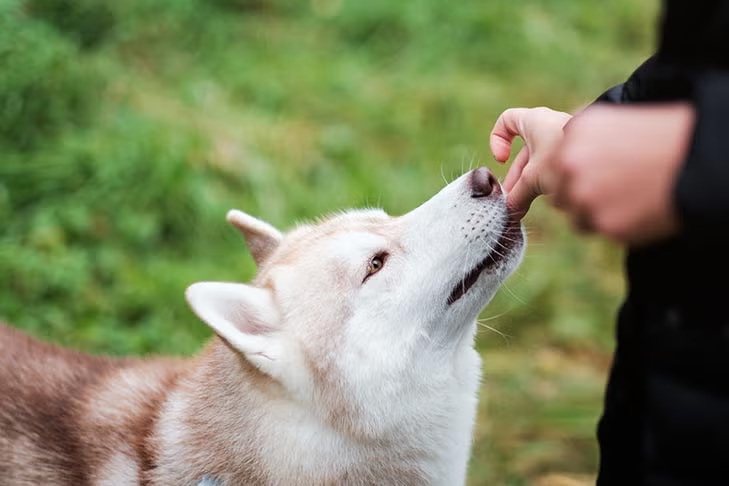
- Listens at home but shuts down outside
- Fixates on smells, movement, or other dogs
- Appears inconsistent or “selective”
- Shows stress instead of defiance
- Public outings feel tense or exhausting
These aren’t personality flaws. They’re training gaps—and they’re fixable.
What Changes When Dogs Learn to Work Through Distractions
Dogs become calmer. Owners become more confident. Outings stop feeling like a gamble.
Dog training with distractions creates clarity, emotional regulation, and trust. Not perfection. Not control. Reliability you can actually use.
Let’s Talk About Your Dog
If your dog listens at home but falls apart everywhere else, you’re not asking for too much. Most dogs don’t need more commands—they need better preparation for the world they live in.
At Ducktown Lodge, we offer dog training with distractions that build real-world reliability without overwhelm.
Ducktown Lodge
6140 Dahlonega Highway
Cumming, GA 30928
📞 (770) 733-0836
✉️ hello@ducktownlodge.com