Why Dog Jumping on Guests Is a Manners Problem, Not a Behavior Flaw
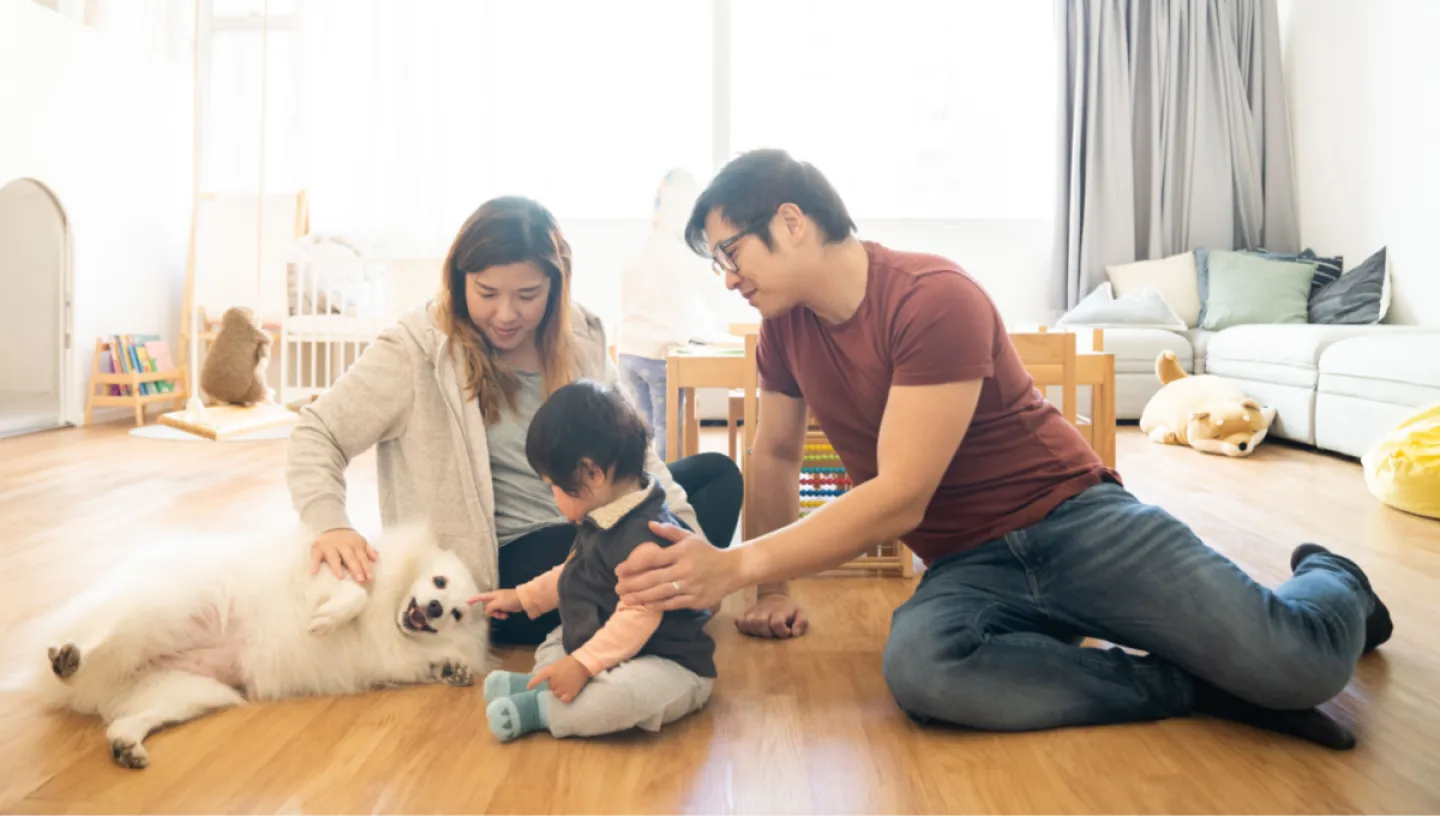
When a dog is jumping on guests, it usually isn’t about disobedience. It’s about excitement, unclear expectations, and habits that have been unintentionally reinforced over time. Dogs repeat what works, and jumping often gets attention. The goal isn’t to shut down enthusiasm. It’s to teach a calmer, clearer way to greet people that feels good for everyone involved.
Dogs jump on guests because it works. Attention, eye contact, and touch reward the behavior. To stop dog jumping, remove attention for jumping and consistently reward calm greetings like sitting or keeping four paws on the floor.
What This Guide Will Walk You Through
In the sections below, you’ll learn why telling a dog “no” rarely stops jumping, how to teach polite greeting manners step by step, what to do when guests arrive, and how consistency creates long-term change. This approach focuses on clarity, calm repetition, and realistic expectations that actually hold up in real homes.
Why Dogs Jump on Guests and People
Jumping doesn’t come out of nowhere. It develops because it solves a problem for the dog. They want connection, attention, or clarity in a moment that feels exciting or uncertain. Jumping is simply the fastest behavior they know that gets a response.
Once you understand why it shows up, it becomes much easier to change without frustration.
Jumping Is a Learned Behavior, Not a Bad Habit
Dogs repeat behaviors that get results. Jumping often works because it leads to talking, touching, eye contact, or movement. Even pushing a dog away or saying their name can feel like engagement.
From your dog’s perspective:
- Jumping gets a reaction
- A reaction equals attention
- Attention feels rewarding
The fix isn’t punishment. It’s changing what behavior actually pays off.
What Dogs Are Really Communicating When They Jump on People
Jumping is rarely about dominance. It’s usually about proximity and emotion. Dogs jump when they’re excited, unsure how to manage it, or lacking a clear alternative greeting.
Without structure, dogs improvise. Teaching manners answers one simple question for them: What should I do instead?
Why Dog Jumping on Guests Gets Worse Over Time
Inconsistency fuels jumping. One guest ignores it. Another laughs. Someone else pets the dog mid-jump. The dog learns it’s always worth trying again.
When expectations become predictable, jumping loses its purpose.
Why Telling Your Dog “No” Doesn’t Stop Dog Jumping
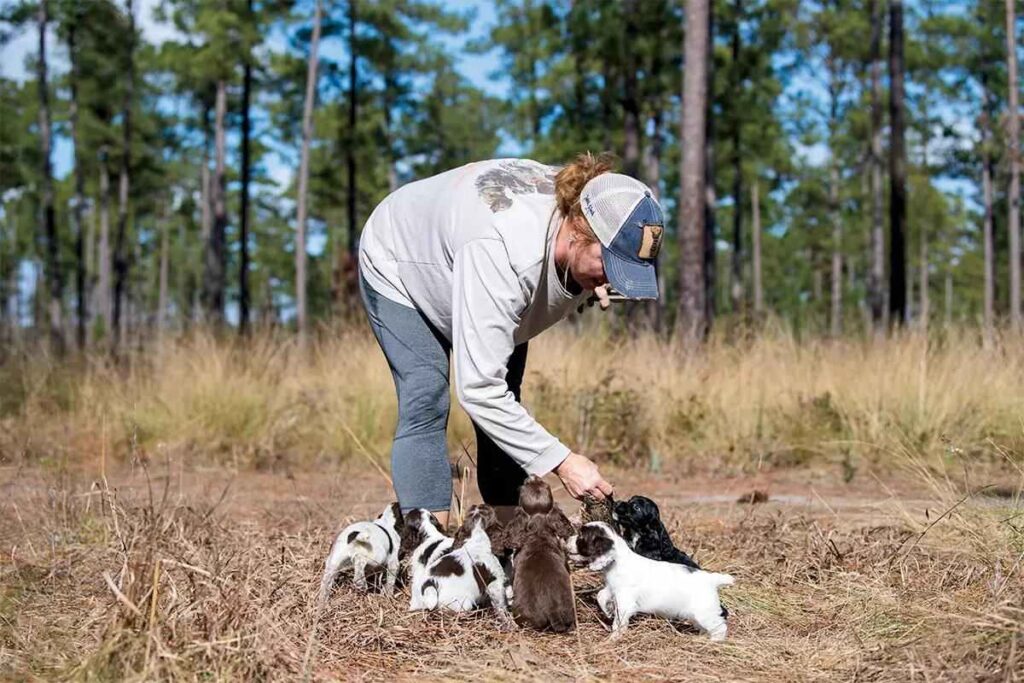
Teaching Puppies Manding at an Early Age Helps Prevent Behavioral Issues
Why Dogs Struggle With What Not to Do
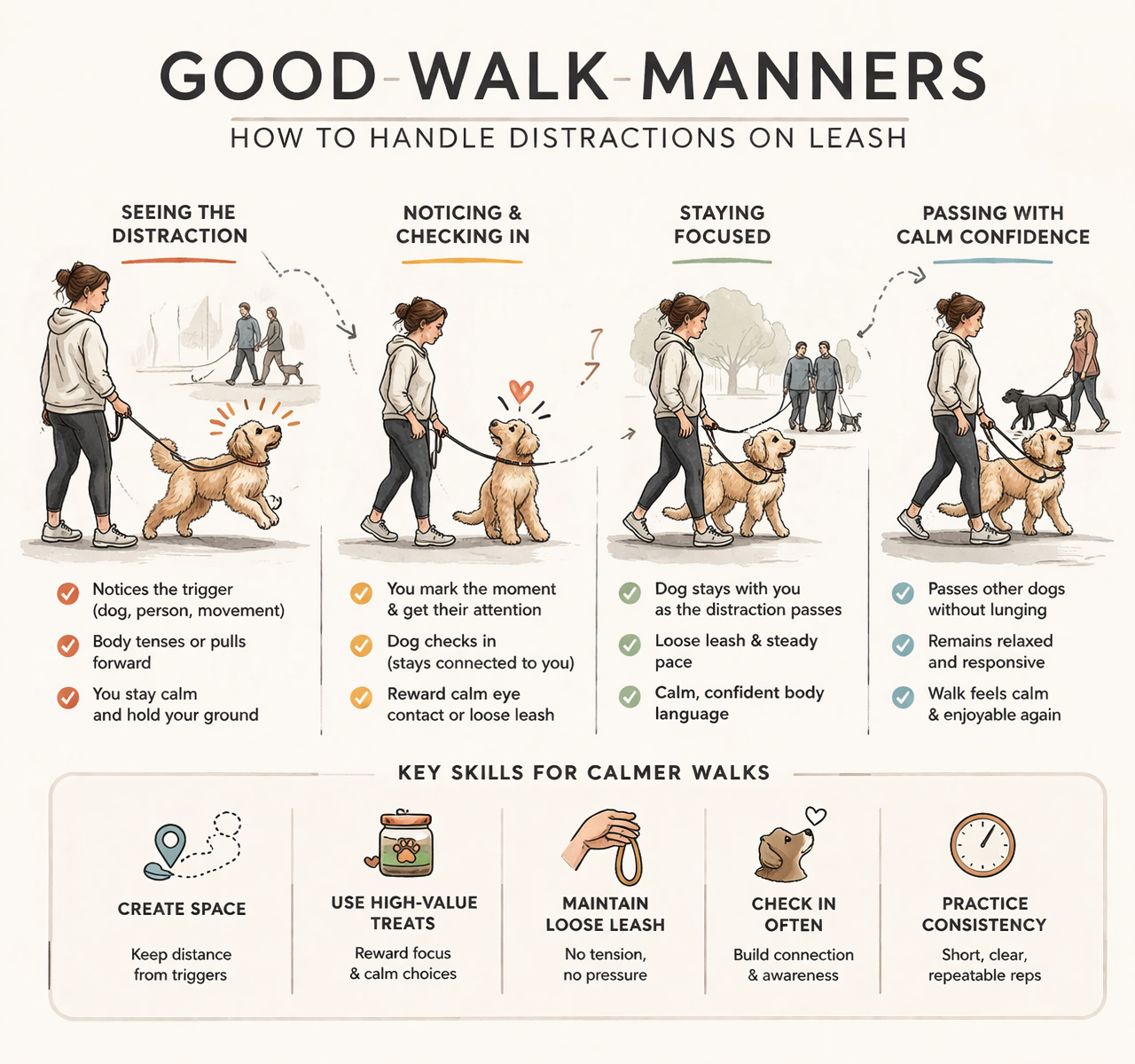
Dogs understand actions, not abstract rules. “No jumping” doesn’t tell them what to do. Without direction, they default to familiar behavior.
Clarity beats correction every time.
Why Physical Corrections Fail to Stop Dog Jumping on People
Pushing a dog down often backfires. Some dogs think it’s play. Others escalate. Sensitive dogs lose trust. None of these outcomes teach calm manners.
Calm structure teaches faster than force.
What Actually Helps Dogs Learn Manners Around Guests
Dogs improve when:
- Jumping never gets attention
- Calm behavior always does
- The response stays the same every time
Consistency removes confusion.
The Core Rule to Stop Dog Jumping on Guests
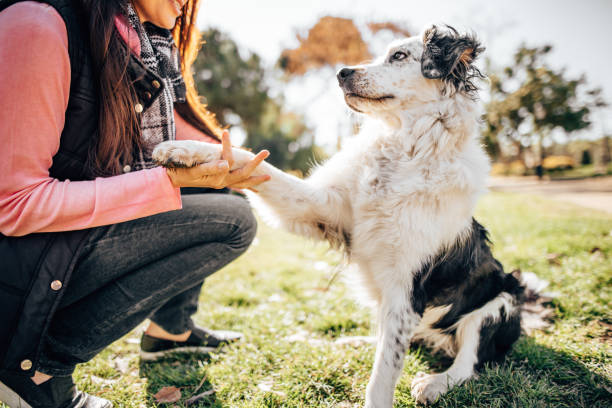
Attention is the reward. When jumping stops working and calm behavior starts paying off, the behavior shifts.
Why Attention Keeps Dogs Jumping
Attention includes talking, touching, eye contact, pushing away, and saying the dog’s name. If jumping triggers any of that, it’s reinforced.
Four Paws on the Floor: The Foundation of Dog Greeting Manners
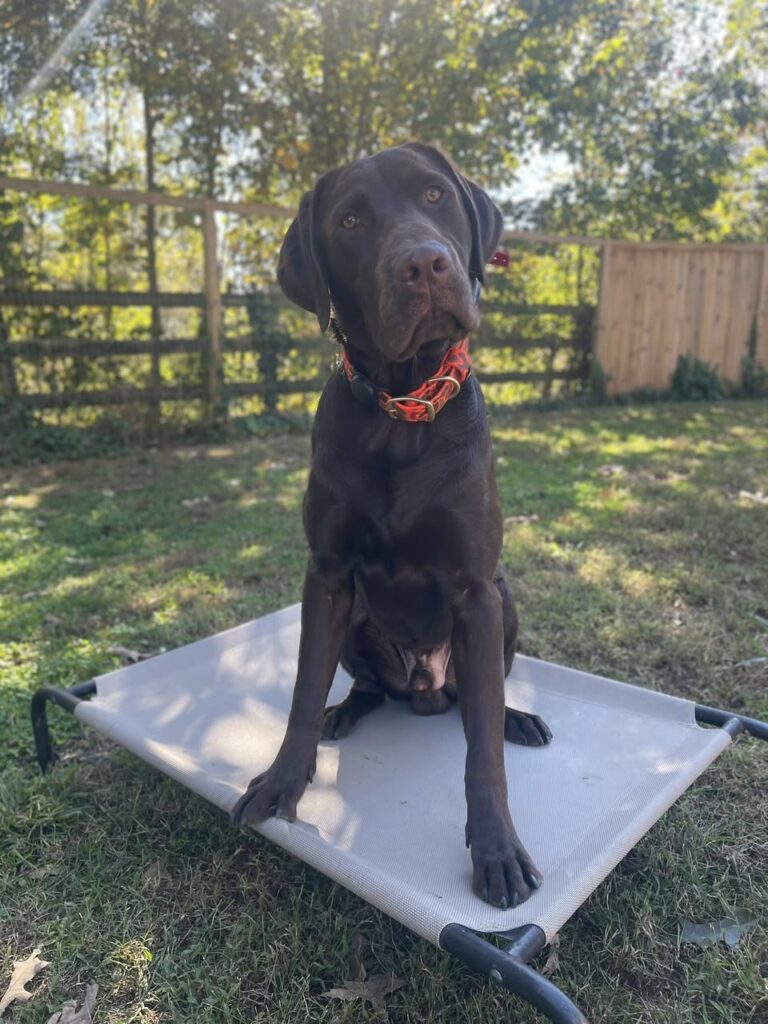
All four paws on the floor is the green light.
When your dog is grounded:
- They get attention
- They get in touch
- They get conversation
When they jump, attention stops. Calm gets rewarded.
Many positive training resources, including The Labrador Site, point out that jumping continues because it’s accidentally rewarded. When dogs are greeted with attention while jumping, the behavior sticks. When attention is consistently given only for calm greetings, dogs learn very quickly which behavior works better. This shift from reacting to rewarding calm is what creates lasting change.
Why Consistency Beats Intensity in Dog Training
Big reactions create noise. Consistency creates clarity. When the answer never changes, dogs stop testing and start relaxing.
Teach Dog Manners Around Guests With a Polite Greeting
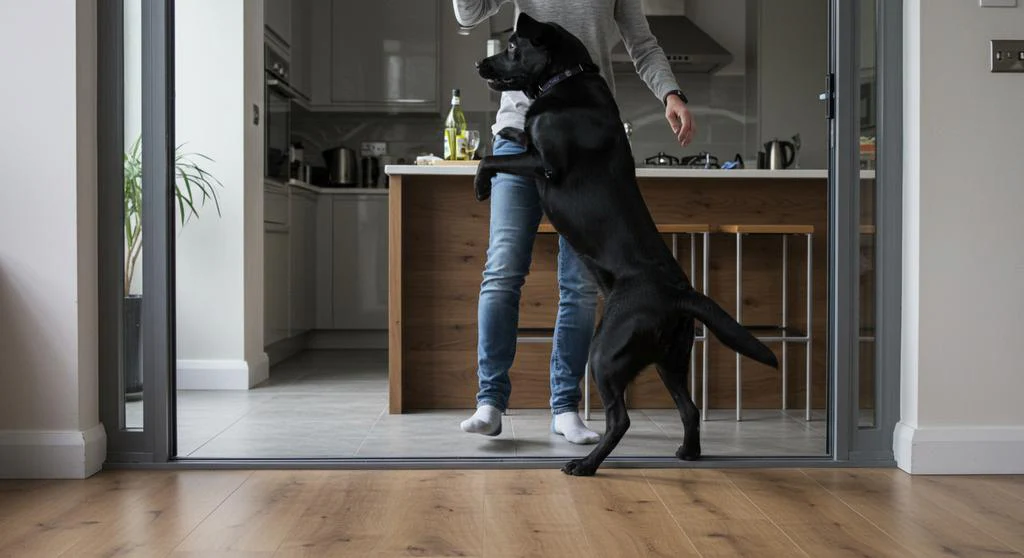
Stopping jumping works best when you replace it with a behavior your dog can succeed at.
Choosing a Greeting Behavior Your Dog Can Succeed With
Good options include:
- Sitting calmly
- Standing with four paws on the floor
- Going to a familiar spot
Simple behaviors hold up better under excitement.
How to Teach Dog Greeting Manners Without Guests Present
Practice in calm moments. Reward immediately. Keep sessions short. Build the habit before real-life pressure shows up.
How to Reward Calm Without Creating More Excitement
Reward quickly but calmly. Keep your voice low. Let calm be what feels good.
How to Stop a Dog From Jumping When Guests Arrive
The first minute matters most. “Stay down and calm, and good things happen.” Not “Jump and then get told off.”
Preparing Your Dog Before the Door Opens
Walk your dog earlier. Clear the entry space. Have treats ready. Set expectations before energy spikes.
How to Coach Guests to Prevent Dog Jumping
Ask guests to:
- Ignore jumping
- Avoid eye contact and touching
- Wait for all four paws on the floor
Clear instructions prevent mixed messages.
Guests often don’t know your training plan, so prep ahead:
- Ask guests to ignore your dog until all four paws are down. No eye contact, no talking, no petting during jumps.
- Use a calm arrival routine. Keep greetings low-key: quiet voice, hands at your side, and reward your dog only when they’re grounded.
- Practice with helpers. Have family or friends help you rehearse entering and greeting; repetition makes learning stick.
Some people even scatter a few treats on the floor so dogs who spot free goodies can’t be jumping while eating them — a subtle way to reward the desired behavior.
Managing the First 60 Seconds of Greetings
Use a leash if needed. Ask for the greeting behavior immediately. Reward calm fast. Reset without scolding if jumping happens.
Common Mistakes That Keep Dogs Jumping on People
Why Letting Jumping Slide Slows Progress
One allowed jump resets the pattern. Dogs don’t understand exceptions. They understand repetition.
Asking Too Much Too Soon
If jumping returns, the situation got harder. Step back. Lower difficulty. Build again.
Mixed Messages That Confuse Dogs
Everyone needs to follow the same rule. Inconsistency keeps jumping alive.
How Long Does It Take to Stop a Dog from Jumping on Guests
What Early Progress Looks Like
Look for:
- Shorter jumps
- Faster recovery
- Pausing before jumping
These moments matter.
When to Expect Reliable Manners
With consistency, most dogs show clear improvement within a few weeks. Progress comes before perfection.
When Extra Training Support Helps
Large dogs, high-arousal greetings, or busy homes may need added structure. That’s support, not failure.
Why Dog Manners Around Guests Matter Beyond Politeness
How Clear Expectations Reduce Stress
Clear rules help dogs feel secure. Secure dogs settle faster. Owners relax too.
What Calm Greetings Say About the Relationship
Polite greetings reflect communication and trust, not control. When greetings improve, other areas often improve as well.
Trainer Tips for Owners
Enrichment and Energy Outlets Support Calm, Teachable Behavior
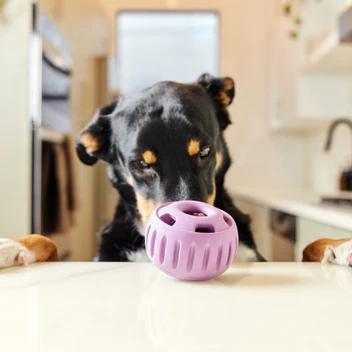
Dogs are far more likely to jump when they’re carrying excess energy or feeling unsettled. In our board-and-train program, we see this every day. Manners improve fastest when a dog’s physical and mental needs are met consistently.
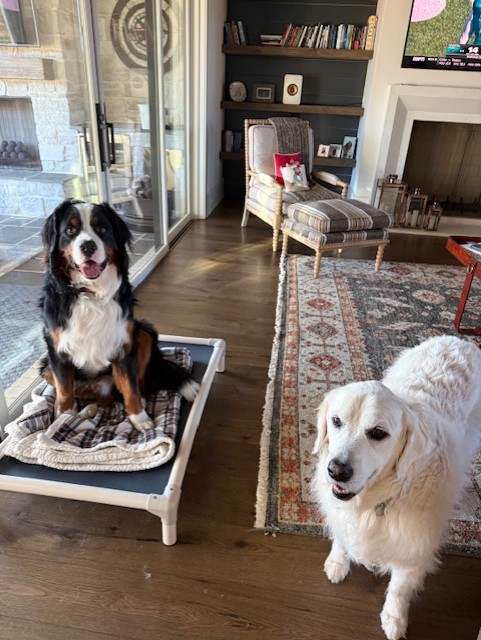
Calm enrichment helps dogs settle before guests arrive, making polite greetings easier to practice and maintain.
Before guests arrive, we focus on helping dogs settle before they’re asked to make good choices. That might look like a structured walk, a short training session, or a calming enrichment activity that helps the nervous system slow down.
Enrichment isn’t a distraction. It’s preparation. When a dog’s brain is engaged and their body is regulated, polite greetings come more naturally.
This is why, during board-and-train, we pair greeting manners with:
- Daily structured movement
- Mental engagement that encourages calm focus
- Purposeful downtime that teaches dogs how to settle
A dog who knows how to relax is far less likely to jump.
Consistency Is What Makes Training Stick
The number one reason jumping returns after training is inconsistency at home.
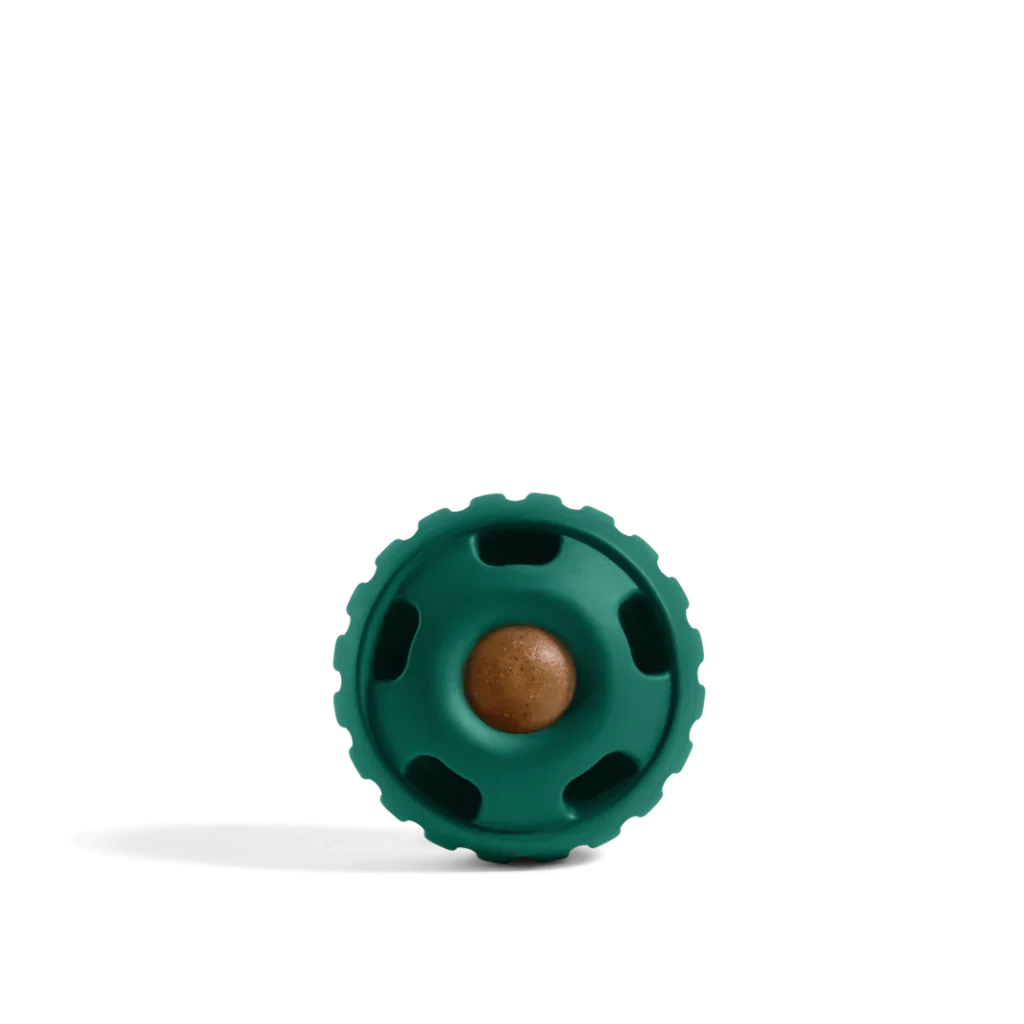
For dogs who struggle to settle when people arrive, a calm enrichment option like a Woof toy can give them something purposeful to focus on while guests come in, making polite greetings easier to practice.
Dogs don’t generalize rules automatically. If jumping is sometimes ignored, allowed at other times, or accidentally rewarded, the behavior persists. That’s why, during board-and-train, we train the system around the dog, not just the dog itself.
Everyone who greets your dog needs to follow the same rules:
- Jumping never gets attention
- Calm behavior always does
Keeping treats by the door and reinforcing polite greetings helps bridge the gap between training and real life. When the response is predictable, dogs stop guessing and start choosing the right behavior on their own.
Set Your Dog Up for Calm Greetings
Before guests arrive:
- ✔ Give your dog structured movement earlier in the day
- ✔ Offer a calming enrichment activity
- ✔ Clear the entry area to reduce chaos
- ✔ Have treats ready near the door
During greetings:
- ✔ Ignore jumping completely
- ✔ Reward four paws on the floor or a sit
- ✔ Keep voices and movements calm
After:
- ✔ Reinforce success
- ✔ Reset if needed without correction
Consistency matters more than intensity.
Keynotes for Board & Train Graduates
- Jumping is often an energy and clarity issue, not defiance
- Calm behavior must be practiced, not hoped for
- Enrichment prepares the dog’s nervous system for learning
- Consistency after board-and-train determines long-term success
- Manners improve when structure and emotional regulation work together
How We Teach Dog Greeting Manners at Ducktown Lodge
At Ducktown Lodge, jumping is treated as a communication gap, not a character flaw. Dogs are taught what to do instead through calm repetition and consistent structure.
Teaching Calm Greetings in Real Life
Manners are practiced during everyday transitions. Calm behavior is acknowledged. Jumping never is.
Why This Approach Stops Dog Jumping Long-Term
Consistency, low stress, and real-life practice help dogs generalize the behavior so it holds up at home, not just in training.
Life Feels Easier When Your Dog Knows What to Do
When jumping stops, guests relax. Dogs settle. You stop managing every interaction. Clear manners create calm moments, and calm moments change how it feels to live with your dog.
If you want support that’s steady, realistic, and built around real life, start with a conversation. No pressure. No judgment. Just clarity that sticks.