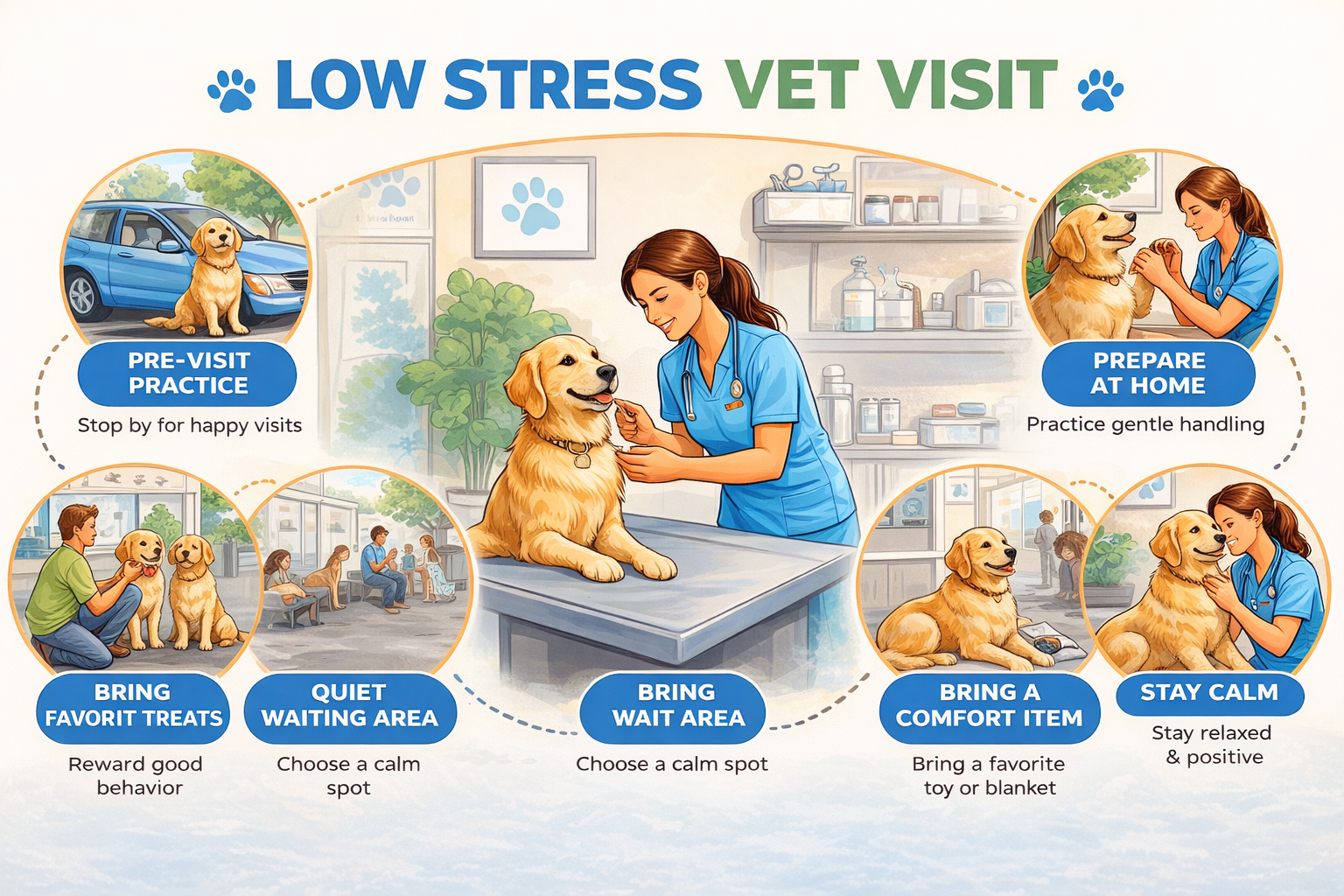
Low-Stress Vet Visits for Dogs Start With Preparation
Low-stress vet visits for dogs do not happen by luck. They happen by design. When dogs are introduced to gentle handling, calm structure, and positive exposure to new environments early, veterinary care becomes predictable rather than overwhelming. As an AKC breeder and owner of a board-and-train facility, we have seen firsthand that reducing dog anxiety at the vet begins long before the appointment. With thoughtful preparation, clear routines, and collaboration with trusted veterinarians, dogs can learn that the exam room is simply another place where they are safe.
We rely heavily on our trusted veterinary partners at Best in Show Veterinary Hospital in Cumming and Dawsonville Veterinary Hospital in Dawsonville. They guide our health protocols. They advise us on prevention. They support our boarding dogs when care is needed. That collaboration protects every dog that walks through our doors.
Why Dog Anxiety at the Vet Happens
Low-stress vet visits for dogs begin with understanding why stress happens in the first place.
Most dogs struggle because the environment feels unpredictable. There are strong smells. Slick floors. Other animals under tension. Unfamiliar hands reaching toward them.
If the only time a dog visits a veterinary clinic is when something hurts, the association becomes even stronger.
Common signs of dog anxiety at the vet include:
- Trembling or shaking
- Refusing food
- Pulling toward the exit
- Hiding behind the owner
- Growling or freezing
None of this means a dog is bad. It means the dog feels uncertain.
Uncertainty creates stress. Predictability creates calm.
Preparing Your Dog for Low Stress Vet Visits
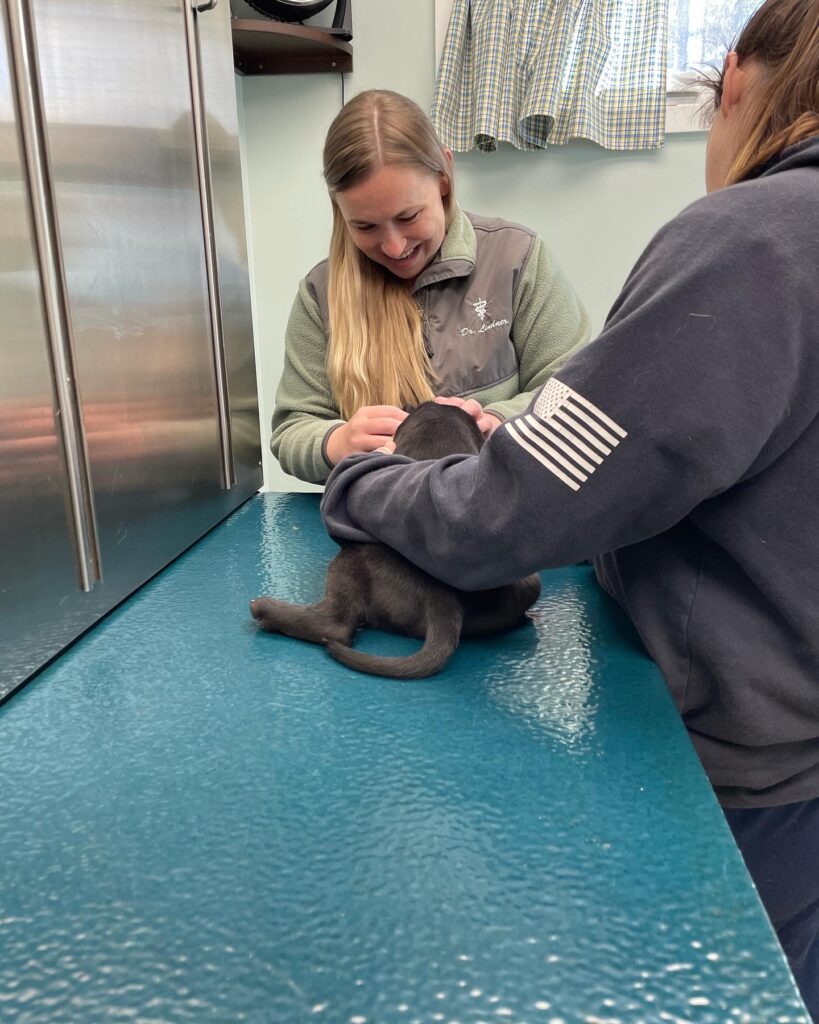
“Low stress vet visits for dogs begin with preparation, structure, and collaboration between training and veterinary care. As breeders, we begin preparing puppies for low-stress vet visits from the start.”
Before their first appointment, they had already experienced:
- Daily paw handling
- Gentle ear checks
- Brief mouth examinations
- Calm collar holds
- Standing on raised surfaces
This exposure is quiet and consistent. We repeat it until it feels normal.
Owners can recreate this foundation at home, even with adult dogs.
Here is how to start:
- Touch and reward. Lightly touch a paw and immediately give a treat.
- Increase duration slowly. Hold for one second, then two, then three.
- Practice gentle restraint. Brief collar holds followed by praise.
- Stay below the stress level. Slow down if your dog pulls away.
Dog training for vet visits is about emotional stability, not perfection.
Dog Training for Vet Visits Builds Confidence
In our board-and-train program, we focus on structure because structure lowers stress.
Teaching a reliable sit, down, place, or stand cue gives a dog something familiar to anchor to during a veterinary exam. The cue itself is not magic. The predictability is.
Practice these skills in gradually more distracting places:
- Your driveway
- A quiet park
- Near mild activity
- Outside a store
When a dog walks into a veterinary clinic in Cumming or Dawsonville, the room may feel unfamiliar. But the structure does not.
That is how low-stress vet visits for dogs are created.
Why Veterinary Partnerships Matter for Low-Stress Vet Visits for Dogs
As a board-and-train facility owner, we cannot operate independently of veterinary care.
We depend on Best in Show Veterinary Hospital and Dawsonville Veterinary Hospital for:
- Vaccination guidance
- Preventive health recommendations
- Emergency support
- Medication protocols
- Consultation on specific cases
When a boarding dog needs medical attention, we already have established relationships. That continuity reduces stress for the dog and for the owner.
Low-stress vet visits for dogs are easier when training and medical care work together.
Our job is to prepare dogs emotionally. Our veterinarians ensure their physical well-being. Together, that creates clarity.
Creating Positive Associations With the Veterinary Office
Low-stress vet visits for dogs also require positive exposure.
If the only visits are stressful ones, the building itself becomes a trigger.
Instead, try:
- Visiting the parking lot and offering treats
- Walking near the entrance calmly
- Stepping inside briefly and leaving on a positive note
Small exposures reduce emotional spikes and build confidence over time.
Ask your veterinary clinic if short positive visits are possible. Many welcome the opportunity to help dogs feel more comfortable.
Your Energy Influences the Outcome
Dogs read us carefully.
If you are tense or rushing, your dog notices. Slow your breathing. Move steadily. Speak in a normal tone.
Think of yourself as the anchor.
When you remain grounded, your dog has something stable to attach to.
Calm spreads.
When a Dog Already Struggles at the Vet
Some dogs have history. A painful procedure. A stressful restraint. A negative past experience.
Progress toward low-stress vet visits for dogs may look small at first:
- Standing calmly for five seconds
- Accepting a brief ear touch
- Entering the building without resistance
Celebrate those steps.
If anxiety is intense, structured professional training can rebuild clarity safely. The goal is not to overpower fear. It is to replace uncertainty with predictable patterns.
Low-Stress Vet Visits for Dogs Are Built Through Trust

Low-stress vet visits for dogs are not about forcing compliance. They are built through:
- Early handling
- Clear structure
- Gradual exposure
- High-value rewards
- Collaboration with trusted veterinarians
As AKC breeders and board-and-train providers in North Georgia, we see the long-term impact of this work every day.
Dogs raised and trained with clarity handle life better. Including veterinary care.
Ready for Low-Stress Vet Visits for Your Dog?
Veterinary care should feel steady, not stressful. When preparation, training, and medical support work together, dogs respond differently. They walk in with more clarity. They recover faster. They trust the process.
At Ducktown Lodge, we prepare dogs thoughtfully — whether they were raised here as part of our AKC breeding program or trained through our board-and-train services. And we do not do it alone. We work closely with trusted veterinary partners like Best in Show Veterinary Hospital in Cumming and Dawsonville Veterinary Hospital in Dawsonville to ensure every dog receives consistent, compassionate care.
When your dog is supported by a team that communicates and collaborates, everything feels different. Less guessing. Less tension. More confidence.
If you want low-stress vet visits for your dog, start with preparation. Start with structure. Start with a conversation.
Let’s talk about your dog — and build the kind of calm that lasts.