If you’re searching for how to stop puppy biting, you’re probably dealing with tiny razor teeth that feel anything but normal. Dog breeders call puppy teeth shark teeth for a reason. They’re sharp, persistent, and often shocking for new puppy owners.
What amazes me is how many people are completely taken aback by puppy nipping. They assume something is wrong. Their puppy is aggressive. Or that they’ve already failed.
None of that is true.
Puppy biting is a normal part of development. Dogs communicate with their mouths, long before they understand words or rules. How we handle this stage is imperative to proper development, emotionally and behaviorally. This is not a phase to ignore, but it’s also not one to punish.
How to Stop Puppy Biting Starts With Understanding Why Puppies Bite

Before you can truly understand how to stop puppy biting, you need to understand why it happens.
Puppy Biting Is Normal Development
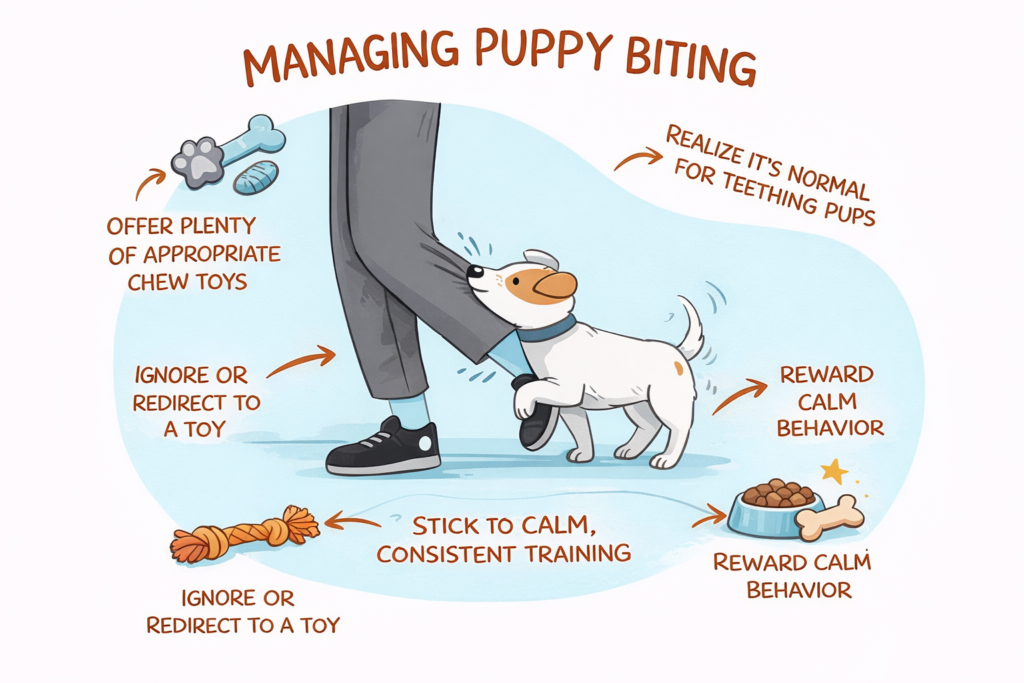
Puppies explore the world with their mouths. They don’t have hands. Mouthing helps them learn texture, pressure, and boundaries. During teething, sore gums make chewing feel necessary, not optional.
This is why puppy nipping increases between eight and twenty weeks. It’s not defiance. It’s biology.
Puppies Communicate Through Their Mouth
When puppies play with littermates, they bite constantly. When one bites too hard, the other puppy yelps and stops playing. That pause teaches bite inhibition.
When puppies come home, humans take over that role. Whether we realize it or not, we are teaching them how much pressure is acceptable.
How to Stop Puppy Biting by Teaching Bite Inhibition
If you want lasting results, bite inhibition is the foundation of how to stop puppy biting.
What Bite Inhibition Really Means
Bite inhibition is a puppy’s ability to control the strength of their mouth. Puppies are not born with it. They learn it through feedback and consistency.
This is why completely suppressing mouthing too early can backfire. Puppies need guidance, not fear.
What to Do When a Puppy Bites Too Hard
When your puppy bites hard:
- Freeze your hand
- Use a calm cue like “ouch” or “too bad”
- Briefly remove attention
This mirrors how puppies learn from each other. Hard biting ends play. Calm, consistent responses matter more than dramatic reactions.
How to Stop Puppy Biting Without Making It Worse
Many puppy owners accidentally intensify biting without realizing it. According to the ASPCA, puppy mouthing and nipping are normal developmental behaviors, and with calm guidance, redirection, and supervision, puppies can learn appropriate ways to interact with people.
What Not to Do When Trying to Stop Puppy Biting
Avoid:
- Yelling or scolding
- Physical corrections
- Holding the mouth shut
- Jerking your hands away quickly
These responses increase arousal or create fear. Neither teaches self control. They only confuse the puppy.
How to Stop Puppy Biting Through Redirection
Puppies need to chew. That part is non-negotiable.
Redirecting Puppy Mouthing the Right Way
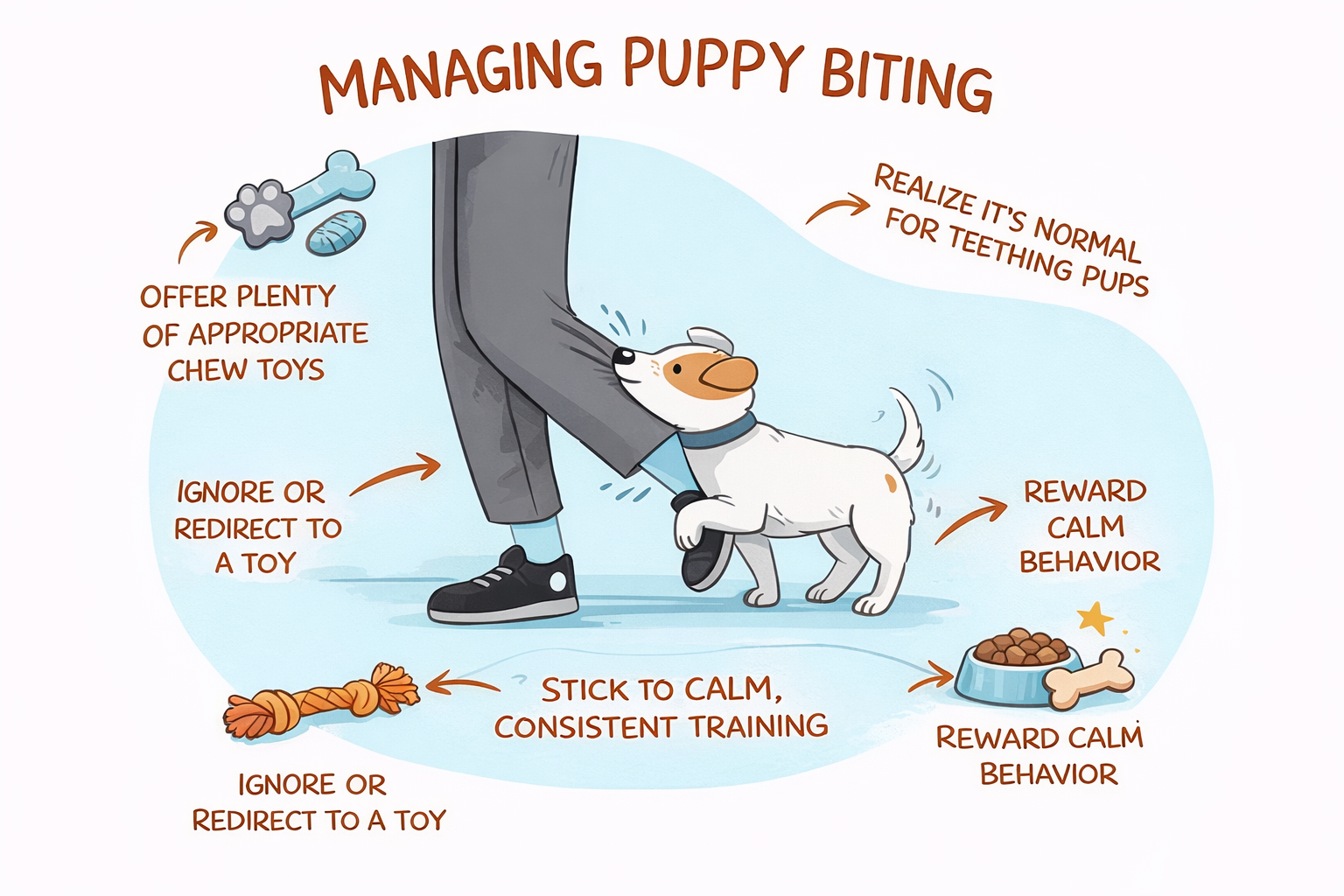
When teeth go to skin, calmly redirect to something appropriate.
Helpful options include:
- Rubber chew toys
- Soft tug toys
- Puppy safe teething items
Keep toys within reach so redirection is immediate. Over time, your puppy learns that toys earn engagement and skin does not.
How to Stop Puppy Biting by Reinforcing Calm Behavior
Puppies repeat what works.
When your puppy:
- Releases on their own
- Chooses a toy
- Settles instead of biting
Acknowledge it. Calm praise. Gentle interaction. Occasional treats. You are teaching your puppy what to do, not just what not to do.
How to Stop Puppy Biting by Managing Energy and Structure
Many people focus only on the teeth and miss the root cause.
Puppy biting spikes when puppies are:
- Overtired
- Overstimulated
- Lacking structure
- Unsure how to settle
This is why evening biting frenzies are common. It’s not attitude. It’s a nervous system overload. Predictable routines, quiet downtime, and age-appropriate naps matter just as much as training.
How Long Puppy Biting Lasts (And When to Get Help)
Most puppies improve as teething ends and bite inhibition develops. But improvement depends on guidance.
Puppy biting decreases when:
- Boundaries are consistent
- Redirection is immediate
- Calm behavior is reinforced
- Everyone responds the same way
If biting escalates, draws blood regularly, or is paired with fear or guarding, it’s time for professional support. Early guidance prevents long-term issues.
How to Stop Puppy Biting Is About Teaching, Not Punishing
Puppy biting does not mean your dog is aggressive.
It does not mean you’re failing.
It does not mean your puppy is broken.
It means your puppy is learning how to live in a human world.
When puppy nipping is met with calm structure, clear communication, and patience, puppies grow into dogs who understand how to interact safely and respectfully. That is how you truly learn how to stop puppy biting
How to Stop Puppy Biting in Homes With Children
This is where things matter most.
At Ducktown Lodge, one of our biggest priorities is helping families raise puppies safely alongside children. Children and dogs can have incredible relationships, but both must be taught how to interact and respect each other.
When a child is bitten, both the child and the dog pay a high price. Even if the injury is minor, the emotional impact can be lasting. Too often, the dog is the one who ultimately loses their home or their life due to fear and misunderstanding.
Proper training and management of both children and dogs can prevent tragedies before they ever happen.
How to Stop Puppy Biting by Teaching Children What to Do
Children need guidance just as much as puppies do.
Teach your children:
- Never tease, throw objects, or provoke a dog
- To be calm and gentle, especially around unfamiliar dogs
- To ask permission before petting a dog they don’t know
- To pet gently and avoid ears, tails, and faces
- Not to hug dogs, especially unfamiliar ones
Hugging can feel like confinement to a dog and brings a child’s face close to the dog’s mouth, which increases risk.
Children should also be taught:
- Not to run, jump, or scream around unfamiliar dogs
- Not to stare into a dog’s eyes
- Never to wake a sleeping dog
- Never to climb on a dog, even the family dog
What feels safe at home can become dangerous elsewhere.
How to Stop Puppy Biting by Teaching Dogs About Children
Puppies also need guidance around kids.
What Puppies Need to Learn
- Children move unpredictably
- High energy increases excitement and nipping
- Calm behavior is always rewarded
- Rough play ends immediately
Puppies should be supervised at all times around children. If play gets too intense on either side, step in calmly and reset. No yelling. No blame. Just structure.
Socializing puppies to children in a controlled, positive way builds confidence and safety for everyone.
How Long Puppy Biting Lasts (And When to Get Help)
Most puppies improve as teething ends and bite inhibition develops, but only if guidance is consistent.
Puppy biting decreases when:
- Boundaries are clear
- Redirection is immediate
- Calm behavior is reinforced
- Adults manage interactions with children
If biting escalates, draws blood, or causes fear in the household, it’s time for professional support. Early help protects both the dog and the family.
How to Stop Puppy Biting Is About Teaching, Not Punishing
Puppy biting does not mean your dog is aggressive.
It does not mean your child did something wrong.
It does not mean your family is failing.
It means everyone is learning.
When puppy nipping is met with calm structure, clear rules, and thoughtful management, puppies grow into dogs who understand how to interact safely. Children grow confident instead of fearful. Families stay whole.
That’s what learning how to stop puppy biting is really about. Our reproduction veterinarian at Best in Show Veterinary Hospital emphasizes that thoughtful early care is essential for raising healthy, well-adjusted puppies.
A Final Word From Ducktown Lodge
You’re not being overprotective. You’re being responsible.
Raising a puppy alongside children takes guidance, patience, and support. You don’t have to figure it out alone. At Ducktown Lodge, we believe training should protect relationships, not create tension.
If you want help navigating puppy biting, early training, or family dynamics, start with a conversation. We’ll meet you where you are and help you move forward safely.