Dog Treats for Training: Why They Matter From the Start
Dog treats for training are one of the most effective tools you can use to teach clear, consistent behavior. When used correctly, dog treats for training create motivation, sharpen focus, and speed up learning. They are not bribes. They are communicating.
If your dog struggles to pay attention, pulls on the leash, or seems distracted, the issue is often clarity. Dog treats for training help mark the exact moment your dog makes the right choice. That clarity builds confidence. And confident dogs learn faster.
The key is not just what treatments you use, but how you use them. Timing, size, repetition, and gradual fading all matter. When done well, dog treats for training become the bridge between food motivation and reliable focus.
Focus Comes Before Obedience
Before a dog can sit, stay, or walk politely on leash, they must learn how to focus. Focus is the foundation. In this post, we will break down the best dog treats for training, how to teach focus step by step, how often to reward, when to fade treats, and how to build attention that lasts beyond food.
Dog Treats for Training: Why They Matter More Than You Think
Most people think dog treats for training are about getting a dog to listen. That is not the real purpose. Treats are about communication. They tell your dog, yes, that right there. That is what I wanted.
Dogs repeat what works. If looking at you earns something valuable, they will look at you again. If ignoring you pays off, they will ignore you again. Dog treats for training help you clearly mark the behavior you want more of. That clarity builds focus faster than correction ever will.
When people say they do not want their dog dependent on treats, what they usually mean is they want their dog to listen without food in hand. That is a fair goal. But food is not the problem. Poor timing and poor structure are.
Dog Treats for Training Are Communication, Not Bribery
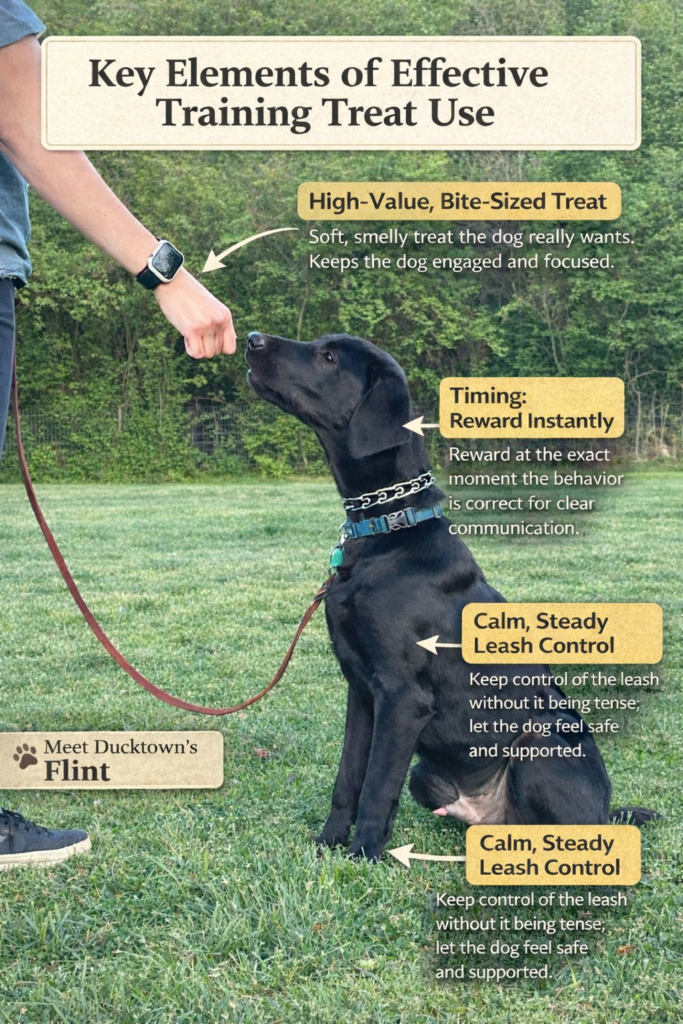
Dog treats for training should be small, soft, and easy to deliver quickly. There is a big difference between bribing and reinforcing.
A bribe happens when you show the treat first and beg the dog to respond. The dog learns to wait until they see food.
Reinforcement happens after the behavior. The dog offers focus. You reward it. Now the dog thinks, that worked. I will try that again.
When using dog treats for training to teach focus, think in these terms:
- Reward behavior, do not beg for it. Wait for eye contact. The moment it happens, mark and reward.
- Keep your hands neutral. Do not wave food in front of your dog’s face. Let the focus come first.
- Be clear and calm. Quiet, steady reinforcement builds steady dogs.
Focus training works best when the dog feels safe, not pressured. Food lowers tension. It creates a positive learning space. That emotional safety is part of why dog treats for training work so well.
How to Teach Focus Before Teaching Obedience
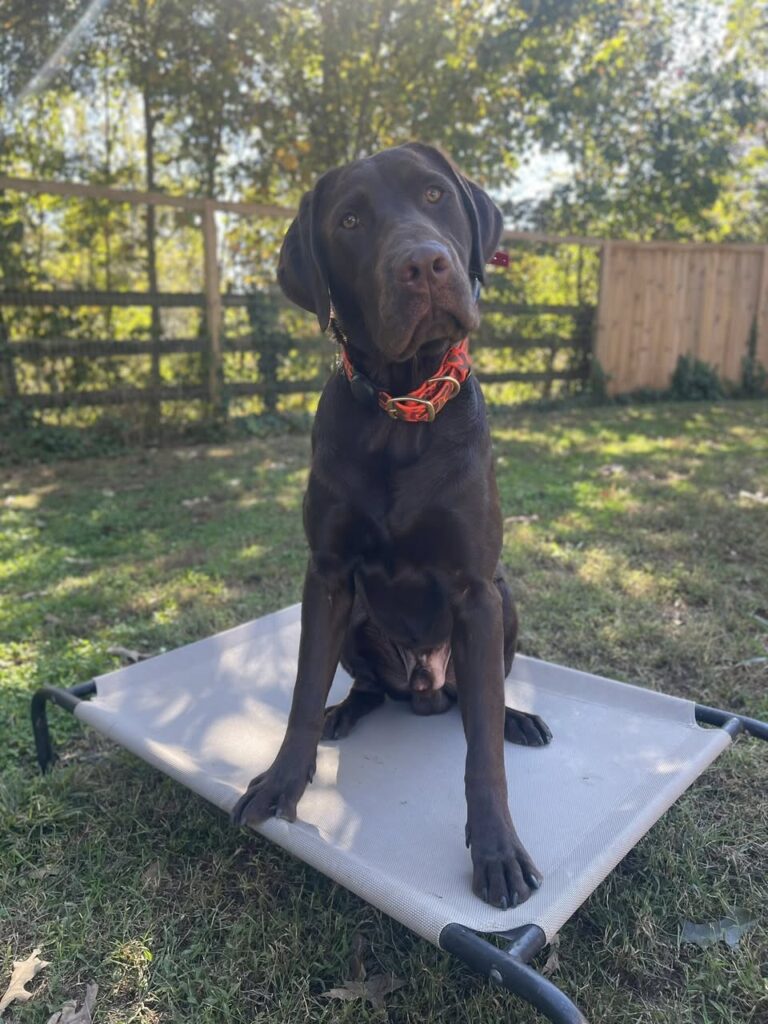
Teaching focus starts with consistent reinforcement, and dog treats for training make that reinforcement clear.
Teaching a dog to focus starts with something simple. Eye contact.
Stand still. Say nothing. Wait.
The moment your dog looks at your eyes, mark it with a calm yes and give a small treat. Do not wave food. Do not repeat their name over and over.
You are teaching your dog this simple lesson. Looking at me works.
In the beginning, reward even one second of eye contact. Keep sessions short. One to three minutes is plenty.
Dog treats for training make the lesson obvious. They make focus rewarding. Over time, your dog begins to check in without being asked. That is the beginning of reliable attention.
Best Dog Treats for Training: Size Matters More Than You Think
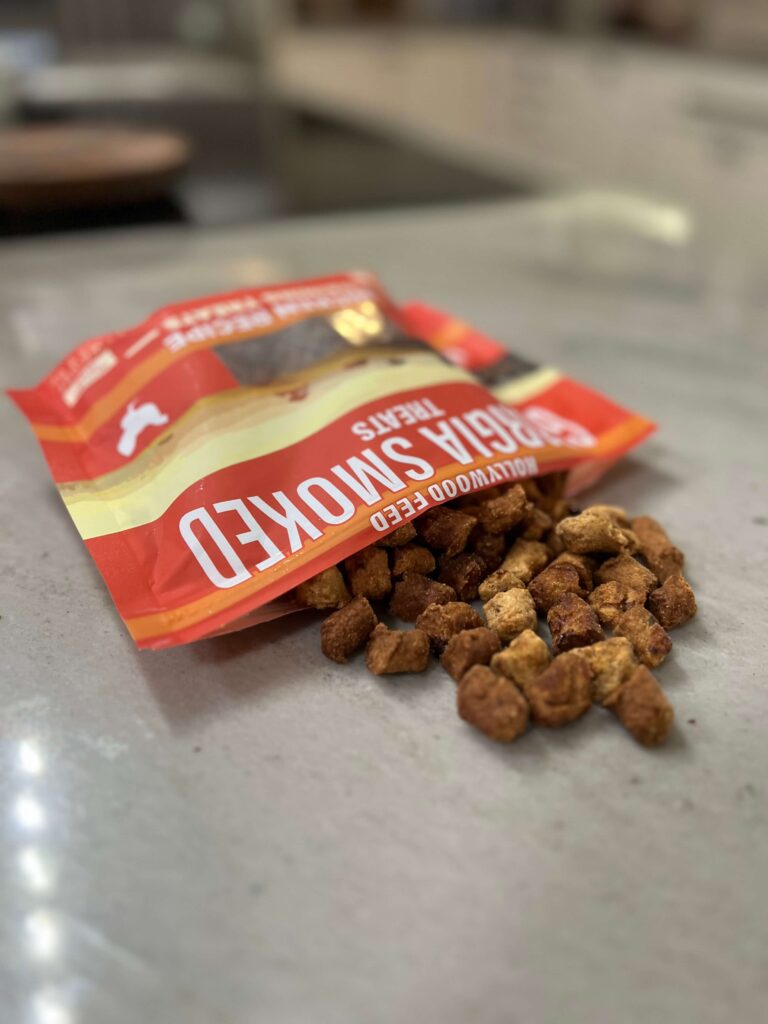
When it comes to dog treats for training, bigger is not better.
Small treats keep the session moving. Focus training depends on repetition. The more successful reps you get, the faster your dog learns. If your dog is chewing for ten seconds after every reward, momentum is lost.
Keep Dog Training Treats Small
Small dog treats are key to keeping a training session smooth and effective. Even for large dogs, a pea sized treat is more than enough. For small dogs, you can go even smaller.
Many commercial dog treats for training are far too large. If you cannot deliver five rewards in under a minute, your treats are too big.
Before your session starts:
- Cut treats into tiny pieces. Prep ahead so you are not fumbling mid-session.
- Aim for pea-sized or smaller. Large dogs do not need large rewards.
- Think repetition over quantit.y More small rewards build faster learning.
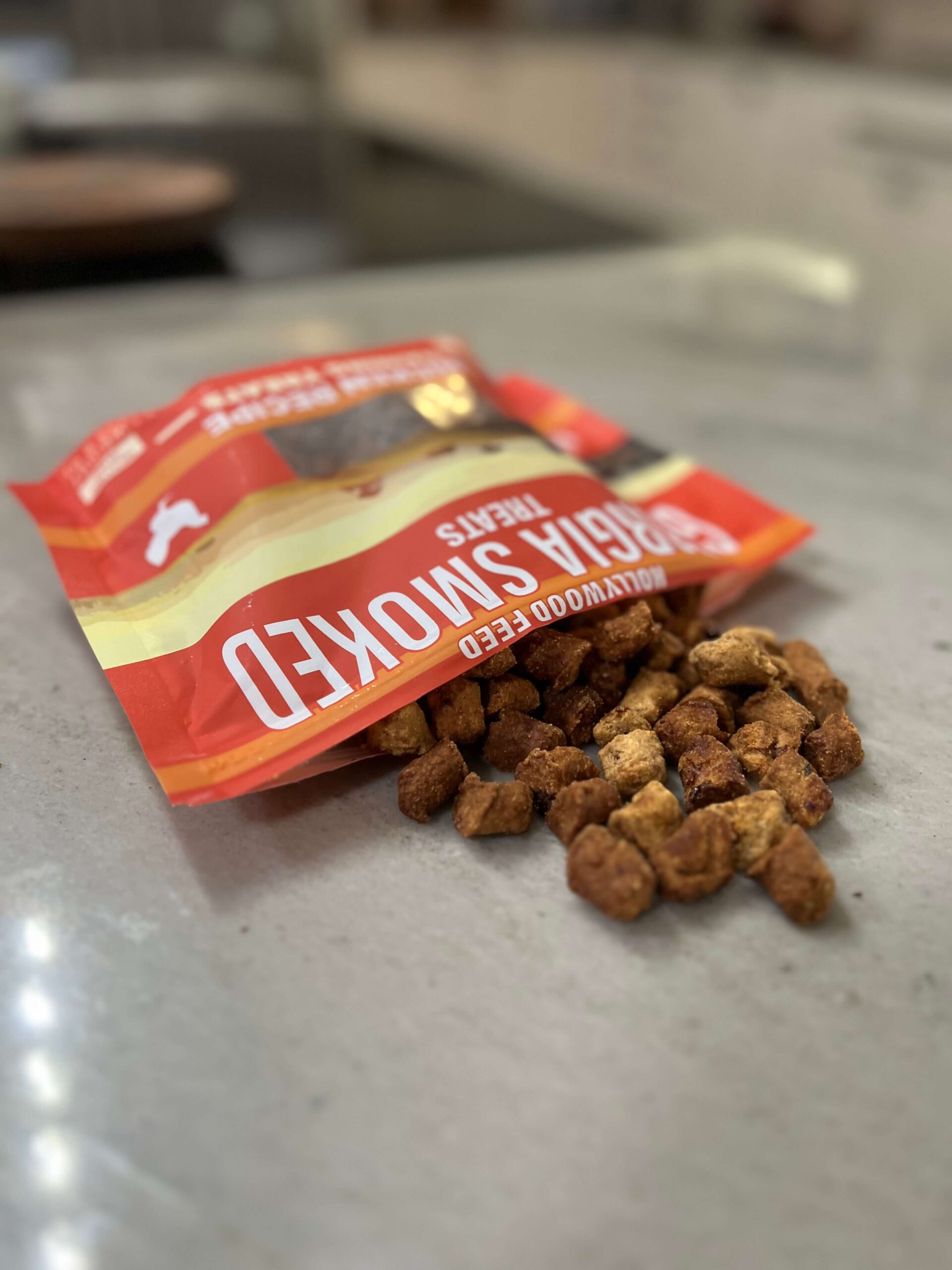
Soft, smoky treats often hold attention well without requiring large portions. For example, Georgia Smoked Chicken Training Treats are designed specifically for repetition work and can be easily broken into small bits. You can find them here: Hollywood Feed “Hollywood Feed on Keith Bridge Rd – Makes Shopping for Pet Supplies in Cumming Easy”
The goal is not to fill your dog up. The goal is to create clear, fast feedback.
High-Value Dog Treats for Training and When to Use Them
High value means your dog wants it more.
You do not need a high value for every session. But you need it when:
- You are teaching something new
- You are working around distractions
- Your dog struggles with focus
Brands that work well for high-value dog treats for training include:
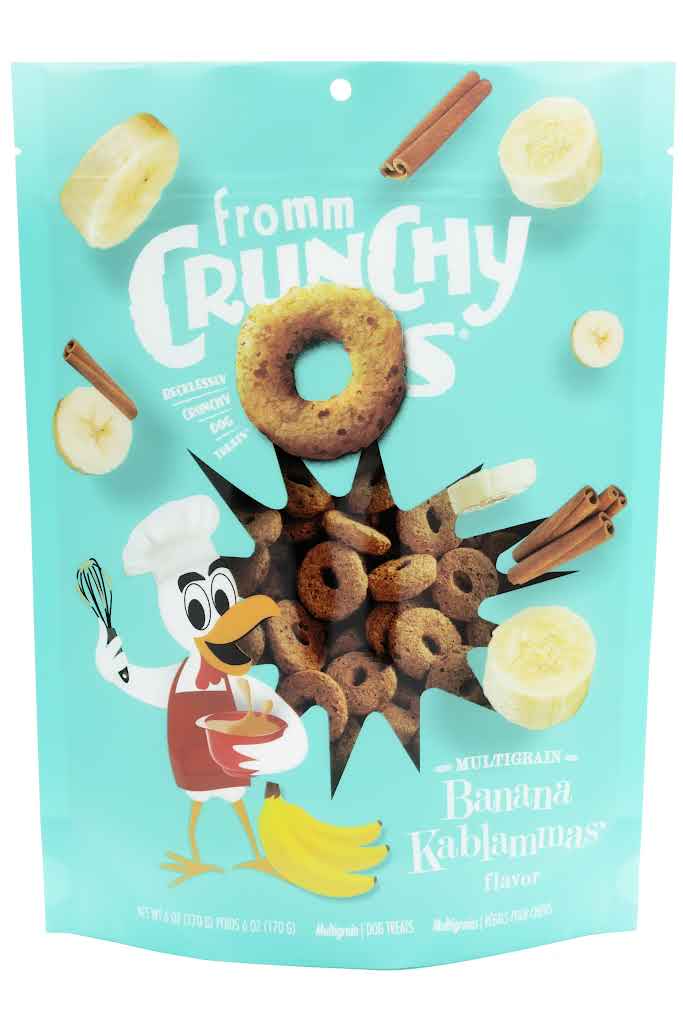
- Hollywood Feed Freeze Dried Raw Strong scent and easy to break apart.
- Fromm Training Treats: Crunchy and Healthy Choice (Our dogs love these treats)
- Small pieces of cooked chicken. Simple and highly effective. Very High Value for Higher Distraction
High-value treats should still be small. Repetition matters more than size.
How to Teach Focus Using Dog Treats for Training
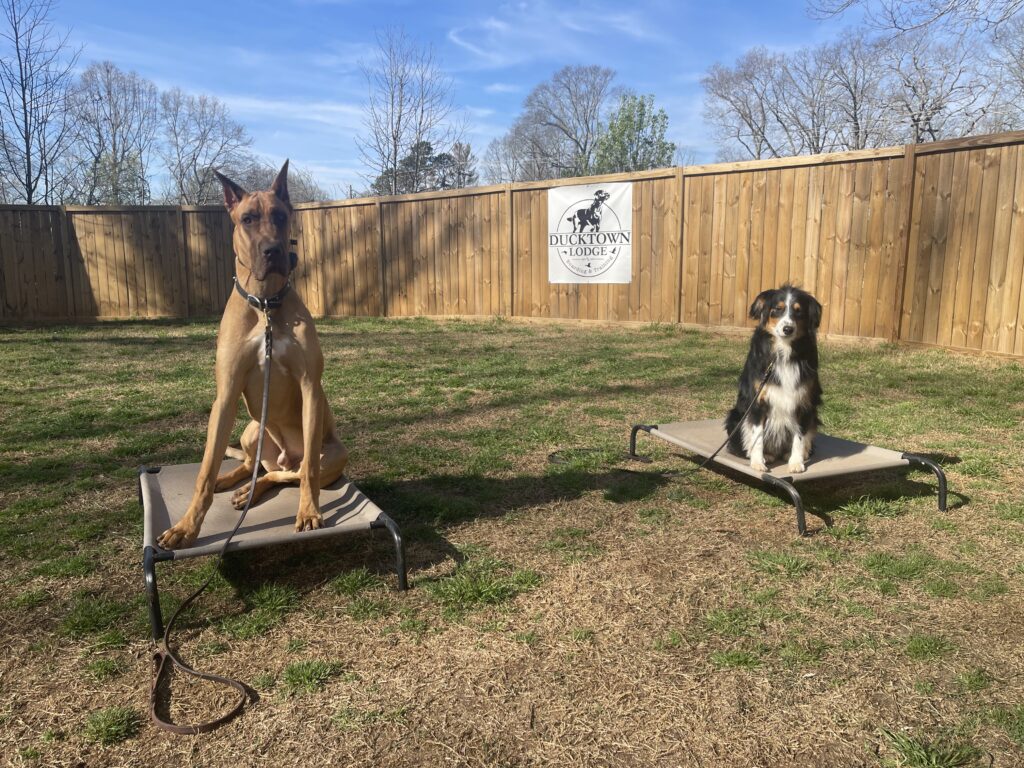
Focus is not something you demand. It is something you build.
When people ask how to teach focus, they usually mean how to get their dog to pay attention instead of everything else. The answer is simple. Make attention rewarding.
How to Teach Focus With Eye Contact
Start in a quiet space.
Stand still. Say nothing. Wait.
The moment your dog looks at you, mark and reward immediately.
When using dog treats for training:
- Reward immediately
- Keep treats small
- Stay calm
In the beginning, reward even one second of eye contact.
Teaching a Dog to Focus Using the Name Game
Once eye contact is consistent, add your dog’s name.
Say it once.
If they look at you, mark and reward. If they do not respond, wait and reset.
The name should mean look at me. Not background noise.
Practice daily in short sessions. Teaching a dog to focus requires repetition, not pressure.
How to Teach Focus and Increase Duration
Now build duration slowly.
Start with one second. Then two. Then three.
Do not rush. If you increase too quickly, focus breaks down.
Dog treats for training allow you to stretch attention without frustration. Move in layers. Indoors first. Then the backyard. Then, quiet public spaces.
Confidence builds lasting focus.
How Often to Use Dog Treats for Training When You Teach Focus
When learning how to teach focus, timing and frequency matter.
Reward Immediately When Using Dog Treats for Training
The reward must happen the moment your dog gives eye contact.
- Mark instantly
- Deliver quickly
- Avoid delays
Delayed rewards create confusion.
Use Small, Frequent Dog Treats for Training in the Early Stages
In early training, reward often.
- Reward every success
- Keep sessions short and dense
- Use higher value treats if needed
Frequent reinforcement builds strong patterns.
Gradually Reduce Dog Treats for Training
Once focus is consistent, shift to a variable reward schedule.
- Reward every second or third success
- Keep timing sharp
- Add praise and calm engagement
Variable rewards strengthen behavior.
Maintain Positive Association
Even as you reduce food, keep focus on rewarding.
Use praise. Use calm touch. Occasionally, use high-value treats.
Dog treats for training start the process. Structure sustains it.
Common Mistakes When Using Dog Treats for Training to Teach Focus
Using Dog Treats for Training as a Permanent Lure
If your dog only focuses when they see food, you are luring.
Reward after behavior, not before.
Talking Too Much
Say your dog’s name once. Reward eye contact. Keep it simple.
Training in High Distraction Too Soon
Start indoors. Build slowly. Increase difficulty in layers.
If your dog fails repeatedly, the environment is too hard.
When Dog Treats for Training Are Not Enough to Teach Focus
Dog treats for training are powerful. But they are not magic.
Structure Supports How to Teach Focus
Dogs need routine. Clear expectations reduce stress.
Lower stress improves attention.
Emotional Regulation Comes First
If a dog is overstimulated, its focus will be weak.
Lower intensity. Increase distance from triggers. Shorten sessions. When dogs feel safe, focus improves.
Dog Treats for Training and How to Teach Focus That Lasts
Dog treats for training build the pattern. Relationship builds the habit.
What Real Focus Looks Like
- Your dog checks in naturally
- Eye contact is soft and calm
- Distractions are noticed but manageable
- Your dog returns attention easily
That is real focus.
Moving Beyond Dog Treats for Training
Gradually reward unpredictably. Use life rewards like movement and play. Keep expectations clear.
Focus shifts from food-driven to relationship-driven.
Dog Treats for Training and How to Teach Focus With Confidence
If you have felt frustrated trying to teach focus, you are not alone.
Learning how to teach focus is not about being louder. It is about being clearer.
When you use dog treats for training with small rewards, sharp timing, and calm repetition, your dog begins to understand you. Add structure. Add steadiness. Focus becomes natural.
Imagine saying your dog’s name once and seeing soft eye contact.
Imagine walks where your dog checks in without being asked.
Dog treats for training are not the end goal. They are the bridge.
Clear communication builds confidence.
Confidence builds focus.
Focus builds trust.
And trust is what makes everything else easier.