Puppy barking is one of the most common and frustrating challenges new dog owners face, especially when the barking is directed straight at you. Whether it happens behind a baby gate, during dinner, or the moment you stop engaging, puppy barking is rarely random. It’s communication, and understanding why it happens is the first step to stopping it calmly.
One of the most common questions puppy owners ask is also one of the most exhausting:
“How do I get my puppy to stop barking at me?” It usually happens when you’re right there. On the couch. Behind a baby gate. Trying to cook dinner. Your puppy locks eyes with you and starts barking like it’s their job.
This kind of barking can feel personal. It isn’t. It’s communication. And once you understand what your puppy is really saying, the solution becomes much clearer and far less emotional.
Why Puppies Bark Directly at Their Owners

When a puppy barks at you, not at noises or strangers, it’s almost always about access, frustration, or attention.
Puppy Barking for Attention vs Real Needs
One of the most common triggers is a physical barrier. A baby gate. A closed door. A crate.
Your puppy can see you, smell you, and wants to reach you but can’t. That conflict creates frustration, and barking becomes the outlet.
This is known as boundary frustration, and it’s very common in young dogs who haven’t yet learned how to settle themselves.
Puppy Demand Barking
Many puppies also learn quickly that barking gets results.
Results might look like:
- You’re talking to them
- You are making eye contact
- You’re moving closer
- You’re opening the gate
- You sigh and walk away
To a puppy, all of that counts as feedback. Over time, barking turns into a strategy.
This is called puppy demand barking, and it’s a learned behavior, not intentional defiance.
Puppy Barking and Early Separation Stress
Sometimes, barking can be a sign of insecurity. Puppies are still learning that separation is safe and temporary.
That doesn’t mean your puppy has full separation anxiety. It just means they need help learning how to be calm when access to you is limited.
Start With This Question Before You Correct Anything
Before addressing barking behavior, pause and check your puppy’s basic needs.
Ask yourself:
- Have they gone potty recently?
- Have they had physical movement?
- Have they had mental stimulation?
- Have they had connection time with you?
A puppy who hasn’t had their needs met will struggle to self-regulate. Addressing barking without meeting those needs first is like asking a tired toddler to be quiet without a nap.
Once those needs are met, you can work on the behavior itself with confidence.
Why Ignoring Barking Actually Works
Once your puppy’s needs are met, barking should stop working.
That means:
- No eye contact
- No verbal responses
- No touching
- No opening the gate
This is the hardest step for most owners. Barking is designed to get a reaction, and silence feels unnatural.
But here’s the truth:
Every response teaches your puppy that barking controls the situation.
Ignoring barking removes the payoff.
Consistency matters more than perfection here. If barking works sometimes, your puppy will keep trying harder.
How to Reward Quiet Without Creating More Barking

Ignoring barking only works if quiet behavior is reinforced.
The moment your puppy stops barking, even briefly, that’s your opportunity.
Rewarding quiet can look like:
- Calm praise
- A small treat
- Tossing a treat away from the gate
- Offering a high value chew
- Opening the gate only when silent
You’re not waiting for minutes of silence. You’re reinforcing the decision to stop.
This teaches your puppy that calm behavior is what gets results.
Using High Value Chews to Change the Emotional Response

High-value distractions are powerful when used intentionally.
Long-lasting chews work best because they encourage settling, not excitement.
Examples include:
- Bully sticks
- Frozen enrichment toys
- Safe long-lasting chews
The key is association.
Only offer these items when your puppy is behind the gate or separated. Over time, the gate stops predicting frustration and starts predicting good things.
That emotional shift reduces barking before it starts.
Teach a Calm Interrupter Instead of Yelling
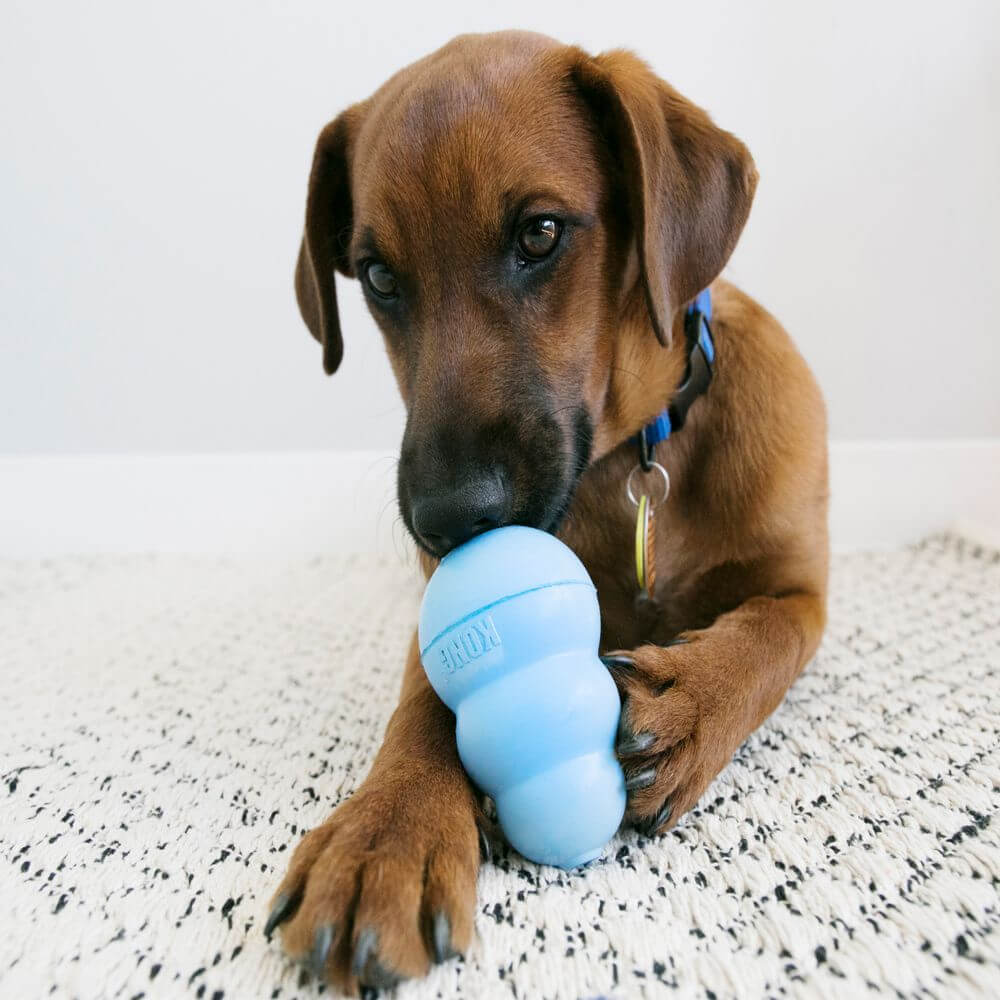
Yelling often escalates barking. To a puppy, raised voices feel like participation. Kongs are our go-to at Hollywood Feed on Keith Bridge Road, Cumming, Ga
Instead, teach a neutral interrupter cue.
Choose something calm like:
- “Uh oh”
- A soft kiss sound
- Their name said gently
Practice this cue when your puppy is already relaxed. When they turn toward you, reward them.
Later, you can use this cue at the gate to redirect attention before barking spirals.
This keeps communication clear without adding tension.
Gradual Desensitization Builds Real Calm
Quiet behind a gate is a skill, not an expectation.
Start small.
Steps might look like:
- Standing on the other side of the gate for a few seconds
- Rewarding calm behavior
- Increasing time slowly
- Progressing from visible to briefly out of sight
If you move too fast, frustration increases and barking returns.
Slow progress builds confidence. Confidence reduces noise.
How Puppy Culture Uses Barriers the Right Way

At Ducktown Lodge, we follow the Puppy Culture program to help puppies build confidence, emotional regulation, and resilience early in life. One of the tools Puppy Culture uses is barrier challenges. These are not meant to block puppies indefinitely or test their patience. They are meant to teach problem-solving in a safe, age-appropriate way.
Why We Start This Work So Early
At Ducktown Lodge, we don’t wait until a puppy is overwhelmed to start teaching calm. We start early, when their brains are most open to learning how to pause, think, and recover from frustration.
That’s why we use the Puppy Culture program. Not because it’s trendy, but because it respects how puppies actually develop emotionally. The goal isn’t to push them through hard moments. It’s to teach them how to move through small challenges without tipping into stress.
One area where this matters most is how puppies learn to handle barriers. Gates. Pens. Doors. Leashes. These show up everywhere in real life. When puppies are guided through these moments thoughtfully, they learn resilience. When they’re overwhelmed, they learn to bark, lunge, or panic instead.
Understanding the difference is key.
When done correctly, barriers help puppies learn, “I can pause, think, and figure this out.”
When done poorly, they can create the very frustration and barking most owners are trying to prevent.
The difference matters.
What Barrier Frustration Actually Is
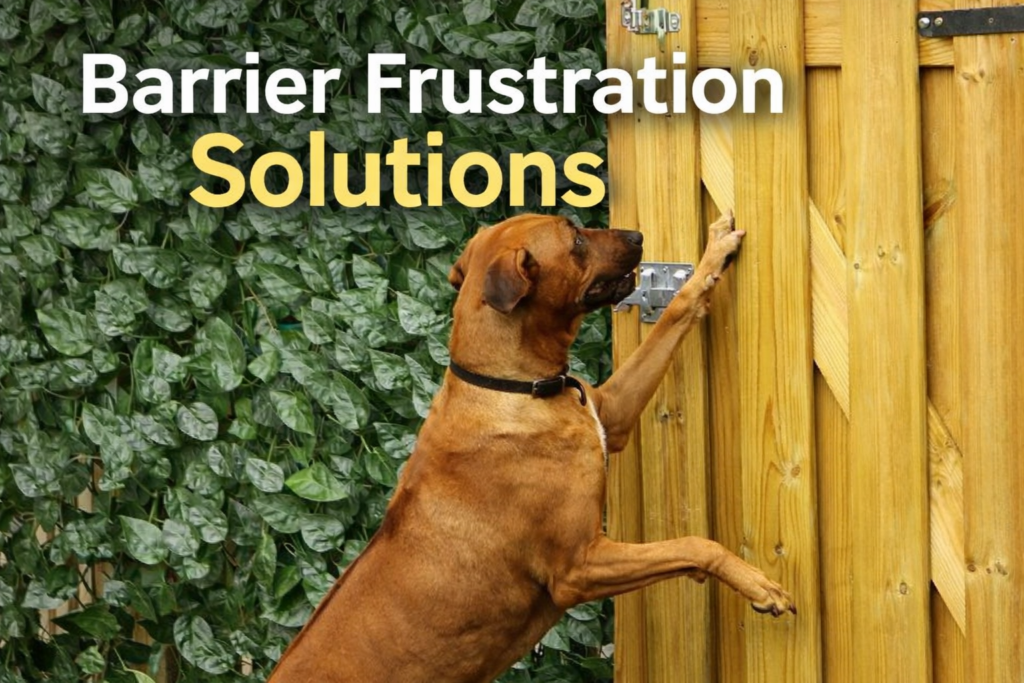
Barrier frustration happens when a dog reacts intensely because something they want is visible but unreachable.
This can look like:
- Barking or screaming
- Lunging at gates, fences, or windows
- Growling or snapping at the barrier
- Escalating faster each time the barrier appears
It’s important to understand that this behavior is not aggression. In most cases, it comes from overexcitement, anxiety, fear, or unmet needs. Social, people-oriented dogs are often the most prone to it because access matters so much to them.
Puppy Culture’s Goal With Barriers
Puppy Culture introduces barriers gently and briefly.
The goal is:
- Confidence
- Curiosity
- Problem solving
- Emotional flexibility
Examples include stepping over a rolled towel or navigating a small, temporary obstacle. These moments are short and supported. The puppy is never left to spiral into frustration.
When barriers are overused, too difficult, or paired with high emotional triggers, puppies don’t learn resilience. They learn panic.
How We Prevent Barrier Frustration From Developing
Healthy frustration tolerance is built slowly and intentionally. Here’s how we manage it.
Identify Your Puppy’s Threshold
Every puppy has a point where they notice a trigger, but can still stay calm. That distance is your starting place. Training happens before reactions, not during meltdowns.
Teaching a Calm “Quiet” Cue Without Adding Pressure
Teaching a “quiet” cue can be helpful when it’s done thoughtfully. The goal isn’t to shut your puppy down or correct emotion. It’s to give them a clear, calm way to turn the volume down once they’ve already communicated.
The key is how the cue is taught.
Start in low-stimulation moments, not during a full barking episode. When your puppy makes a noise and then pauses, calmly say your chosen word, like “quiet,” in a neutral, steady tone. The moment they remain silent, reinforce that choice with a small treat, gentle praise, or calm affection.
Over time, your puppy begins to associate the word with the state of being calm, not with punishment or frustration.
A few important guidelines make this work:
- Use a calm, even voice. Raised voices sound like participation, not guidance.
- Reward silence, not barking. The quiet moment is what earns reinforcement.
- Keep sessions short and low-pressure.
- Avoid using the cue when your puppy is already overwhelmed. Teach first. Apply later.
When paired with meeting your puppy’s physical and emotional needs, a quiet cue becomes a communication tool instead of a power struggle.
Done correctly, it helps reduce puppy barking without fear, force, or escalation.
Use Enrichment to Build Emotional Stamina
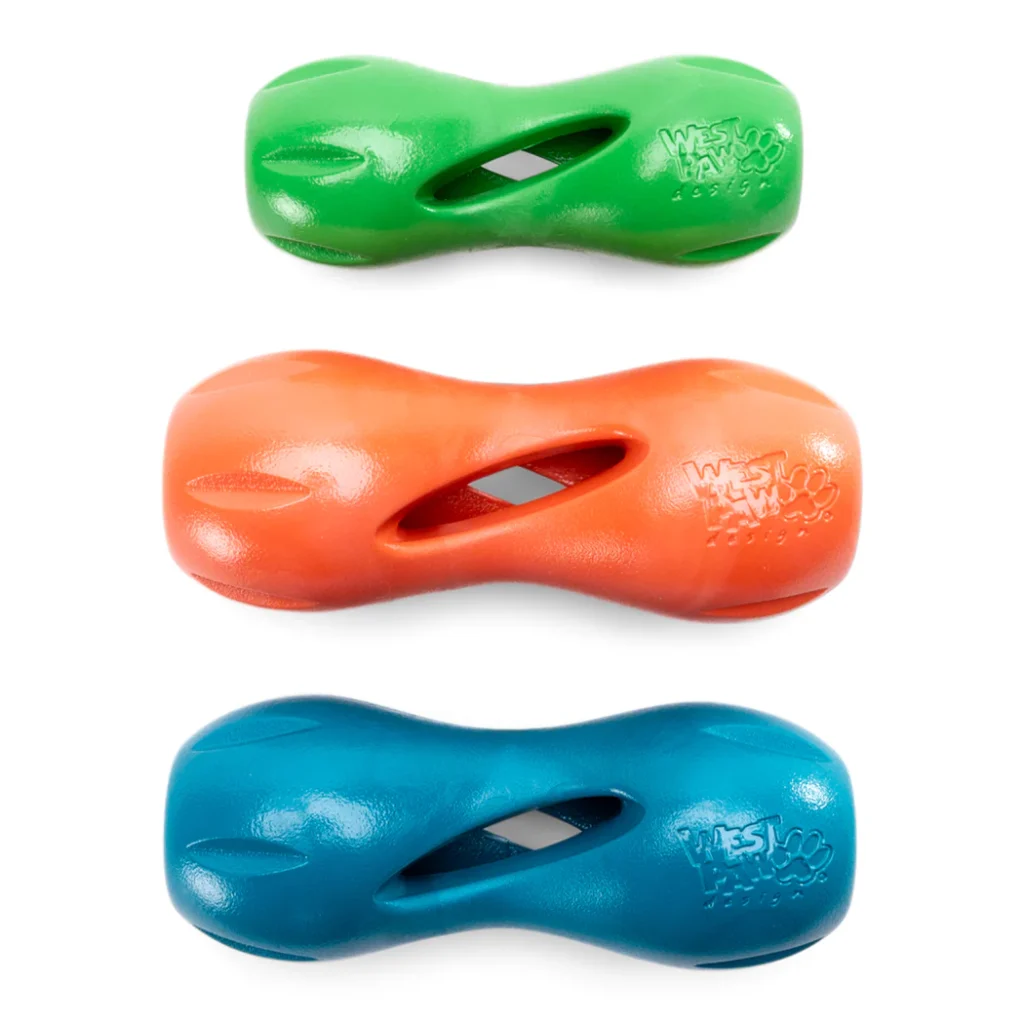
Scatter feeding in grass, puzzle toys, and sniffing activities help puppies practice patience and focus. Think of it as yoga for dogs. It builds flexibility without pressure.
Reduce Visual Triggers When Needed
If your puppy reacts to seeing people or dogs through gates or fences, visual barriers matter. Opaque covers or repositioning the setup can lower arousal and prevent rehearsing barking.
Reward Calm Awareness
When your puppy notices something exciting and chooses calm, that’s gold. Mark and reward that moment. Calm observation is a skill that grows with reinforcement.
Meet Physical and Mental Needs First
A tired puppy with fulfilled needs handles boundaries far better than an under-stimulated one. Routine, movement, chewing, and sniffing all lower baseline stress.
Don’t Negotiate During a Tantrum
If a puppy is already barking or lunging, adding cues or treats often backfires. Calmly remove them or wait for the reaction to pass. Then adjust the environment next time so they don’t cross that threshold again.
Why This Matters Long Term
Barrier frustration doesn’t usually start as a big issue. It grows when puppies rehearse emotional explosions at gates, doors, or leashes.
Handled early and thoughtfully, puppies learn:
- How to pause instead of panic
- How to tolerate “not yet”
- How to self soothe
- How to stay connected without demanding
That’s how you raise a dog who can handle real life with calm clarity.
Common Mistakes That Make Puppy Barking Worse
Some responses feel natural but increase barking long-term.
Opening the Gate While Barking
This teaches your puppy that persistence works.
Yelling or Scolding
This adds emotional energy and often escalates the behavior.
Punishment Tools
Shock collars or harsh corrections increase fear and damage trust. They don’t teach emotional regulation.
Inconsistency
Letting barking work sometimes makes the behavior stronger.
Calm, predictable responses are what actually change behavior.
What This Is Really Teaching Your Puppy
This isn’t just about barking.
You’re teaching your puppy:
- How to handle frustration
- How to self soothe
- How to respect boundaries
- How to communicate calmly
- How to settle without constant engagement
These skills affect leash behavior, crate training, greeting guests, and future independence.
A quiet dog isn’t made through force. It’s built through clarity and follow-through.
When Barking Is a Sign You Need Support
If barking feels constant, escalates quickly, or comes with panic behaviors, it may be time for professional guidance.
Early support helps prevent bigger issues later. Training isn’t about silencing dogs. It’s about helping them feel safe and clear.
At Ducktown Lodge, puppy training focuses on calm structure and emotional regulation, not pressure or punishment. Barking is treated as information, not misbehavior.
You’re Not Asking for Too Much
Wanting a calm home doesn’t make you demanding. It makes you thoughtful.
Puppy barking is common, temporary, and very trainable when handled with consistency and patience.
And if you want help building those skills the right way, you don’t have to figure it out alone.
Start with a conversation. We’ll meet your puppy where they are.