AKC Breeder Insight: Why We Raise Our Puppies With Crates From Day One

As an AKC breeder, we have raised many puppies over the years, and every one of them is introduced to a crate early. Not as confinement. Not as punishment. As a tool for safety, rest, and emotional regulation.
When you raise puppies in a structured, intentional way, patterns become clear. Puppies who learn how to settle in a crate sleep better, potty train faster, and transition into new homes with far less stress. We have seen this across litter after litter.
Crates are part of how we raise stable dogs, not something added later to fix problems.
For our Ducktown Retriever families, crate training is something we actively teach and support. We show owners how to:
- Use the crate as a calm resting space, not isolation
- Build positive routines around sleep, meals, and downtime
- Help puppies feel safe instead of overstimulated
Because these puppies are raised with crates from the beginning, they already understand how to rest. That foundation follows them home and sets families up for success.
Crate training is not a theory for us. It is something we live every day with the dogs we raise.
Why crate training matters more than most people realize
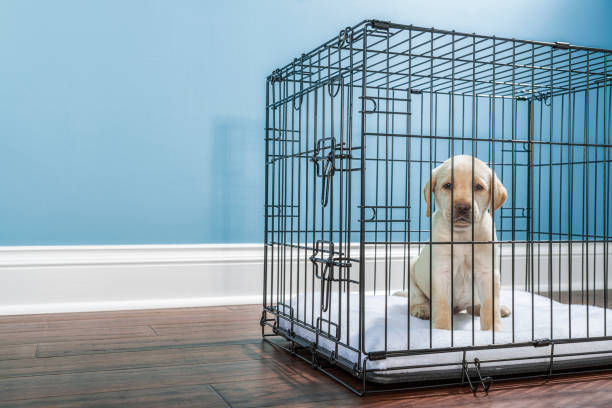
Crate training a puppy is one of the most effective ways to create calm, confident dogs. When done correctly, a crate gives puppies structure, safety, and a place to truly rest. It is not about confinement. It is about teaching a young dog how to settle in a world that can feel loud and overwhelming.
Crate training a puppy helps build confidence by giving them a safe place to rest, self-soothe, and learn routine. When introduced correctly, a crate works like a den, not a cage, supporting potty training, better sleep, and calmer behavior without fear or punishment.
A calmer start creates a better long-term dog
Most puppy struggles do not come from stubbornness. They come from overstimulation, lack of rest, and too much freedom too fast. In the sections below, we will walk through why crates work, how to use them humanely, what mistakes to avoid, and how simple tools can help your puppy feel safe instead of stressed.
Why Crate Training a Puppy Is About Confidence, Not Control
Many new puppy owners hesitate with crate training because it feels restrictive. That hesitation usually comes from misunderstanding what a crate is meant to provide. When used correctly, a crate is not about control. It is about giving a puppy clarity, predictability, and a place to feel safe.
Puppies are not born knowing how to rest. They do not automatically understand routines or boundaries. Without guidance, they stay overstimulated, overtired, and emotionally scattered. A crate fills that gap.
The biggest misunderstanding new puppy owners have
Most concerns about crate training come from one belief: that a crate is the same thing as a cage. That belief leads to guilt, inconsistency, and second-guessing.
Here is what actually causes problems:
- Using the crate as punishment, which creates fear instead of safety
- Giving too much freedom too soon, which overwhelms puppies
- Inconsistent use, where rules change based on emotions
The crate itself is not the issue. How it is used makes all the difference.
Dogs are den animals by design
Dogs naturally seek out small, enclosed spaces when they are tired or stressed. This is instinct.
You see it when puppies:
- Crawl under furniture to nap
- Choose corners or closets to rest
- Curl up in quiet, tucked away spots
A properly introduced crate mimics that natural den. It gives the puppy a defined space where nothing is expected of them except rest.
Confidence comes from predictability
Confidence is built when puppies know what comes next. Meals. Potty breaks. Play. Rest. Repeat.
A crate supports this rhythm by:
- Creating a clear beginning and end to activity
- Teaching puppies when it is time to settle
- Removing the pressure to stay alert all the time
When puppies know they have a safe place to land, they relax faster.
A Crate Is a Den: Reframing the Conversation
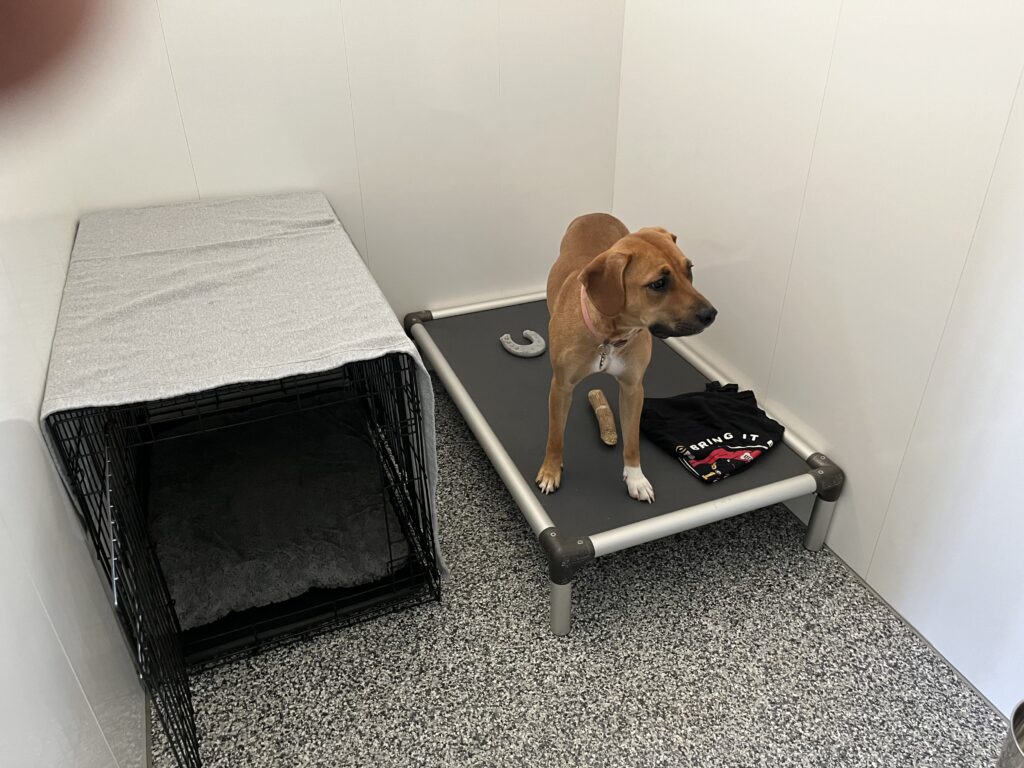
When people talk about crate training a puppy, the biggest emotional barrier is language. Calling a crate a “cage” frames it as something negative. That framing is inaccurate.
A crate is not meant to restrain. It is meant to protect, ground, and comfort.
Why language matters for new puppy owners
New puppy owners already feel pressure. Harsh language adds guilt, which leads to inconsistency.
When owners view the crate as a den:
- They use it proactively
- They stay calm and confident
- They create routines instead of emotional reactions
That confidence helps puppies feel safe faster.
What makes a crate feel like a den
A crate works when it feels secure.
A den like crate includes:
- Just enough space to stand, turn, and lie down
- Soft bedding or familiar scents
- A quiet location, not the center of chaos
At Ducktown Lodge, crates function as personal bedrooms. That same mindset works at home.
When puppies choose the crate on their own
A clear sign that puppy crate training is working is when the puppy walks into the crate voluntarily.
You may notice your puppy:
- Going in to nap
- Settling faster after play
- Seeking the crate when overwhelmed
That choice matters. It shows trust.
Encourage Your Puppy to Explore the Crate (Never Force It)
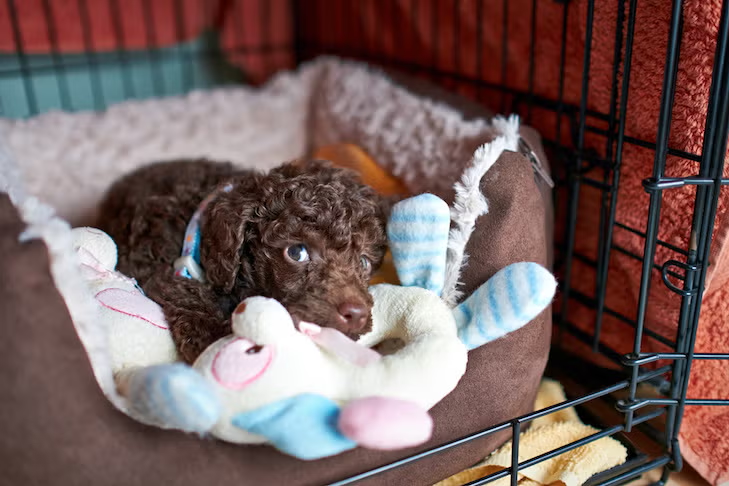
When you first introduce crate training to a puppy, hesitation is normal. New spaces can feel unfamiliar, and some puppies need time to feel safe stepping inside. What matters most is how that introduction happens.
Forcing a puppy into a crate can create a negative association that is difficult to undo. If a puppy feels trapped or pressured, the crate stops feeling like a den and starts feeling like something to avoid. That fear does not come from the crate itself. It comes from the experience around it.
The American Kennel Club (AKC) specifically advises allowing dogs to explore their crate at their own pace and avoiding any form of force during early crate training. When puppies are encouraged instead of pushed, they are far more likely to view the crate as a safe resting place rather than confinement.
A calm introduction looks like this:
- Leaving the crate door open so the puppy can choose to enter
- Tossing treats or feeding meals near or inside the crate
- Using calm praise, not excitement or pressure
- Allowing curiosity to lead, not hands-on guidance
As AKC breeders, this is exactly how we introduce crates to our puppies. Every litter we raise learns that the crate is a place of rest and safety, never a place they are forced into. That early experience matters. Puppies who are allowed to choose the crate build confidence faster and settle more easily.
This same approach is what we teach our Ducktown Retriever families. When crate training is built on trust instead of force, puppies do not just tolerate the crate. They seek it out.
How Crate Training Helps Puppies Learn to Settle
One of the biggest benefits of crate training a puppy is teaching them how to rest. Many puppies do not know how to turn off.
Puppies do not know how to rest yet
Overtired puppies often look wild, not sleepy.
Common signs include:
- Excessive nipping
- Zooming
- Ignoring cues
- Inability to settle
A crate provides boundaries when a puppy cannot make that decision alone.
Teaching an off switch early
Crate training puppies:
- Reduces overstimulation
- Supports emotional regulation
- Builds calm habits early
This skill becomes critical as puppies grow.
What happens when puppies never learn to rest
Dogs who never learn to settle often struggle later with anxiety, reactivity, and impulse control.
Crate training a puppy prevents these patterns before they start.
Crate Training and Potty Training Work Together
Crate training a puppy is one of the clearest ways to support potty training.
Why do puppies avoid soiling their den
Dogs naturally avoid eliminating where they sleep.
Crate training helps because:
- Bladder awareness improves
- Accidents decrease
- Routines become predictable
Creating clear, kind routines
A helpful rhythm:
- Out of crate and straight outside
- Calm praise
- Back inside for activity
- Return to crate for rest
This teaches clarity, not fear.
Common potty training mistakes
Mistakes usually include:
- Too much freedom
- Inconsistent schedules
- Punishment instead of structure
Crate training puppies works best as part of a full routine.
Crate Training Puppies at Night: What Puppies Actually Need
Nighttime crate training can feel emotional. That does not mean it is wrong.
Why nighttime feels hard
Puppies are adjusting to sleeping alone for the first time.
Crying usually means:
- Adjustment
- Seeking comfort
- Learning safety
How to set up nighttime success
Supportive setup includes:
- Crate near you
- Calm bedtime routine
- Potty before bed
- Predictable environment
Breeder trusted tools that help puppies settle
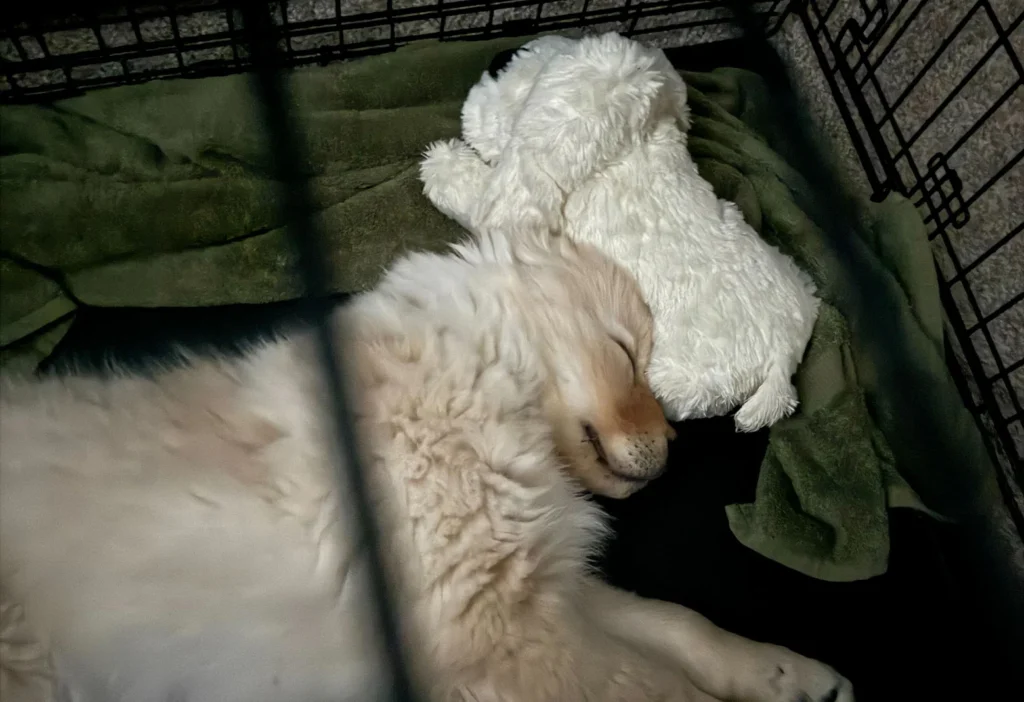
Many experienced breeders use simple tools to support crate training puppies at night. Many AKC breeders, including us, use tools like the Snuggle Puppy to help puppies settle in the crate by mimicking the warmth and heartbeat of littermates, making the crate feel safe and familiar instead of isolating.
Helpful options include:
- Heartbeat comfort toys like the Snuggle Puppy
- Licking-based calming tools such as crate safe pupsicles
- Crate only enrichment toys like KONG Puppy or West Paw Toppl
- Calming pheromones such as Adaptil or ThunderEase
- White noise or calming music
These tools support regulation. They do not replace structure.
Crying, reassurance, and balance
A calm approach includes:
- Needs met
- Gentle reassurance
- Avoiding panic practice
When puppies feel safe, sleep follows.
Is Crate Training Cruel? Addressing the Guilt Head On
Many new owners ask, is crate training cruel?
The answer depends on how it is used.
Why does this question come up
Emotional language and misuse online create fear.
Concern usually comes from care, not logic.
What makes crate training harmful
Crate training becomes harmful when:
- Used as punishment
- Replaces engagement
- Ignores distress
- Lacks balance
What humane crate training looks like
Humane crate training a puppy includes:
- Exercise
- Mental stimulation
- Clear routines
- Emotional support
Many dogs choose their crate when it feels safe.
How Long Should a Puppy Be in a Crate?
There is no single number.
Age-appropriate expectations
General guidelines:
- 8 to 10 weeks: about 1 hour
- 10 to 12 weeks: 1 to 2 hours
- 3 to 4 months: up to 3 hours
Nighttime stretches are often longer once puppies settle.
Crates as part of a full-day rhythm
A healthy rhythm includes:
- Potty
- Activity
- Food
- Rest
Reading your puppy, not the clock
Settling calmly is the goal. Adjust as needed.
Common Crate Training Mistakes (And How to Avoid Them)
Most mistakes come from good intentions.
Giving too much freedom too fast
Freedom should be earned through calm behavior.
Being inconsistent
Predictability builds trust.
Using the crate emotionally
Crates should never carry frustration.
Expecting the crate to do everything
Crates support training. They do not replace it.
Long-Term Benefits of Crate Training Beyond Puppyhood
Crate training a puppy pays off long after puppyhood.
Easier boarding, travel, and vet visits
Crate-trained dogs settle faster in new environments.
Dogs that handle change better
They adapt with less stress.
Why crate-trained dogs settle long-term
They know how to rest.
Who Crate Training Is Especially Helpful For
Crate training puppies is especially helpful for:
- New puppy owners
- Busy households
- Overstimulated puppies
It supports both the dog and the human.
Final Thoughts: Calm Structure Creates Confident Dogs
Crate training a puppy is not about taking something away. It is about giving clarity.
A crate used as a den gives puppies a place where nothing is expected of them. That ability to settle supports them for life.
You are not being restrictive. You are being thoughtful.
A calmer start makes everything easier later
If you are raising a puppy and feeling overwhelmed, you are not alone.
Crate training puppies the right way helps you feel confident, not reactive.
At Ducktown Lodge, we see every day how calm structure supports happier dogs and more peaceful owners.
Let’s talk about your dog.