Stopping dog barking isn’t about control or correction—it’s about clarity. Barking is one of the fastest ways tension builds between dogs and their people. It interrupts conversations, startles guests, and makes owners feel like they’re constantly managing chaos. Most people want a quieter dog—but very few are shown how to achieve that without yelling, correcting, or feeling frustrated.
The truth is simple: barking isn’t the real problem. It’s a symptom.
When you understand why a dog is barking and give them clear direction, barking naturally fades. Training that actually works doesn’t try to silence dogs. It teaches them how to disengage, settle, and trust that they don’t have to manage everything around them.
Why Dog Barking Becomes a Problem in the First Place

Barking turns into a problem when it becomes a dog’s default response to stimulation. That usually happens when a dog feels unclear about their role or believes it’s their job to react. Barking is one of the many ways dogs communicate. In fact, most people appreciate barking when it serves a purpose—alerting them to someone approaching the home or signaling that their dog needs something. Problems start when barking becomes excessive or unfocused. Because barking serves different functions, it’s important to understand why a dog is vocal before trying to change the behavior. Even organizations like the ASPCA emphasize that identifying the motivation behind barking is the first step to addressing it effectively.
Fear-Based Barking
Fear barking happens when a dog is overwhelmed by something they don’t understand or don’t feel prepared to handle. This is common on walks, in new environments, or when unfamiliar people or dogs appear suddenly. The barking isn’t aggression—it’s self-protection.
In many cases, fear barking traces back to a lack of early socialization or experiences where the dog learned that the world is unpredictable. When a dog feels unsure, barking becomes their way of creating distance and control.
The solution is not to force confidence or rush exposure. Calm, structured guidance works better.
On walks, this means paying attention before your dog reacts. If you see a trigger approaching and your dog is still thinking, that’s your moment. Ask for a calm behavior—such as a stay, a pause, or disengagement—and reinforce the choice to remain settled. Over time, the dog learns that staying calm is both safe and rewarding.
Socialization also plays an important role here, but it must be done thoughtfully. Flooding a fearful dog with interactions often backfires. Instead, controlled exposure to new people, dogs, and environments—paired with clear expectations—helps reduce fear barking at its root.
Fear barking fades when dogs learn they don’t have to handle the world alone.
Dog Barking Related to Separation Anxiety

Barking and whining when left alone is one of the most emotionally charged forms of vocalization. Dogs are social animals. When separation anxiety is present, barking isn’t attention-seeking—it’s distress.
These dogs aren’t trying to be difficult. They’re panicking.
Separation-related barking often escalates quickly and can be paired with pacing, destruction, or attempts to escape. In severe cases, dogs may even injure themselves. This isn’t a training issue you solve by ignoring the noise or hoping the dog “gets used to it.”
The solution starts with teaching the dog that alone time is safe.
That means building tolerance gradually. Short departures at first. Predictable routines. Calm exits and calm returns. The goal is to prevent the dog from crossing into panic in the first place.
Mental engagement also matters. Dogs left with appropriate outlets—chew items, enrichment toys, or structured rest spaces—cope better than dogs left with nothing to do but worry.
Technology like cameras can help owners monitor progress, but the real work happens through consistent training that builds confidence and independence over time.
Separation anxiety barking improves when dogs learn that absence does not equal abandonment.
Frustration-Based Dog Barking
Frustration barking is often overlooked because it feels situational—and it usually is. This type of barking happens when a dog wants something and can’t get to it.
A toy stuck under furniture. A dog visible but out of reach. A door that won’t open. A confined space with too much energy and nowhere to release it.
The barking usually stops once the frustration resolves, but if it’s reinforced, it can become a habit.
This is where timing matters.
If a dog barks and then immediately gets what they want—attention, access, or relief—the barking is rewarded. Dogs are excellent pattern learners. They repeat what works.
Instead, wait for a pause. Even a brief moment of quiet. That’s when you respond.
Frustration barking decreases when dogs learn that calm behavior—not noise—moves situations forward. Clear structure, appropriate outlets, and consistent responses prevent frustration from turning into a long-term behavior pattern.
Dogs also bark for reasons that are completely normal and often situational. Excitement barking is common when owners come home or when dogs greet familiar people or playmates. Many dogs are naturally vocal during play, especially when arousal runs high.
Alert Dog Barking
Alert barking occurs when a dog detects something unexpected—such as someone at the door, movement near the home, or a sudden noise. Sometimes the trigger is obvious, and sometimes it’s as subtle as a car door closing or a sound coming from the television.
Territorial Dog Barking
Territorial barking is driven by a dog’s instinct to protect space. That space may be a home, yard, car, or even a familiar walking route the dog believes belongs to them. Veterinary behavior research, including guidance from the Cornell University College of Veterinary Medicine, explains that these barking types are rooted in perception and context—not defiance—and must be addressed by understanding what the dog believes it is responsible for.
Dog Barking Is Communication, Not Disobedience
Dogs bark to communicate. It’s how they respond to what they notice. Many training issues start when barking is treated like defiance instead of information.
Common reasons dogs bark include:
- Alerting to movement or sound
- Excitement when something new appears
- Frustration when they want access
- Uncertainty about expectations
- Boredom or lack of engagement
When barking is punished without clarity, dogs don’t learn calm. They learn tension. Training works when we respond to the reason behind the barking, not just the noise itself.
Dog Barking in High-Distraction Environments

Dogs bark more when their environment asks too much of them.
Busy streets, windows facing foot traffic, constant visitors, or frequent new dogs entering a space can all increase barking. In these situations, dogs often assume responsibility. They believe it’s their job to alert, monitor, or manage what’s happening.
Without structure, reaction becomes the default.
Training removes that pressure by teaching dogs what is—and isn’t—their responsibility.
Why “Just Telling Them to Stop” Doesn’t Work
Most owners respond to barking instinctively. They raise their voice. They repeat commands. They grow frustrated when nothing changes.
From the dog’s perspective, though, barking is still working.
How Attention Reinforces Barking
Attention is reinforcing, even when it’s negative. If barking consistently produces a response, dogs learn that barking gets engagement.
This is why barking often becomes habitual. The dog isn’t being defiant—they’re repeating a behavior that’s been rewarded.
Training that works removes the payoff.
The Cost of Suppression Without Clarity
Methods that silence barking without teaching an alternative often create more stress. A quiet dog isn’t always a calm dog.
When barking is suppressed instead of guided, dogs may show anxiety in other ways: pacing, fixation, or explosive reactions later on.
Long-term success comes from teaching dogs how to disengage.
Training Solutions for Dog Barking at Home

Creating Calm Through Eye Contact in High-Distraction Areas
One of the most overlooked tools in dog training is eye contact. Not forced staring. Not pressure. Just a quiet, intentional check-in that helps a dog reset and reconnect when the world gets loud.
In high-distraction areas—busy sidewalks, parking lots, new environments, or places where other dogs are present—many dogs lose access to calm thinking. Their attention scatters outward. Barking, pulling, or vocalizing often follows.
Eye contact brings attention back.
“Leave it” is one of the most misunderstood cues in dog training. It’s often taught around food, but its real value is emotional.
What “Leave It” Really Teaches a Dog
Leave it teaches choice.
A dog learns they can notice something without reacting to it. They learn that disengagement is safe. That clarity removes pressure and creates calm.
How Leave It Applies to Barking
When dogs bark at doors, fences, windows, or new arrivals, they’re engaging with the trigger. Leave it offers a different response:
- The dog notices the trigger
- You cue leave it
- Dog disengages
- Calm is reinforced
Over time, barking loses its purpose. The dog no longer feels responsible for reacting.
This is why leave it often works better than teaching “quiet” alone.
A Short Story: How We Built a Quiet Pack at Ducktown Lodge

Before Ducktown Lodge ever opened, this was one of my biggest concerns.
I’ve raised hunting retrievers for years, and in that world, vocal dogs are a nuisance. Noise breaks steadiness and focus. So opening a place where new dogs would regularly arrive meant I needed a plan.
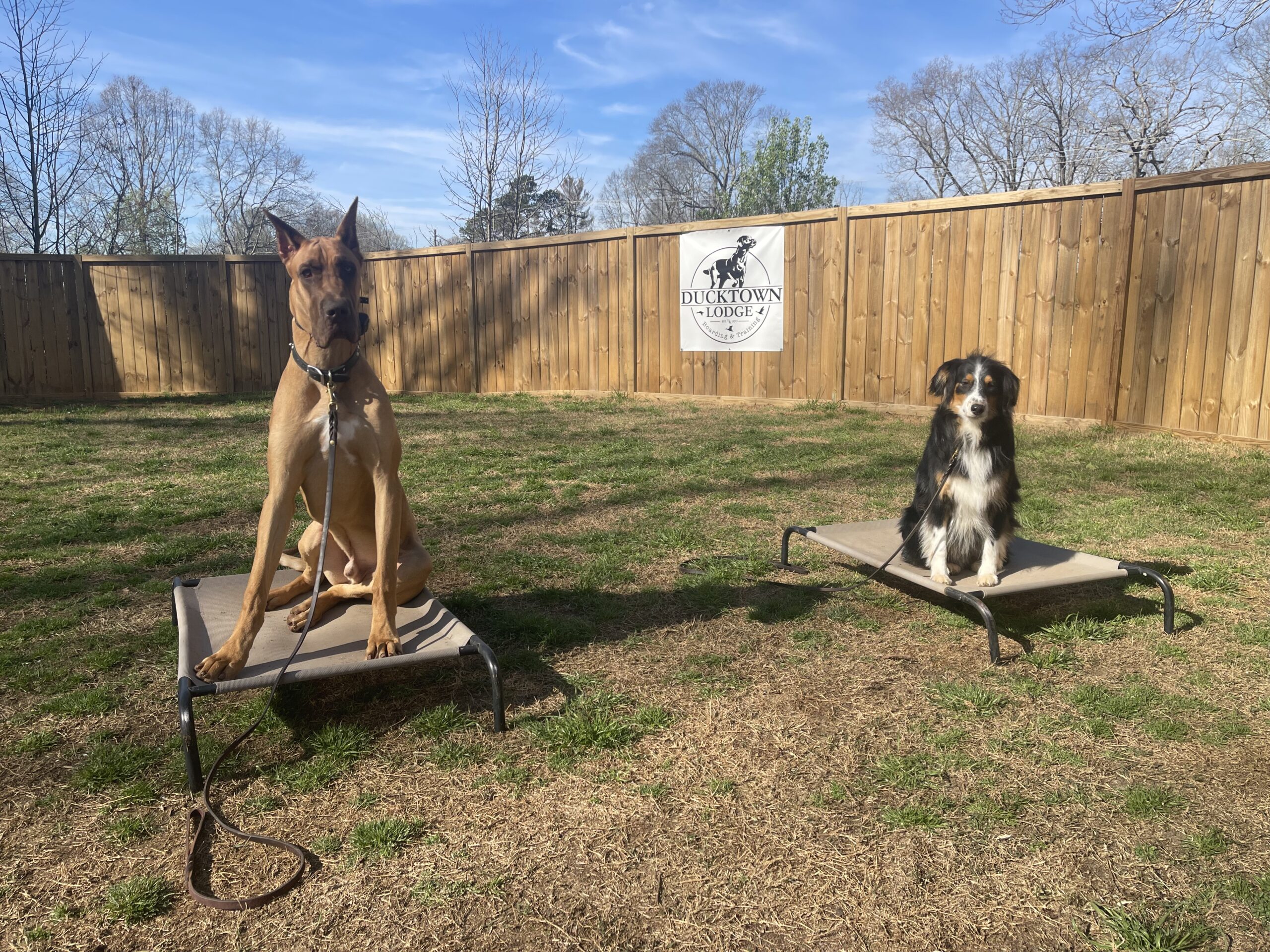
Before the first boarding dog ever stayed here, I prepared my own dogs.
Preparing for New Dogs Before Opening
For several days, new dogs were brought onto the property intentionally. Each time, the process was the same:
Notice it.
Then leave it.
No yelling. No escalation. No chaos.
If one of my dogs barked, I calmly asked for leave it, redirected, and reinforced disengagement.
Why This Changed Everything
My dogs stopped reacting. They may look up when a new dog arrives, but they don’t bark. They don’t spiral. They settle.
That calm became the foundation of Ducktown Lodge.
When new dogs arrive now, the environment stays quiet—not because dogs are suppressed, but because they’re clear. Calm dogs create calm spaces.
Practical Training Steps to Reduce Barking at Home
Training a quieter dog requires intention, not force.
Identify the Trigger
Barking always has a trigger. Windows, visitors, sounds, boredom, or uncertainty are common causes. Training works best when you address the trigger before barking escalates.
Teach Disengagement First
Quiet is not the first goal—disengagement is. Use leave it when your dog notices a trigger but hasn’t barked yet. Reinforce the choice to step away.
Reinforce Calm on Purpose
Calm behavior often goes unnoticed. Reward neutral moments. Dogs repeat what works.
Support Training With Structure
Limit overstimulation. Create routines. Set boundaries. Training is easier when the environment supports calm behavior.
When Barking Signals a Bigger Issue
Persistent barking can signal anxiety, over-arousal, or lack of structure. Signs include:
- Difficulty settling
- Escalating reactions
- Pacing or fixation
This is when working with a professional dog training near me can help identify the real cause and create a clear plan forward.
Training for Quiet Is Training for Peace
Quiet doesn’t come from control. It comes from clarity.
When dogs understand what’s expected—and what they don’t need to manage—barking naturally decreases. Life feels calmer. Communication improves. Everyone relaxes.
Let’s Start With a Conversation
If barking has become a source of stress, you don’t have to solve it alone. At Ducktown Lodge, training is built around clarity, consistency, and real-world experience.
If you’re searching for dog training near me that focuses on calm, structure, and trust, we’re here when you’re ready.
Start with a conversation. We’ll take it from there.